Calathea: How to Care for the Plant with Patterned Leaves
Houseplants

Calathea: How to Care for the Plant with Patterned Leaves

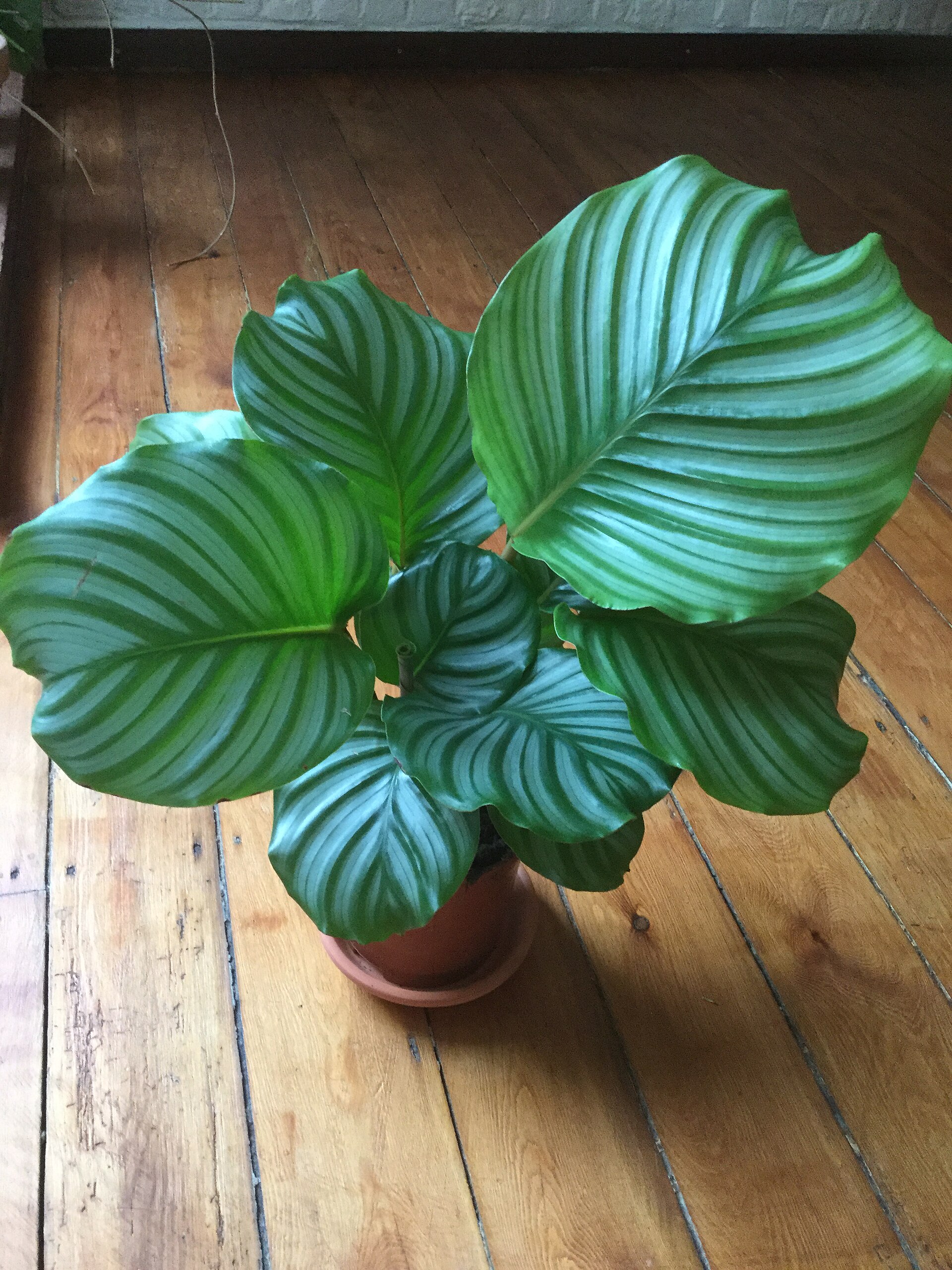
Goeppertia orbifolia

Growing calathea: tropical houseplant with large patterned, striped leaves. Filtered light, high humidity, rich soil, non-toxic to pets.

Characteristics

Scientific nameGoeppertia orbifolia
Height40-90 cm
Sunlightluce filtrata
Watermedia
Soilricco umifero
Toxicitynon tossica
Growthmedia
Temperature18 a 28 °C
Floweringrara
IrrigationKeep the soil consistently moist but not soggy; water with non-calcareous water and mist the leaves often.

Calathea (Goeppertia orbifolia) is a tropical houseplant with large rounded leaves marked by elegant silvery stripes. It needs filtered light, high humidity and rich, humus-filled soil. It is non-toxic to cats and dogs, ideal for bright bathrooms and humid rooms.

Flowering season

JanFebMarAprMayJunJulAugSepOctNovDec

Practical tips

Watering

Water needs: media — always check soil moisture before watering.

Position

Prefers luce filtrata: provide the right light and rotate the plant for even growth.

Substrate

Recommended soil: ricco umifero. Refresh the substrate every 1-2 years.

Leaves

Dust the leaves with a damp cloth to support photosynthesis.

Feeding

Feed during the growing season (spring-summer) and stop in winter.
FAQ

Why are my calathea leaves curling or browning?
Almost always due to air that is too dry, hard tap water or direct sun. Raise the humidity, use rainwater or distilled water and keep it out of direct sunlight.
Why does the calathea move its leaves at night?
This is nyctinasty: the plant raises and lowers its leaves in a day-night rhythm via joints at the leaf base (pulvini). It is normal behaviour and a sign of good health.

You may also like