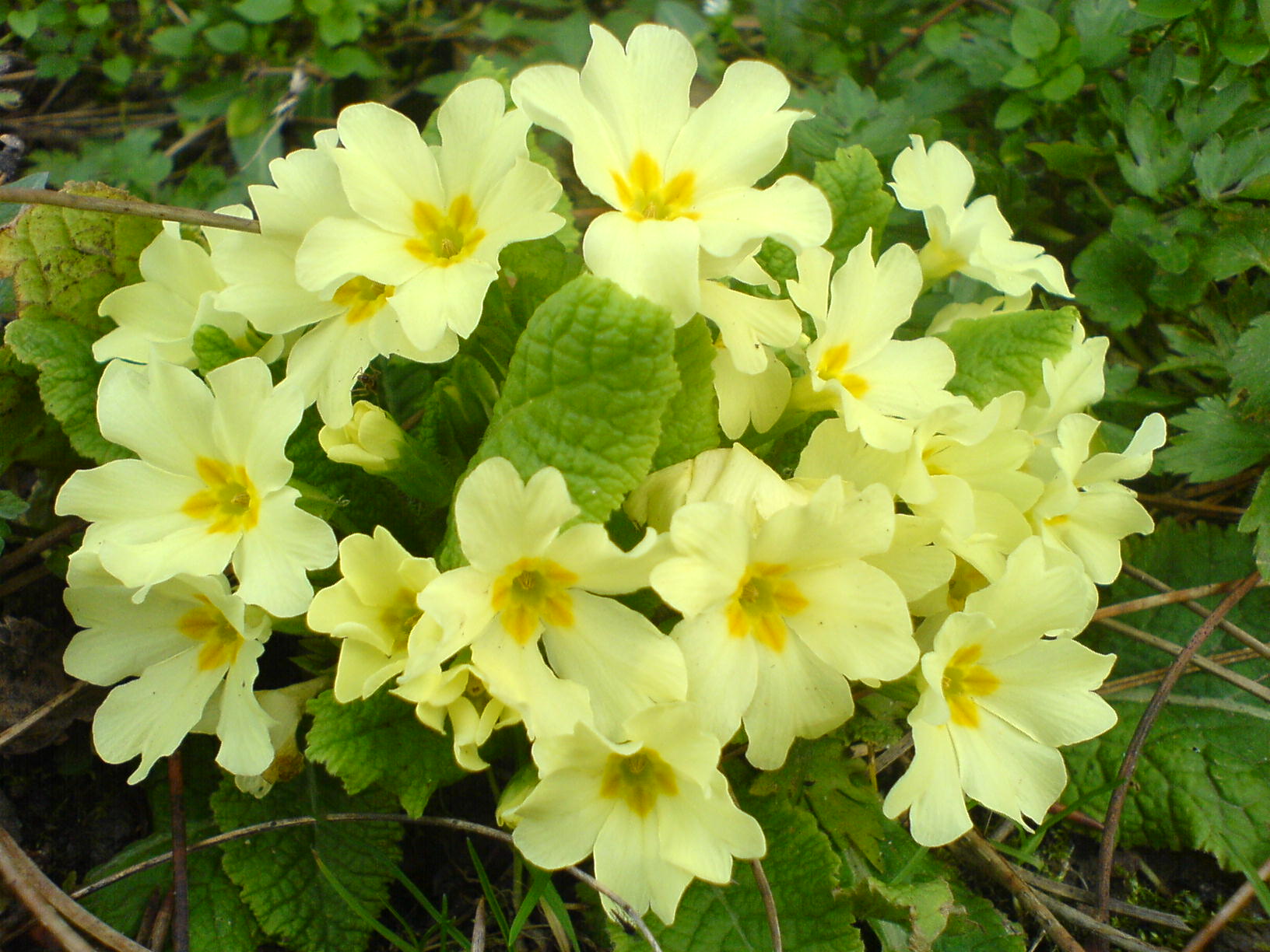
Primrose: How to Grow the Perennial that Heralds Spring
Primula vulgaris
Growing primrose: perennial with colourful flowers blooming in late winter. Partial shade, fresh soil, perfect in borders, pots and woodland edges.
Characteristics
The primrose (Primula vulgaris) is a small perennial with colourful flat-faced flowers, among the first to herald spring as early as February. Grow it in cool partial shade on fertile, moist soil — perfect in borders, pots and woodland edges. It forms compact clumps that thicken over time.
Flowering season
Practical tips
Water needs: media — always check soil moisture before watering.
Prefers mezz'ombra: provide the right light and rotate the plant for even growth.
Recommended soil: fresco fertile. Refresh the substrate every 1-2 years.
Dust the leaves with a damp cloth to support photosynthesis.
Feed during the growing season (spring-summer) and stop in winter.