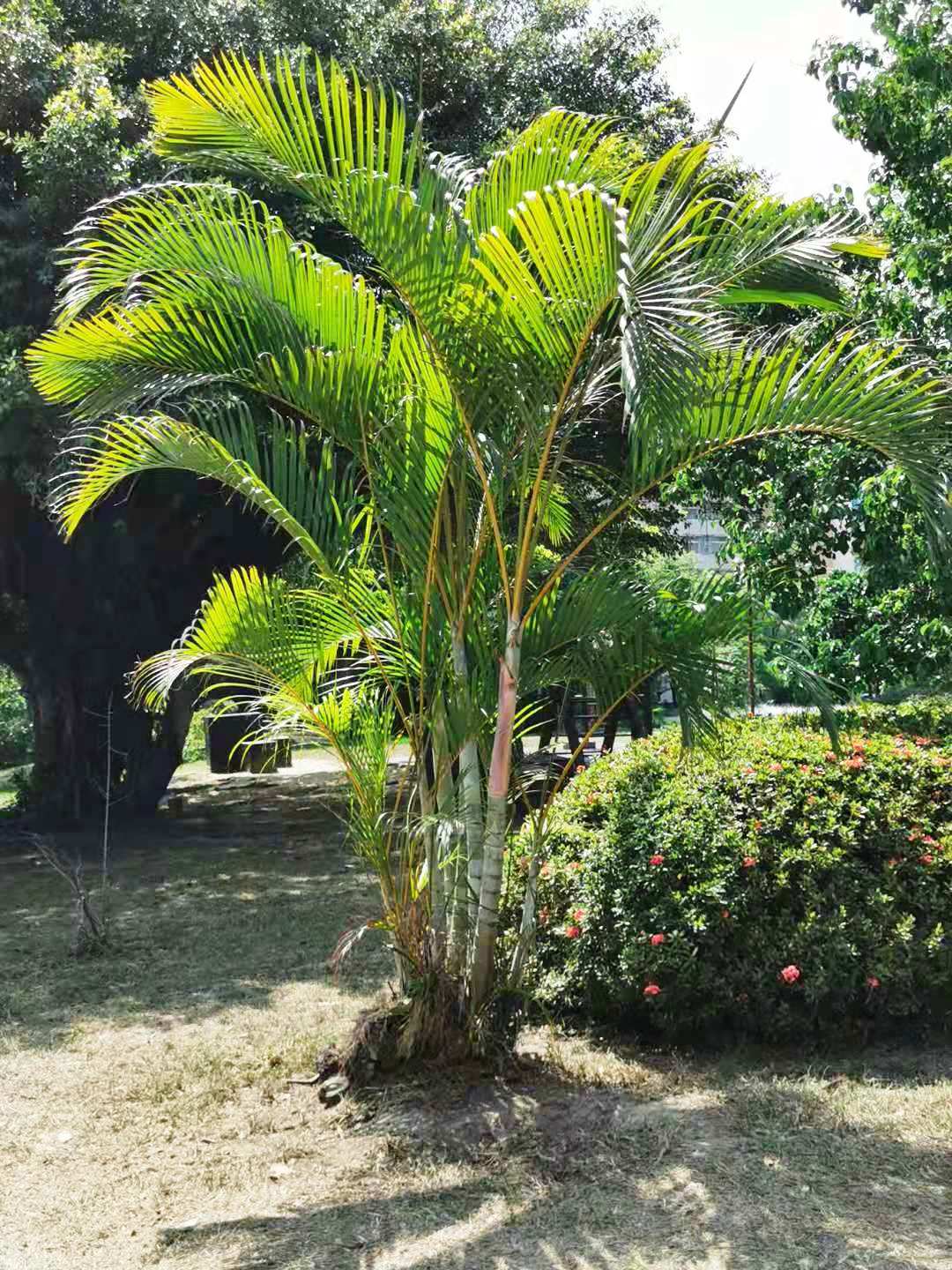
Areca Palm: Dypsis lutescens Care Guide
Dypsis lutescens
Areca palm care (Dypsis lutescens): indoor palm with feathery fronds. Bright indirect light, well-drained moist soil, pet-safe, humidity-loving.
Characteristics
The areca palm (Dypsis lutescens), or golden cane palm, is a much-loved Madagascar houseplant palm with golden cane-like stems and elegant, arching feathery fronds. It loves bright indirect light, rich, well-drained soil kept moist and good humidity. It is pet-safe. Indoors it reaches 2-3 metres.
Flowering season
Practical tips
Water needs: media — always check soil moisture before watering.
Prefers luce intensa indiretta: provide the right light and rotate the plant for even growth.
Recommended soil: ricco drenante. Refresh the substrate every 1-2 years.
Dust the leaves with a damp cloth to support photosynthesis.
Feed during the growing season (spring-summer) and stop in winter.