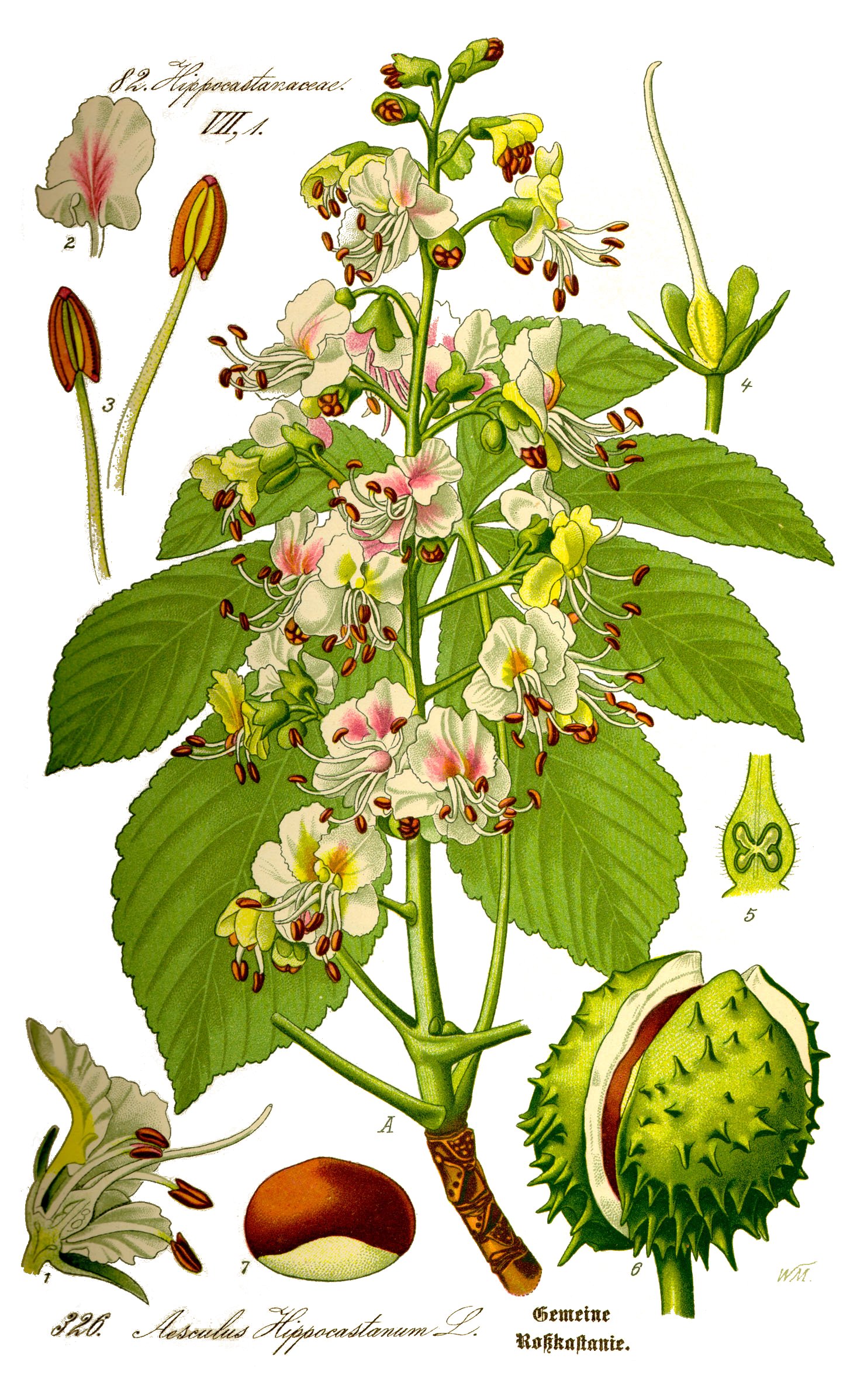
Horse Chestnut: The Conker Tree Care Guide
Aesculus hippocastanum
Horse chestnut care (Aesculus hippocastanum): large ornamental tree with candle-like flowers. Full sun, cool deep soil, toxic seeds.
Characteristics
The horse chestnut (Aesculus hippocastanum), or conker tree, is a large ornamental deciduous tree with showy upright white flower spikes like candles in spring. It wants full sun and cool, deep, well-drained soil and is very hardy. Its shiny seeds (conkers) are toxic and not edible, unlike sweet chestnuts. It reaches 20-35 metres.
Flowering season
Practical tips
Water needs: media — always check soil moisture before watering.
Prefers pieno sole: provide the right light and rotate the plant for even growth.
Recommended soil: fresco profondo. Refresh the substrate every 1-2 years.
Dust the leaves with a damp cloth to support photosynthesis.
Feed during the growing season (spring-summer) and stop in winter.