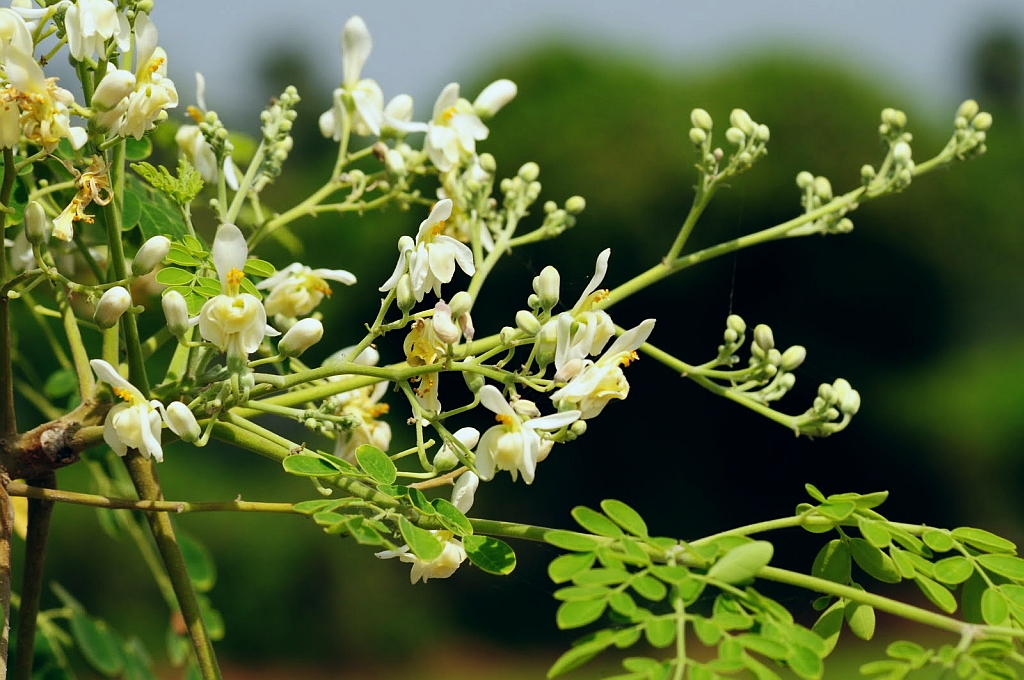
Moringa: The Miracle Tree Rich in Nutritional Properties
Moringa oleifera
Growing Moringa oleifera: tropical superfood tree with leaves rich in vitamins, proteins and antioxidants. Very fast growth.
Characteristics
Moringa oleifera is a tropical tree called the miracle tree for its extraordinary nutritional properties. Its leaves contain more vitamin C than oranges, more potassium than bananas and complete proteins. It grows very fast in full sun on sandy well-drained soil, reaching 5 metres in a year.
Flowering season
Practical tips
Water needs: media — always check soil moisture before watering.
Prefers pieno sole: provide the right light and rotate the plant for even growth.
Recommended soil: sabbioso drenante. Refresh the substrate every 1-2 years.
Dust the leaves with a damp cloth to support photosynthesis.
Feed during the growing season (spring-summer) and stop in winter.