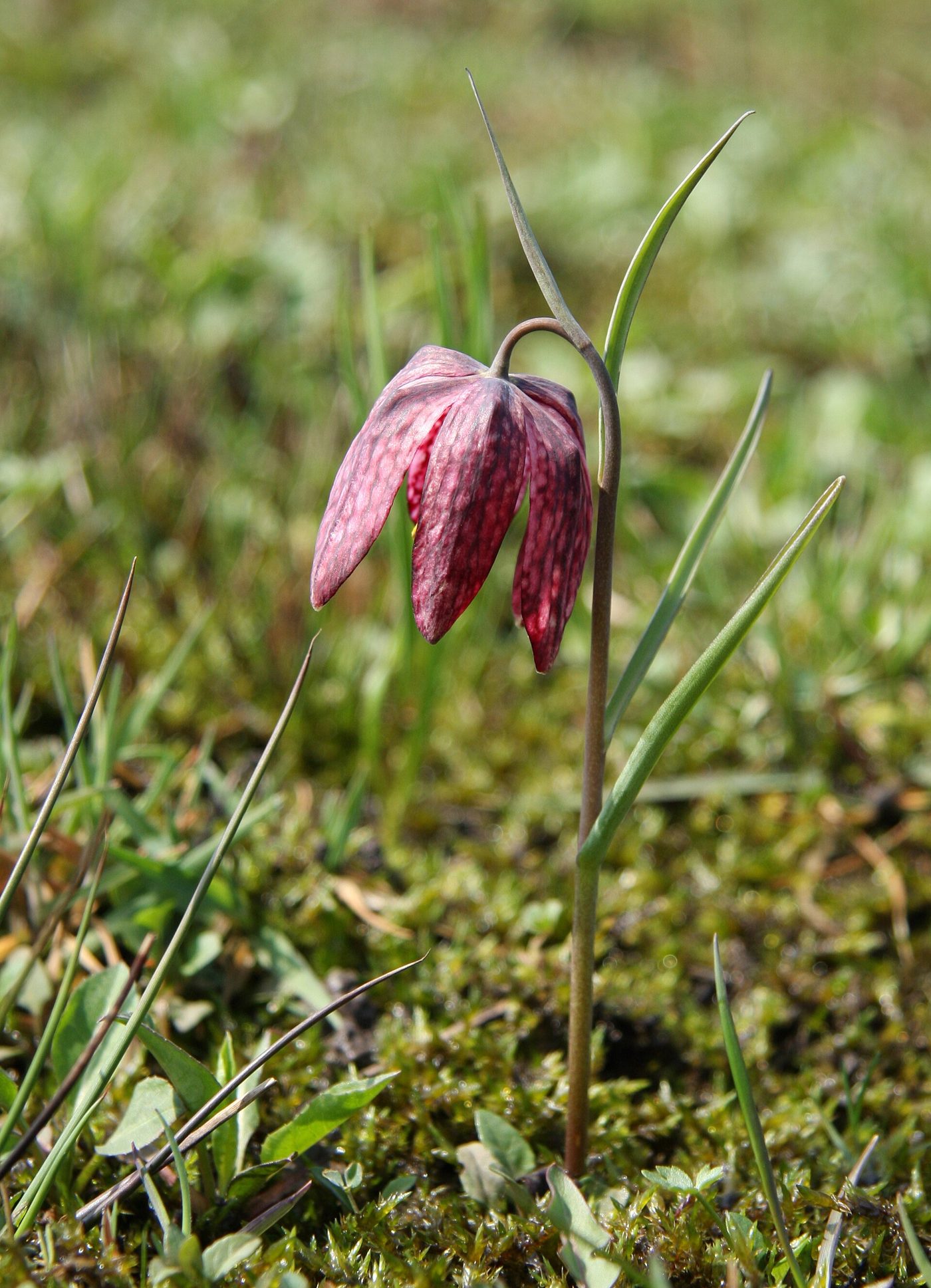
Photo: Yerpo · CC BY-SA 3.0
Snake's head fritillary
Fritillaria meleagris
With its nodding bell-shaped flowers and chequered purple-and-white pattern, the snake's head fritillary is one of the most elegant and unusual spring plants.
Characteristics
A flower with a unique pattern
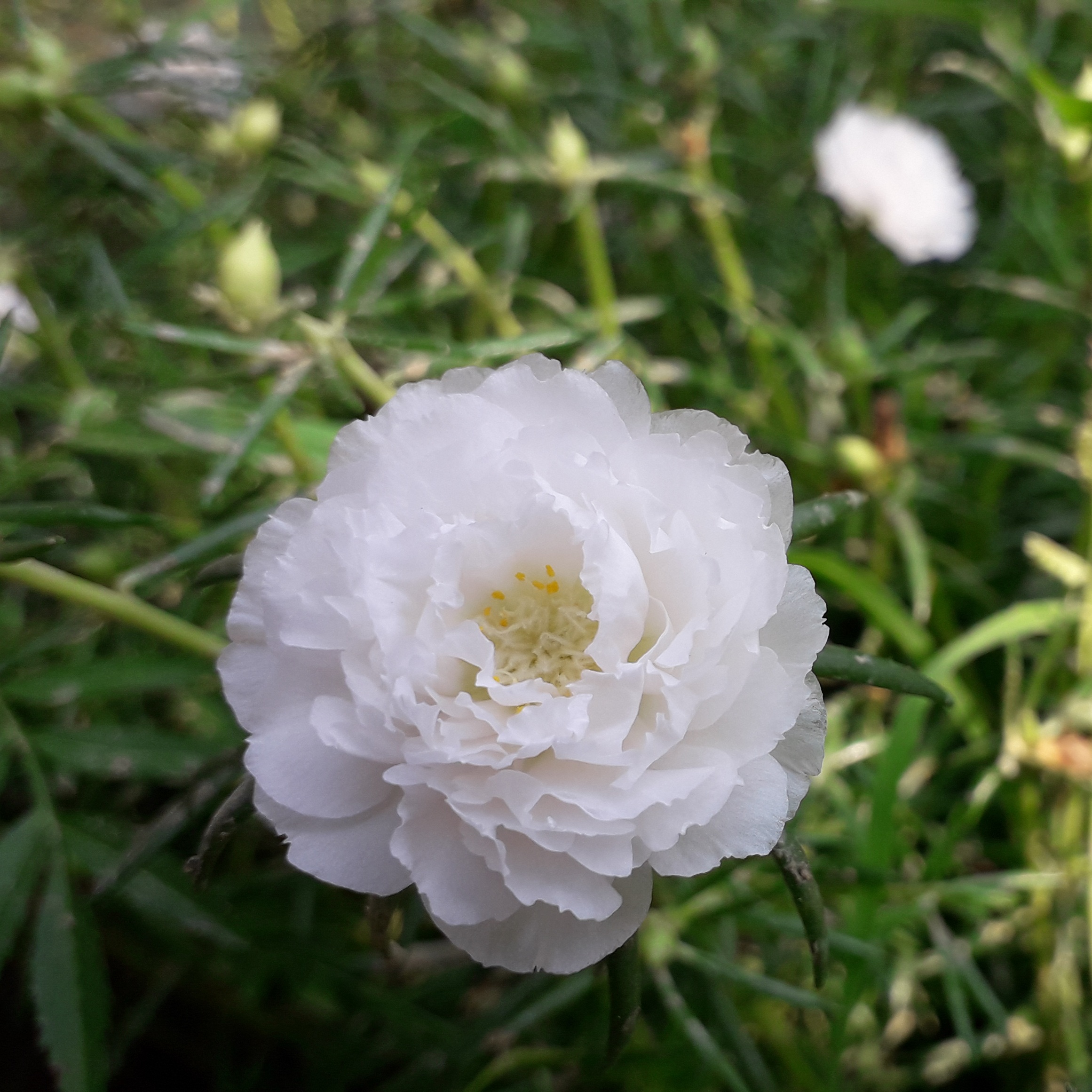
The snake's head fritillary is a bulbous perennial of elegant, delicate appearance. From a slender stem, bearing a few narrow leaves, hangs one or more bell-shaped flowers facing downwards. What makes it unmistakable is the pattern of the petals: a chequerboard of alternating purple and lighter pink squares, from which many of its common names derive. There are also entirely white varieties. Despite its grace, it is a hardy plant well suited to natural gardens.
Origin and distribution
It is native to Europe, where it grows wild in damp meadows and the flood plains of rivers, cool environments subject to periodic flooding. In these areas it can form extensive flowering carpets in spring, one of the most evocative natural spectacles of the season.
Cultivation and care
The snake's head fritillary prefers sunny or partly shaded positions and, above all, a cool, moist soil that does not dry out too much. The bulb should be planted in autumn, and the plant flowers in early spring. It is very hardy and copes well with cold. Once established, it tends to naturalise, coming back every year and spreading slowly, which makes it perfect for flowering meadows, damp borders and natural-style gardens.
Warning and curiosities
It should be remembered that the fritillary is a toxic plant: it contains alkaloids, present especially in the bulb, which make it poisonous if eaten. It should therefore be kept away from children and pets, and handled without bringing the hands to the mouth. For its beauty and rarity, in some countries it is protected and cherished as a symbol of the damp spring meadows.
Flowering season
Practical tips
Water needs: Regular, likes moist soils — always check soil moisture before watering.
Prefers Full sun or partial shade: provide the right light and rotate the plant for even growth.
Recommended soil: Cool, moist and rich. Refresh the substrate every 1-2 years.
Dust the leaves with a damp cloth to support photosynthesis.
Feed during the growing season (spring-summer) and stop in winter.
Pros
- Unique, unmistakable chequered pattern
- Elegant spring flowering
- Hardy and easy to naturalise
- Perfect for flowering meadows and damp borders
Cons
- Toxic if eaten
- Requires cool, moist soil
- Short flowering, in early spring