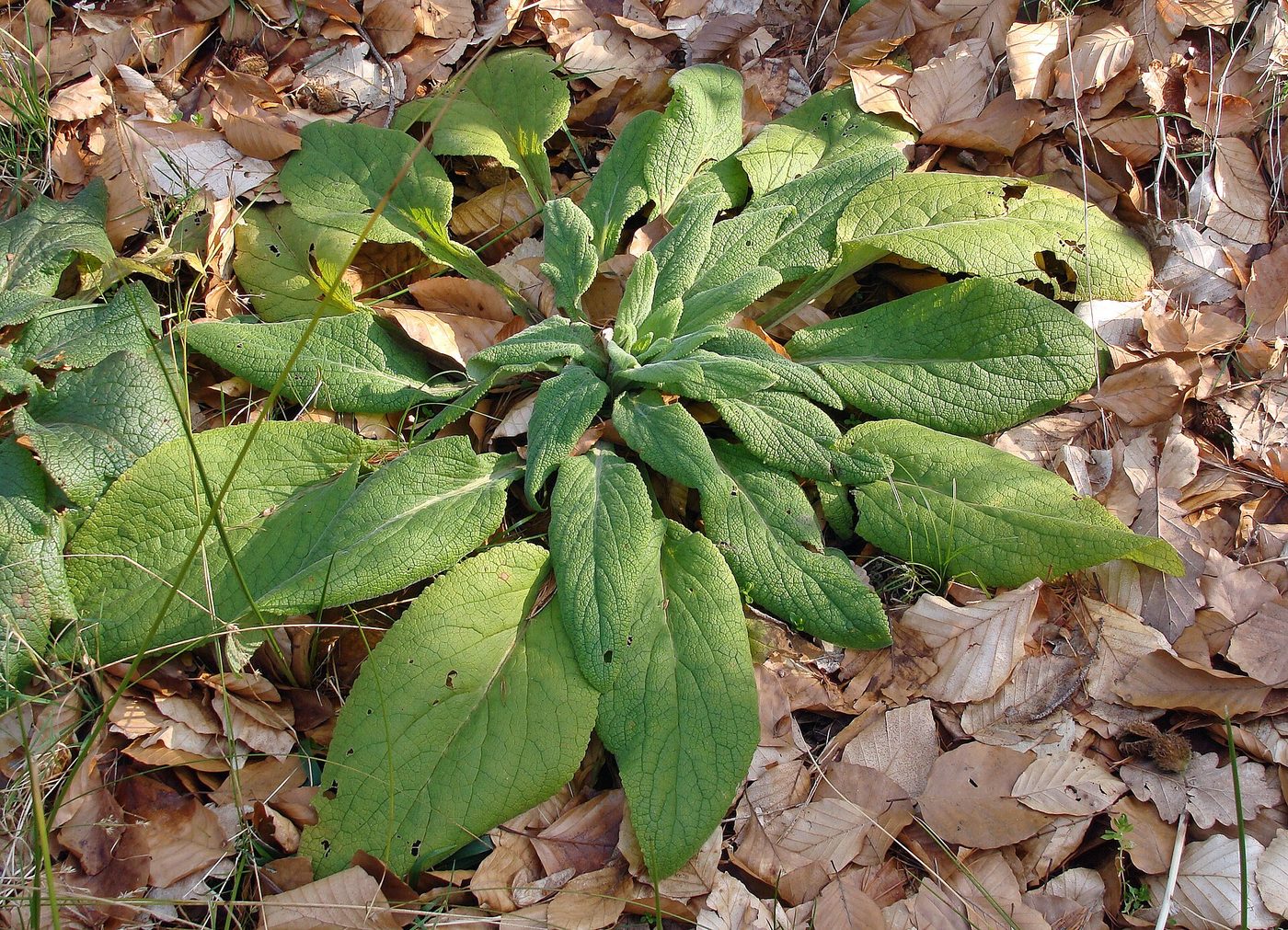
Photo: Jean-Marc Pascolo · CC BY-SA 3.0
Foxglove
Digitalis purpurea
With its tall spikes of bell-shaped flowers, the foxglove is a plant of great beauty but very poisonous, famous in gardens and in medicine.
Characteristics
Elegance to be handled with care
The foxglove is one of the most spectacular flowering plants of European gardens and woods. It produces tall, erect spikes along which are arranged, in a row, numerous pendulous flowers shaped like a bell or a thimble, of colours ranging from pink-purple to white, often spotted inside. It is a biennial or short-lived perennial plant: in the first year it forms a rosette of leaves, in the second it raises its spectacular flower spike. The whole plant, however, is very poisonous, and must be treated with great care.
Habitat and distribution
It is widespread across much of Europe, where it grows wild in woodland clearings, along path edges, in disturbed ground and in hilly and mountainous areas. It prefers acidic, cool soils rich in organic matter, and partly shaded positions. It is a hardy plant, which adapts well to temperate climates and spreads easily through its countless tiny seeds.
A poisonous and medicinal plant
The foxglove is sadly known for its toxicity: it contains substances that act powerfully on the heart. Ingesting even small parts of it can be extremely dangerous, for humans and animals. Yet these very substances, suitably isolated and dosed in a strictly medical and pharmaceutical setting, have historically been used to treat certain heart conditions. It is a classic example of a plant on the border between poison and medicine, whose use belongs exclusively to professionals.
Cultivation
In gardens the foxglove is much loved for its imposing spikes, ideal in borders and natural-looking gardens. It is grown in a partly shaded position, in cool, well-drained soil, and is also prized by pollinators, in particular bumblebees that slip into the bell-shaped flowers. It should, however, be placed carefully where there is no risk of children or pets ingesting its parts.
Safety note
Being a very toxic plant, the foxglove must never be ingested or used for 'do-it-yourself' healing purposes. After handling it, it is wise to wash your hands. Its beauty is to be enjoyed with the eyes: it is an ornamental plant, not a plant to be consumed.
Flowering season
Practical tips
Water needs: Regular, cool soil — always check soil moisture before watering.
Prefers Partial shade: provide the right light and rotate the plant for even growth.
Recommended soil: Acidic, cool, rich in organic matter. Refresh the substrate every 1-2 years.
Dust the leaves with a damp cloth to support photosynthesis.
Feed during the growing season (spring-summer) and stop in winter.
Pros
- Spectacular, ornamental flower spikes
- Loved by pollinators such as bumblebees
- Hardy and suited to natural gardens
- Spreads easily from seed
Cons
- Very poisonous in all its parts
- Dangerous to children and pets
- Short-lived plant, must be resown