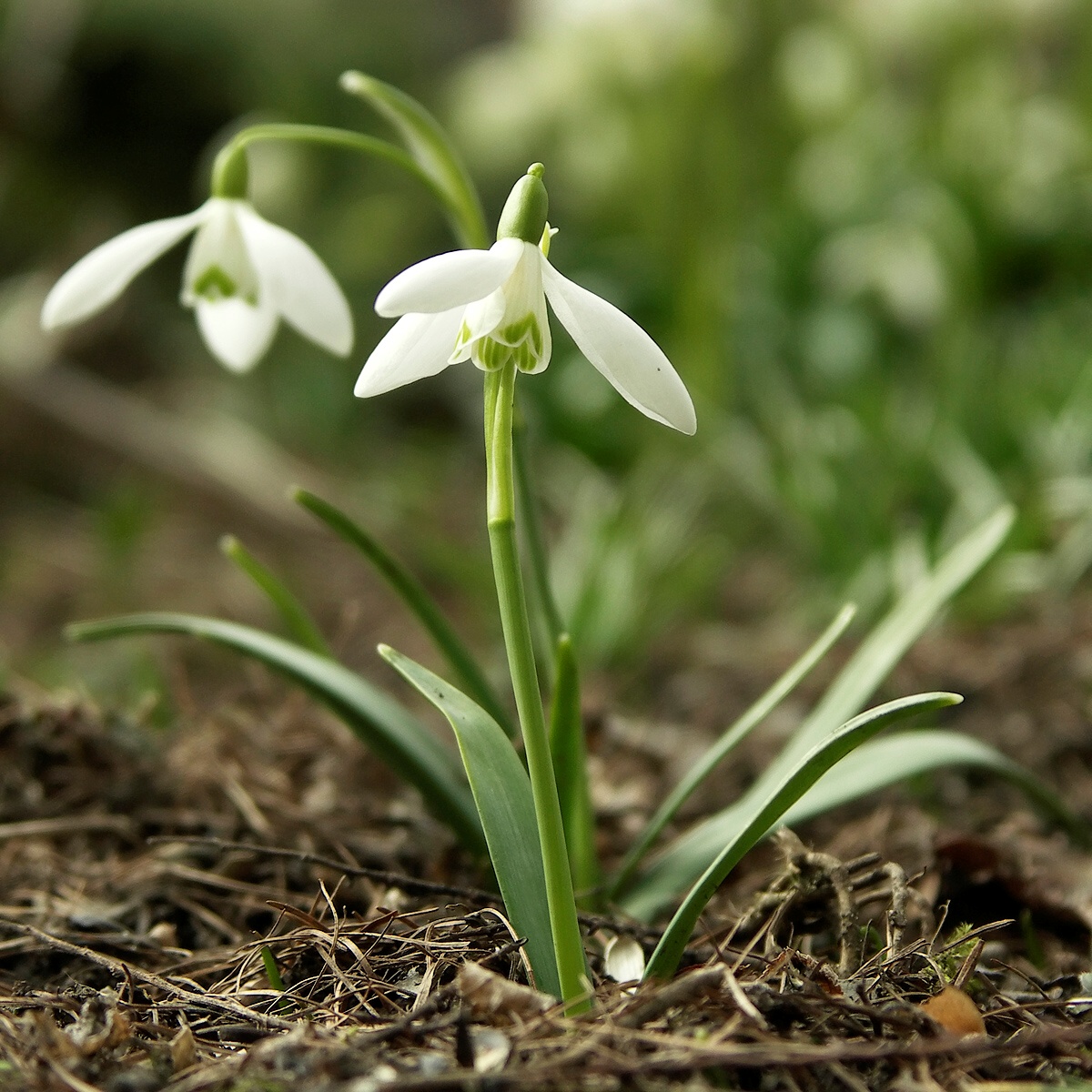
Snowdrop: The First Bulb to Bloom in Late Winter
Galanthus nivalis
Growing snowdrop: small bulb with nodding white flowers blooming from January to March. Partial shade, fresh soil, ideal naturalised under trees.
Characteristics
The snowdrop (Galanthus nivalis) is a small bulb with delicate nodding white flowers, among the first to bloom from January, often through the snow. Grow it in partial shade on fresh, humus-rich soil — ideal naturalised under trees and shrubs. It spreads spontaneously into carpets.
Flowering season
Practical tips
Water needs: media — always check soil moisture before watering.
Prefers mezz'ombra: provide the right light and rotate the plant for even growth.
Recommended soil: fresco umifero. Refresh the substrate every 1-2 years.
Dust the leaves with a damp cloth to support photosynthesis.
Feed during the growing season (spring-summer) and stop in winter.