Photo: T.Voekler · CC BY-SA 3.0
Sacred lotus
Nelumbo nucifera
A symbol of purity in many cultures, the sacred lotus is a spectacular aquatic plant with large water-repelling leaves and majestic flowers.
Characteristics
A majestic aquatic plant
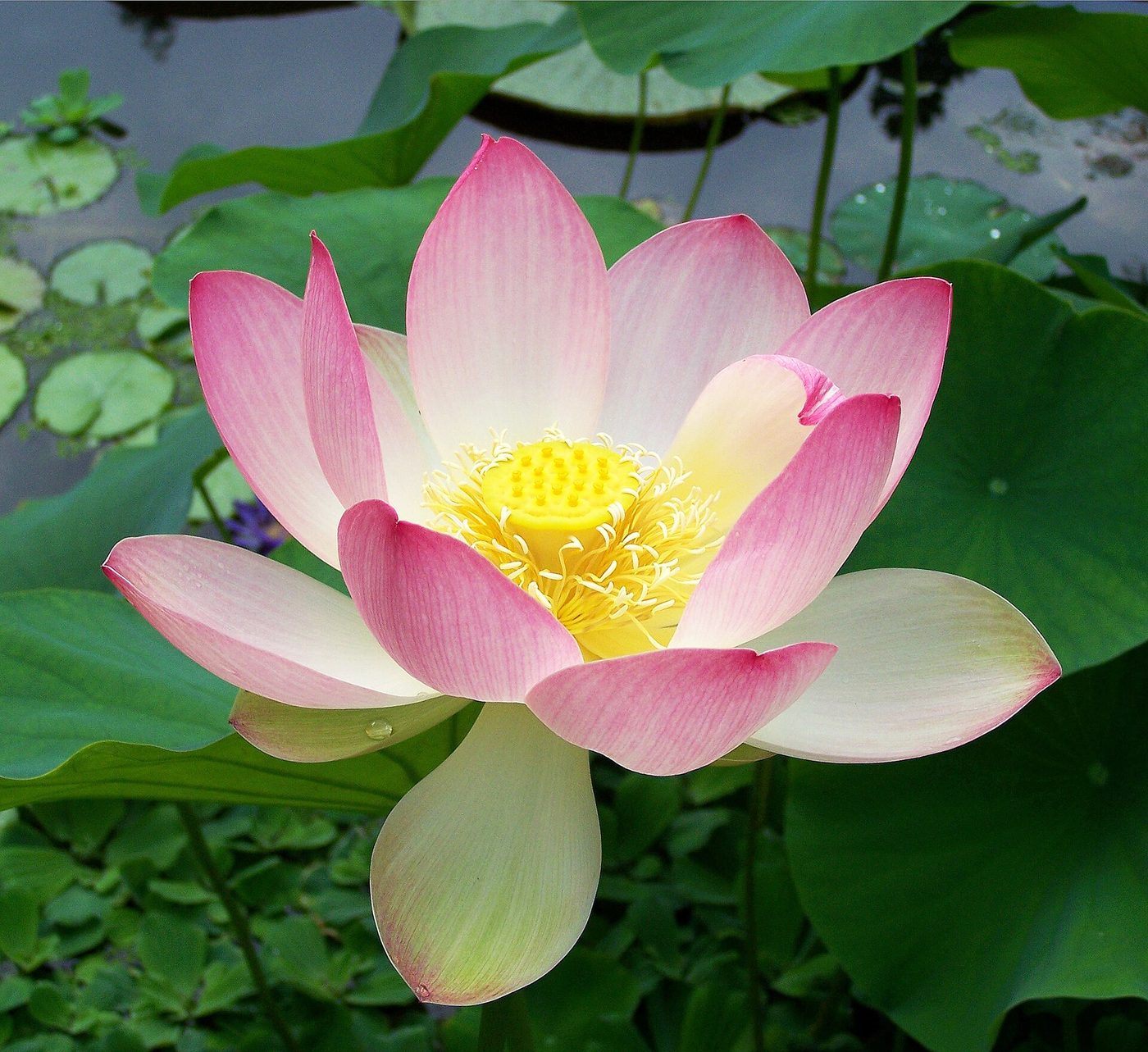
The sacred lotus is an aquatic plant of great charm, rooted on the bottom of ponds and still waters but with leaves and flowers that rise well above the surface. The leaves are large, rounded and waxy, held up by long stalks, and have an extraordinary water-repellent surface: water slides over them in perfect droplets, carrying away dust and impurities, a phenomenon known as the 'lotus effect'. The flowers are broad and majestic, usually pink or white, followed by a characteristic showerhead-shaped receptacle that holds the seeds.
Origin and distribution
It is native to Asia and Australia, where it grows in lakes, ponds and marshy areas with calm waters. For millennia it has been cultivated throughout the East, both for its beauty and for its culinary uses, and it is now widespread as an ornamental plant in many water gardens around the world.
Cultivation and care
The sacred lotus loves full sun and warmth, essential for an abundant flowering. It is grown in basins or ponds, with the rhizome planted in the mud on the bottom and water covering its base. It needs still or slow-moving water and high temperatures during the growing season; in winter the rhizome stays sheltered underwater, safe from frost as long as the water does not freeze to the bottom. It is a vigorous plant which, if it finds the right conditions, spreads to form large colonies.
Uses and curiosities
The lotus is considered sacred in many cultures, particularly in India and the Buddhist world, where it is a symbol of purity because it blooms immaculate even though it grows in the mud. It is also an edible plant: its rhizomes, seeds and other parts are used in cooking throughout Asia. Extraordinary is the longevity of its seeds, able to retain their vitality and germinate even after many centuries.
Flowering season
Practical tips
Water needs: Aquatic plant, rooted on the bottom — always check soil moisture before watering.
Prefers Full sun: provide the right light and rotate the plant for even growth.
Recommended soil: Rich mud on the pond bottom. Refresh the substrate every 1-2 years.
Dust the leaves with a damp cloth to support photosynthesis.
Feed during the growing season (spring-summer) and stop in winter.
Pros
- Large, majestic flowers
- Self-cleaning leaves (lotus effect)
- Symbol of purity in many cultures
- Several edible parts
Cons
- Requires a pond or a water basin
- Loves warmth and full sun
- Can spread a lot if not contained