Photo: Wikimedia Commons · Public domain
Trumpet gentian
Gentiana acaulis
A small flower emblematic of the Alps, the trumpet gentian bears large bells of intense blue just above a cushion of leaves, on mountain pastures and rocks.
Characteristics
The blue of the mountains
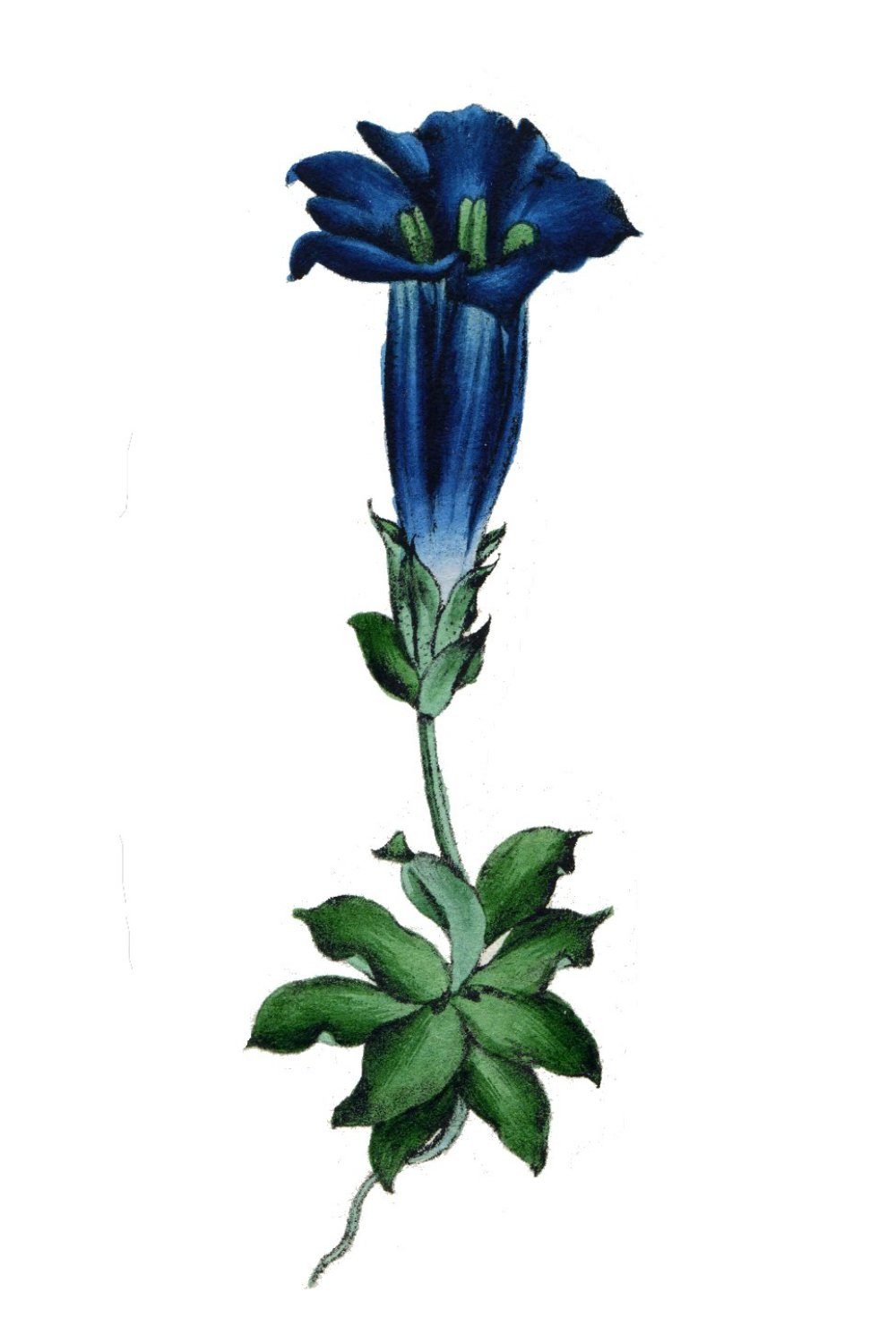
The trumpet or stemless gentian is one of the most loved and recognisable mountain plants. It forms a small rosette of basal leaves pressed to the ground, from which spring large solitary trumpet- or chalice-shaped flowers of a deep, intense blue that few other flowers reach in nature. The name 'acaulis' means 'stemless': the flowers seem to rest almost directly on the cushion of leaves.
Habitat and distribution
It is native to the mountains of central and southern Europe, from Spain to the Balkans, and grows especially in the Alps and Pyrenees, between about 800 and 3,000 metres altitude. It favours pastures, alpine meadows and stony, acidic, siliceous soils, where it flowers in spring and early summer, often just after the snow melts.
Cultivation
It is grown in rock and alpine gardens for its spectacular flowers, but it is not always easy: it wants full sun, a cool but perfectly drained, acidic soil, and cool temperatures. It resents lowland summer heat and waterlogging. In cultivation it does best when the high-altitude conditions it comes from are recreated.
Curiosities
The colour 'gentian blue' entered everyday language thanks to these flowers. Gentians have a long tradition in herbalism (especially the great yellow gentian, with its bitter roots), while the trumpet gentian is prized above all as an ornamental icon of alpine flora.
Conservation
The species is Least Concern, but in many alpine regions it is protected: picking the flowers is banned or regulated. Admiring it on mountain meadows without picking it is the best way to help preserve it.
Flowering season
Practical tips
Water needs: Moderate: cool but well-drained soil — always check soil moisture before watering.
Prefers Full sun: provide the right light and rotate the plant for even growth.
Recommended soil: Acidic, siliceous, stony and free-draining. Refresh the substrate every 1-2 years.
Dust the leaves with a damp cloth to support photosynthesis.
Feed during the growing season (spring-summer) and stop in winter.
Pros
- Large flowers of unmistakable intense blue
- An icon of alpine flora
- Perfect for mountain rock gardens
Cons
- Difficult in the lowlands: dislikes heat and waterlogging
- Wants acidic, well-drained soil
- Protected in many alpine areas