Photo: UpstateNYer · CC BY-SA 3.0
Crown imperial
Fritillaria imperialis
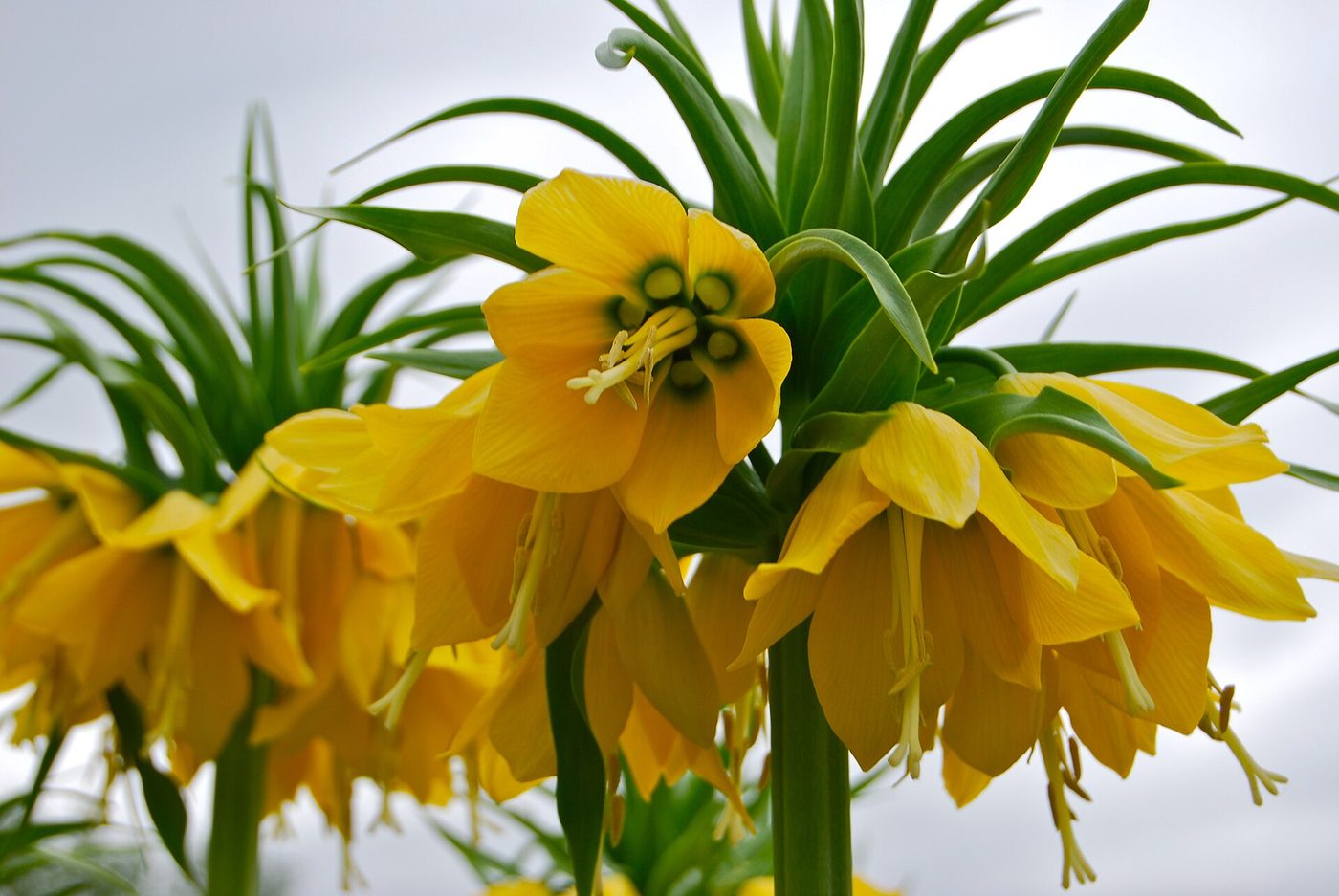
With its erect stem crowned by a ring of pendant bells topped by a tuft of leaves, the crown imperial is one of the most majestic bulbous flowers of spring.
Characteristics
A flower of regal bearing
The crown imperial is a bulbous plant of imposing and unmistakable appearance, among the most spectacular of spring gardens. From a sturdy erect stem, which can exceed a metre in height, hangs at the top a striking crown of bell-shaped flowers, orange, red or yellow depending on the variety, facing downward. Completing the picture, above the crown of flowers rises a characteristic tuft of green leaves, which recalls a royal crown and from which the plant's name derives.
Origin and cultivation
Native to a broad belt from Turkey to Central Asia, the crown imperial has been grown for centuries in gardens as an ornamental plant. It develops from a large bulb, which should be planted in autumn in fertile, deep, well-drained soil, in a sunny or partly shaded position. It flowers in spring, giving its spectacular bloom for a few weeks, then goes into rest after summer.
Care and characteristics
It is a relatively easy plant to grow, provided a few needs are respected: above all it fears waterlogging, which can rot the bulb, so good drainage is essential. A peculiarity of the crown imperial is its smell: it gives off a rather strong and characteristic aroma, not pleasant to everyone, which is said to keep certain small burrowing animals away from the garden.
In the garden
Thanks to its height and spectacular form, the crown imperial is ideal as an accent plant in borders, among spring flower beds or in isolated groups, where its regal bearing stands out above lower plants. It is a perfect choice for those who want a majestic and dramatic touch in the spring garden.
Note
Like many bulbous plants, the bulb of the crown imperial contains substances that may be irritant; it is therefore wise to handle it with care and to keep it, like all garden bulbs, out of the reach of children and pets.
Flowering season
Practical tips
Water needs: Moderate, fears waterlogging — always check soil moisture before watering.
Prefers Full sun or partial shade: provide the right light and rotate the plant for even growth.
Recommended soil: Fertile, deep and well-drained. Refresh the substrate every 1-2 years.
Dust the leaves with a damp cloth to support photosynthesis.
Feed during the growing season (spring-summer) and stop in winter.
Pros
- Majestic, spectacular bearing
- Unmistakable crown of pendant bells
- Perennial, returns each spring from the bulb
- Ideal as an accent plant in borders
Cons
- Fears waterlogging
- Strong, particular smell, not liked by everyone
- The bulb must be handled with care