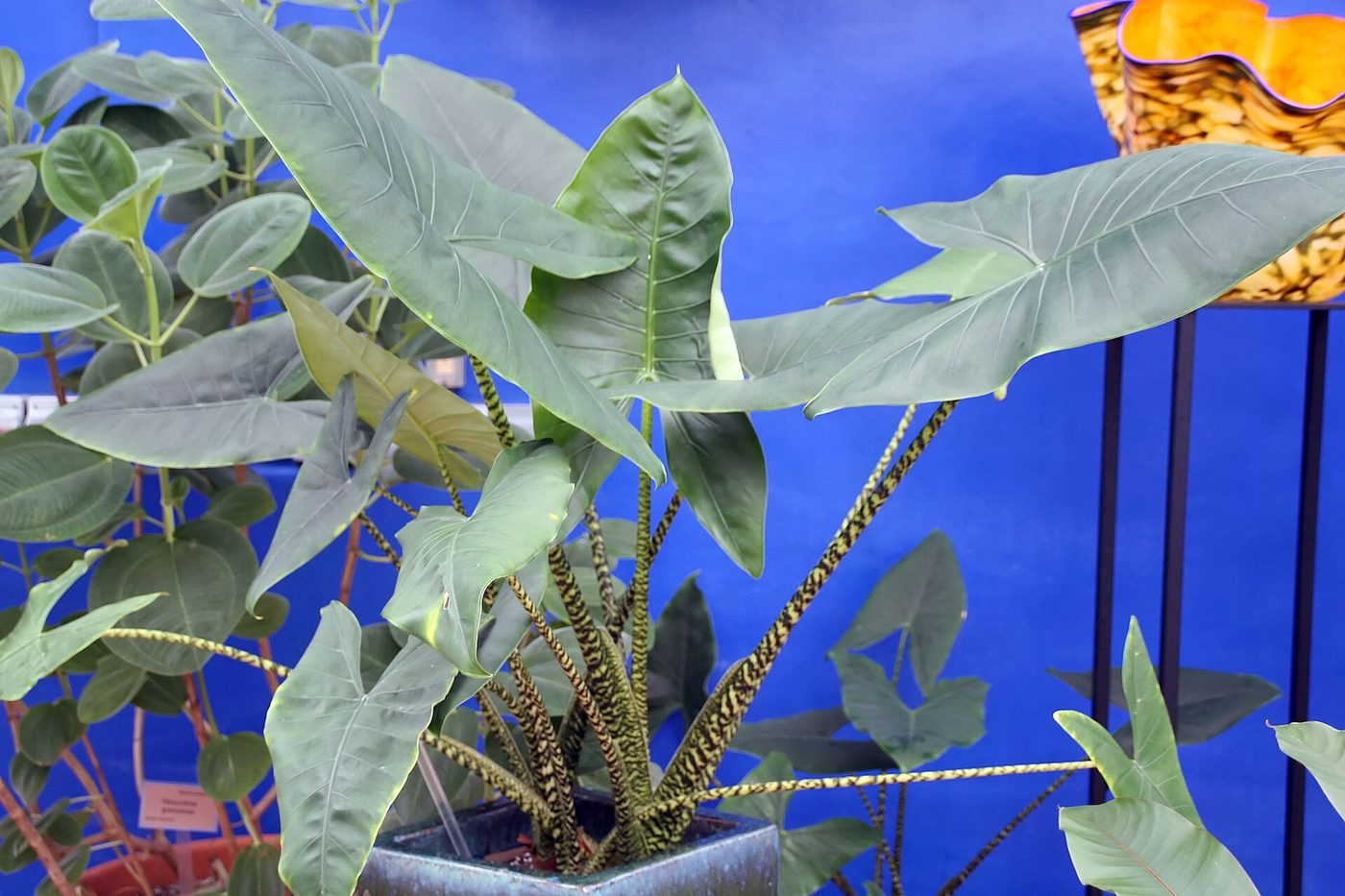
Photo: Photo by David J. Stang · CC BY-SA 4.0
Zebra plant (Alocasia)
Alocasia zebrina
Alocasia zebrina is a houseplant with zebra-striped petioles that hold up large arrowhead-shaped leaves.
Characteristics
The zebra-striped stems
Alocasia zebrina is a plant of the arum family, Araceae, grown worldwide as an ornamental. Its most distinctive feature is not the leaves but the long, upright petioles, striped in green and cream like a zebra's coat — hence the name. On these stems open large, glossy arrowhead-shaped leaves of an intense green. In Tagalog it is known as "gabing tigre".
Origin and habitat
It is endemic to several islands of the Philippines, including Luzon, Mindanao, Leyte and Samar, where it grows in the rainforest understorey. It is used to warmth, high humidity and light filtered by the canopy, without direct sun.
Cultivation
It loves bright but filtered light, a light, very airy mix made for aroids, and high ambient humidity. Water it regularly, keeping the mix just moist but never soggy: waterlogging rots the rhizome. It dislikes cold below 15 °C and draughts. The petioles tend to lean toward the light, so it helps to rotate the pot.
Warning: a toxic plant
Like all alocasias, it contains calcium oxalates and is toxic if eaten, causing irritation of the mouth and throat. Keep it away from children and pets and handle it with care.
Conservation
In the wild it is listed as a threatened species in the Philippines, and the collection of wild specimens is illegal. Plants on sale must come solely from controlled nursery propagation.
Flowering season
Practical tips
Water needs: Regular, mix just moist — always check soil moisture before watering.
Prefers Bright filtered light, no harsh direct sun: provide the right light and rotate the plant for even growth.
Recommended soil: Light, airy and free-draining aroid mix. Refresh the substrate every 1-2 years.
Dust the leaves with a damp cloth to support photosynthesis.
Feed during the growing season (spring-summer) and stop in winter.
Pros
- Decorative, unmistakable zebra-striped stems
- Large, very striking arrowhead leaves
- A high-impact statement houseplant
Cons
- Toxic if eaten
- Demanding on humidity and dislikes cold