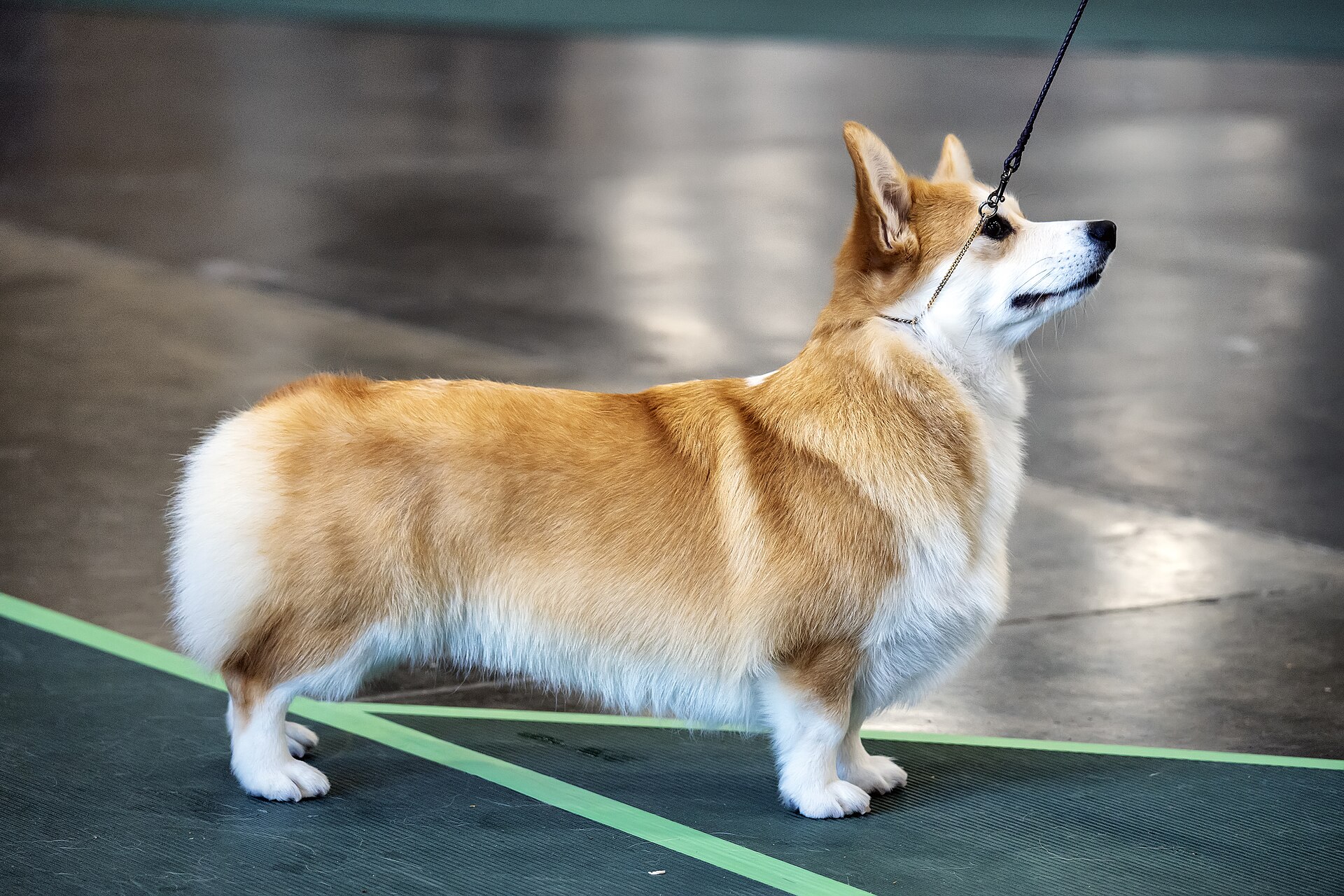
Pembroke Welsh Corgi
Characteristics
Temperament
A small, highly intelligent, lively, alert herding dog with a big character. Affectionate and bonded to its family, it is brave and self-confident, an excellent alarm dog (it tends to bark). From its cattle-droving past it inherits energy, alertness and a certain stubbornness, plus a tendency to "push" and sometimes to nip heels. Though small, it is NOT a "handbag" dog: it needs regular exercise, mental stimulation and consistent guidance. With the right training and activity it is a brilliant, fun and devoted companion.
Diet
It requires a complete, balanced diet for active small-to-medium dogs, with strict portion control: the corgi is greedy and tends easily to overweight. Keeping ideal weight is essential not only for the figure but above all for back health (the long spine is already strained) and joints. Treats and extras must be counted in the daily ration. Always-fresh water and a good level of exercise complete a correct management.
The Pembroke Welsh Corgi is one of the most recognizable and beloved small dogs in the world: a herding dog in miniature, with a long body, very short legs and a bright, smiling expression. Famous for:
- The long body and short legs: a funny, unmistakable silhouette
- The "fox" face: a fine head, large erect ears and an alert gaze
- The herding soul: despite its size, an energetic, determined cattle drover
- The marked intelligence: among the most intelligent and trainable dogs
- The bond with the British crown: the favourite breed of Queen Elizabeth II
- The (near) absence of a tail: the Pembroke has a very short tail or none
It enters the portal among the herding dogs, alongside the Belgian Malinois and the Maremma Sheepdog: with them it shares the calling to work with livestock, here in a small, "low-slung" format, perfect for its original task.
Classification and category
The Pembroke Welsh Corgi is a Canis lupus familiaris, a breed of small herding dogs originating from Pembrokeshire, Wales. In the portal it is placed among the herding dogs, consistent with its historic role as a cattle drover. It is useful to tell it apart from its "twin" breed and similar dogs: the Cardigan Welsh Corgi — the other corgi breed, older, slightly larger, with a long tail and more rounded ears; the Pembroke, instead, has a very short or absent tail and more pointed ears; the Swedish Vallhund and other small "low-slung" dogs — similar in silhouette, but of different origin and type; dachshunds (also in the portal) — although they have short legs, they are burrow dogs of an entirely different family, with a completely different muzzle and use. Etymology: the name "corgi" is thought to come from Welsh, perhaps from "cor gi", "dwarf dog", describing its small stature; "Pembroke" indicates the Welsh county of origin. Parameters: Height at the withers about 25-30 cm. Weight roughly 10-14 kg, with males a little heavier. Build a long, sturdy body on short legs (chondrodysplasia), anything but fragile. Longevity: good, on average 12-15 years with proper care. Reproduction: litters of normal size; it is important to turn to serious breeders, attentive above all to back and hip health.
Habitat and distribution
The Pembroke Corgi is a domestic breed: its "habitat" is life beside people, in the countryside as in the city. Some notes on origin and spread: origin the farms of Wales, where for centuries it was used as a cattle-droving dog; current spread worldwide as a companion dog, with a popularity that has grown enormously, thanks also to its "royal" fame and its presence on social media. The ideal environment for this dog: daily exercise (despite its short legs, it is athletic and needs regular walks and exercise); mental stimulation (activation games, training and "little jobs" make it happy; it is a dog that loves to have a purpose); and family life (it adapts both to a house with a garden and to a flat, as long as it does not lack activity and company). Historically, the corgi was a classic droving dog (heeler): it guided cows and other livestock by nipping at the animals' hocks and then dropping to the ground to dodge their kicks — a task for which its low silhouette is perfect. This origin explains much of its character: energy, alertness, a tendency to "push" and to vocalize. Status: a widespread, well-established domestic breed; there are no conservation issues, but there are important health matters (back, weight) that good breeders and owners must take into account.
Diet
The Pembroke Corgi needs careful feeding, above all because of its tendency to overweight and the particular structure of its back. In general: a complete, balanced diet for active small-to-medium dogs, suited to age, weight and activity level; strict portion control (the corgi is greedy and gains weight easily, and obesity is one of its main enemies); and attention to treats and "extras" (they must be counted in the daily ration). Practical tips: keep ideal weight (overweight greatly increases the risk of back problems — its long spine is already under strain — and joint problems); no "couch feasts" (the corgi can be very persuasive in asking for food, but giving in too much is harmful); and fresh water and a regular diet, combined with a good level of exercise. Crucially, for a corgi, keeping weight under control is not just a matter of figure but of back health and general welfare. Careful dietary management is one of the pillars of caring for this breed.
Physical features
A small but substantial dog, with a unique silhouette. The body and legs — the distinguishing trait: a long, sturdy body on very short legs (chondrodysplasia), giving it the characteristic "low and long" profile; a very short or absent tail in the Pembroke (unlike the Cardigan, which has a long tail); and solid musculature (despite the funny look, it is an athletic, hardy dog). The "fox" head: large, erect, pointed ears; a tapered muzzle and a bright, lively expression; and an intelligent gaze, often with a "smiling" air. The coat: a double coat (dense undercoat + topcoat), protecting it from the weather; colours red, fawn, sable, black-and-tan, often with white markings; and considerable shedding (the double coat needs regular brushing and sheds heavily).
Character, curiosities and care
The Pembroke Corgi is famous for being an intelligent, lively dog with a big character in a small body. It is alert, attentive, affectionate with the family and generally brave and self-confident, sometimes even a little "cheeky". From its droving past it inherits a determined temper and a notable capacity for initiative.
The Queen's dog: the Pembroke Corgi is inextricably linked to the figure of Queen Elizabeth II of the United Kingdom, who was devoted to the breed all her life and owned a great many, starting with the famous "Susan"; images of the sovereign surrounded by her corgis have made this breed an icon recognized worldwide. The "low-slung" herder: the corgi is by no means a mere lap dog: it is a true herding dog, bred to drove livestock; its method is that of the heeler: it lightly nips the hocks of cows to push them, then quickly drops to the ground to avoid the kicks; its low silhouette, far from being an aesthetic quirk, was a practical advantage in this work. The highly intelligent dog: the corgi is consistently ranked among the most intelligent and easily trained breeds; this mental liveliness is a gift and a responsibility: a bored, under-stimulated corgi can become stubborn, "talkative" or prone to managing behaviours (such as pushing or nipping people's heels, a legacy of the droving instinct). The two corgi breeds: there are two distinct Welsh corgi breeds, the Pembroke and the Cardigan; the Pembroke is the more widespread and popular, with a short or absent tail and pointed ears; the Cardigan is older, slightly larger, with a long tail and more rounded ears; though alike, they are considered separate breeds. The fairy legend: Welsh folklore tells that corgis were the steeds and herding dogs of the fairies and elves, and that the "lines" in the coat on the shoulders are the mark left by the little fairy saddles; a fascinating legend that has accompanied this breed for centuries. Practical care: the corgi needs regular exercise and mental stimulation (play, training, activity), strict weight control and attention to the back (limiting jumps and excessive strain), as well as coat care with frequent brushing. It tends to bark and to "guard", an aspect to manage with good training. In return it is a brilliant, fun and deeply affectionate companion.
Pros
- Piccolo ma robusto e atletico: unisce la praticità della taglia all'energia di un pastore
- Intelligentissimo e molto addestrabile
- Affettuoso, vivace e divertente, ottimo cane d'allarme
- Si adatta anche all'appartamento, purché con movimento e stimoli adeguati
Cons
- Tendenza al sovrappeso e al rischio di problemi alla schiena: serve molta attenzione
- Può abbaiare parecchio e tende a mordicchiare i talloni (istinto da conduzione)
- Perde molto pelo (doppio mantello), richiede spazzolature regolari
- Intelligente e testardo: si annoia e può combinare guai senza stimoli e guida coerente