Maned Wolf
Chrysocyon brachyurus
Characteristics
Temperament
Solitary, crepuscular-nocturnal, lifelong monogamous. UNIQUE MONOTYPIC GENUS (no close living relatives)! "Stilt wolf" (90-100 cm shoulder). Does NOT form packs. Pair lives separately 6 months/year. APOSEMATIC URINE smells of MARIJUANA. "Roar-bark" vocalisation audible at 3-5 km. South American Cerrado specialist. Symbiotic mutualism with lobeira (anti-parasite self-medication).
Diet
Unusual omnivore among canids: 50% fruit + 50% meat. Main plant: LOBEIRA (Solanum lycocarpum, "wolf's fruit") = 40% seasonal diet. Animal: rodents (paca, small agoutis), birds, reptiles, amphibians, insects. Solitary hunting with "jumping bounce". Species-specific mutualism with lobeira: disperses seeds + self-medicates (solanocapsine alkaloid against parasites). 0.5-1 kg food/day.
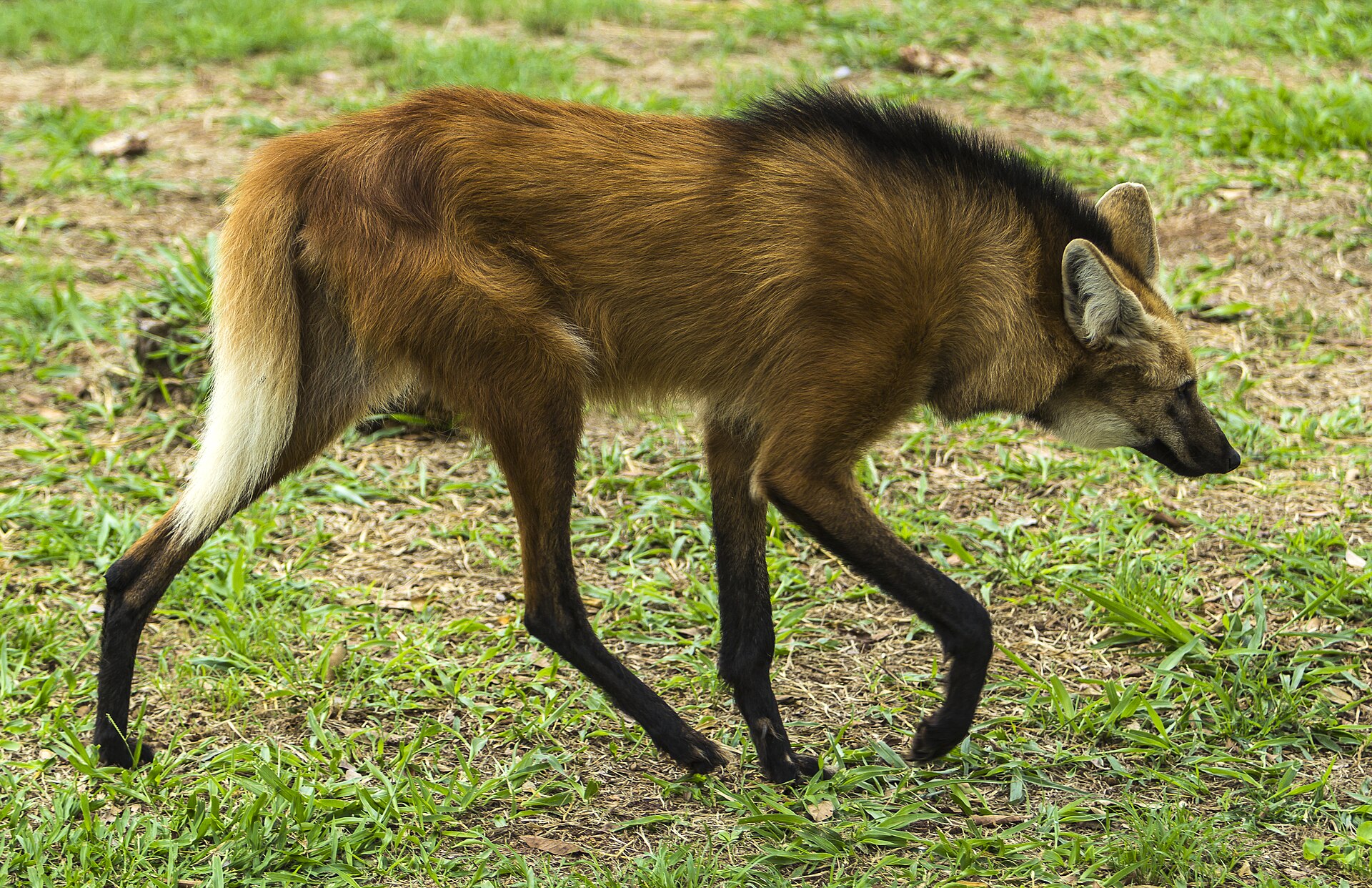
The Maned Wolf (Chrysocyon brachyurus), known in Portuguese as Lobo-guará, is the largest South American canid and unique in its genus (Chrysocyon) — no close living relatives! Nicknamed the "stilt wolf" for its extraordinary features:
- Ultra-long legs: 90-100 cm at shoulder (height of large German Shepherd), BUT with body of medium dog — adaptation to see over tall Cerrado grass
- Erect black mane: neck covered with 7-10 cm black hairs, raised as warning/aggression signal
- Reddish-orange coat: bright "fox" colour, very distinctive
- Unusual omnivorous diet: 50% fruit (especially lobeira, "wolf's fruit") + 50% meat — rare among canids
- Solitary: does NOT form packs, always alone or paired (breeding season only)
- Aposematic urine: territorial marking has such strong smell similar to marijuana/hashish that zoos often report "false police inspections"
- Lifelong monogamous: one of the very few truly monogamous canid species
- Monotypic genus: Chrysocyon contains only this species — last survivor of an ancient South American canid radiation
Distribution: South American Cerrado and Pampas: Brazil (main population), Paraguay, Argentina, Bolivia, Peru. IUCN status: Near Threatened (NT) — estimated population 17,000-23,000 mature individuals, slightly declining due to habitat loss (Cerrado agricultural expansion).
Classification and category
The Maned Wolf belongs to order Carnivora, family Canidae, subfamily Caninae, genus Chrysocyon. The genus is monotypic: contains only one living species. Genetic analyses show the Maned Wolf is genetically isolated — no close living relatives. Closest relative was the Falkland Islands Wolf (Dusicyon australis), extinct since 1876. More distant relatives: Bush Dog (Speothos venaticus), Crab-eating Fox (Cerdocyon thous), South American Foxes (Lycalopex spp.).
Etymology: "Chrysocyon" from Greek "chrysós" (gold) + "kyon" (dog) — reference to golden coat. "Brachyurus" from Greek "brachýs" (short) + "ourá" (tail). Described scientifically by Illiger in 1815.
Morphological parameters: Weight 20-30 kg (record 35 kg). Shoulder height 90-100 cm (German Shepherd size!). Head-body length 95-130 cm. Tail 28-45 cm. Longevity: 12-15 years in nature, up to 16-20 in captivity (record 22). Sexual maturity: 12-18 months. Gestation: 65-70 days. Litter: 2-5 cubs (avg 3). 1 litter/year.
Habitat and distribution
Exclusively South American, mostly in Cerrado (Brazilian tropical savanna) and Pampas. Current distribution: Brazil (~90% global population), Paraguay (~1,500), Argentina (~880), Bolivia (~1,000-3,000), Peru (~50-100), Uruguay (EXTINCT 1990). Preferred habitats: Cerrado (main habitat — 1-2 m tall grass!), Pampas, Pantanal margins, Chaco. The ultra-long legs are a SPECIALISED adaptation for the Cerrado to see over tall grass. IUCN: Near Threatened. CITES: Appendix II. Threats: habitat destruction (Cerrado lost >50% of original extent for soy/eucalyptus), road accidents (main cause of adult mortality), persecution, domestic dog diseases.
Diet
Unusual omnivore: ~50/50 vegetable/animal diet — rare among canids! Vegetable component (40-50%): lobeira (Solanum lycocarpum, "wolf's fruit") = up to 40% of seasonal diet, jaboticaba, pequi, jatobá, wild fruits, seeds, tubers, grasses. Animal component (40-50%): small mammals (paca, cavies, agoutis, armadillos, opossums), birds (tinamou), reptiles (lizards, non-venomous snakes), amphibians, fish, insects, occasional chickens/livestock. Hunting technique: solitary, patrolling territory (5-30 km/night), olfactory/acoustic location, "jumping bounce" pounce on rodents. Mutualism with lobeira: Maned Wolf disperses seeds in feces, plant's solanocapsine alkaloid combats parasitic nematodes — self-medication!
Physical features
Unique silhouette — "dog on stilts" or "very tall fox". Coat: bright reddish-orange base, 7-10 cm long black mane on nape (erectile), black "stockings" from knees down, white throat/chin/tail-tip, white belly. Cubs born BLACK-BROWN (anti-predator camouflage), turn adult colour at 10-12 months. Head: large erect ears (15-20 cm), yellow-amber eyes, long fox-like muzzle, relatively weak jaws (frugivore adaptation). Legs: ULTRA-LONG, slender. Shoulder height 90-100 cm (unique among canids). Gait: ambling — both legs on same side move together (like giraffe, camel). Max speed 55-65 km/h. Tail 28-45 cm (short — "brachyurus"). Vocalisations: "roar-bark" audible at 3-5 km!
Behaviour and curiosities
Solitary, crepuscular-nocturnal, lifelong monogamous. Does NOT form packs (rare among canids). Territory 25-30 km² per pair, but pair lives separately most of year. Breeding April-June. Gestation 65-70 days. Litter 2-5 cubs. Father brings food to lactating mother — unusual paternal behaviour for solitary canid! Cubs independent at 6-12 months.
Famous curiosity: "marijuana urine". The urine contains 2,5-dimethylpyrazine and other aromatics smelling strongly like marijuana/hashish. Zoos (Rotterdam, San Diego, Smithsonian National Zoo) have received "false police inspections" — visitors smell marijuana. Functions as aposematic territorial marking. "Monotypic genus": Maned Wolf is the most genetically isolated canid alive — closest relative is the extinct Falkland Islands Wolf (1876). "Stilt wolf": ultra-long legs are specific Cerrado adaptation — no other canid has this morphology. "Lobeira" symbiosis: plant depends on Maned Wolf for seed dispersal, Maned Wolf self-medicates against parasites with alkaloid solanocapsine. Brazilian R$ 200 banknote (2020) features the Maned Wolf. Argentina reintroduction: 12 individuals released since 2018 in Iberá, 25+ individuals by 2023 — successful rewilding.
Pros
- Genere monotipico — unico al mondo, fascino evolutivo
- Icona del Cerrado, su banconota brasiliana R$200 (2020)
- Mutualismo specie-specifico con lobeira
- Programmi di reintroduzione Argentina (Iberá) di successo
Cons
- IUCN Near Threatened, popolazione in declino
- Cerrado distrutto >50% per agricoltura (soia)
- Alta mortalità da investimenti stradali
- Vulnerabile a malattie virali da cani domestici