Photo: Jerzy Opioła · CC BY-SA 4.0
Emerald ripple peperomia
Peperomia caperata
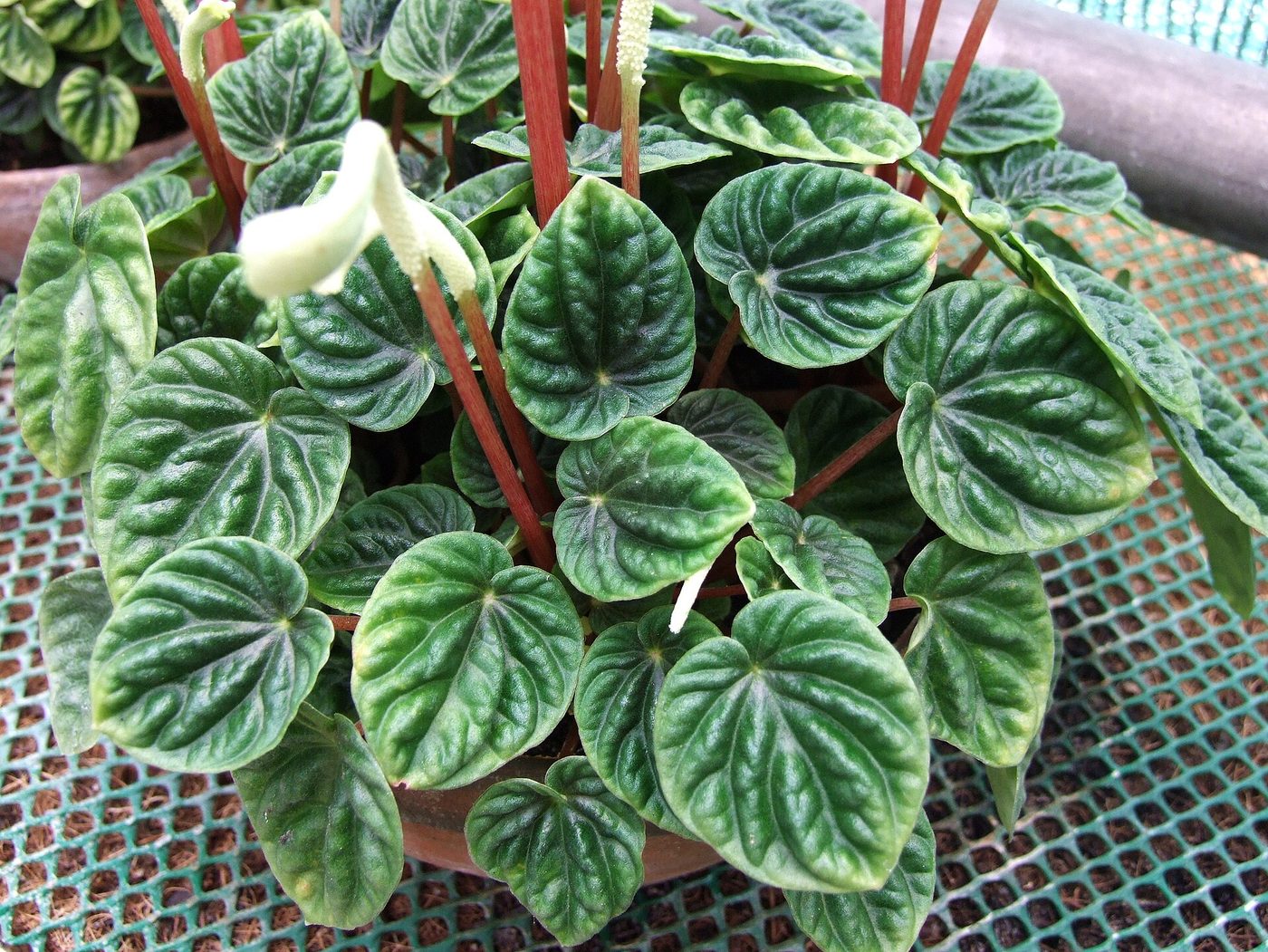
The emerald ripple peperomia is a small houseplant with deeply corrugated heart-shaped leaves and curious white spike flowers, easy and compact.
Characteristics
Leaves corrugated like velvet
The emerald ripple peperomia is a small evergreen perennial of the pepper family, Piperaceae. It forms a compact little mound about 20 cm tall and wide, of deeply corrugated heart-shaped leaves with an almost wrinkled, honeycombed look, in a rich green often veined with purple or bronze. In summer it produces slender upright spikes of tiny white flowers, resembling little mouse tails.
Origin and habitat
It is native to the rainforests of Brazil, where it grows as an understorey plant on trunks and humus-rich soil. This explains its preferences: bright shade, warmth and humidity, without direct sun that would scorch its foliage.
Cultivation
It is an easy houseplant, well suited to beginners. It loves filtered light or bright part shade and a light, well-draining mix. Its slightly fleshy leaves store water, so it should be watered moderately, letting the top few centimetres of soil dry out between waterings: waterlogging rots the roots. It dislikes cold below 12 °C.
Care and facts
Thanks to its small size it is perfect for desks, shelves and terrariums. It propagates easily from leaf cuttings, like African violets. It is non-toxic, so it is safe even in homes with children and pets. There are many cultivars with red, silvery or variegated leaves.
Flowering season
Practical tips
Water needs: Moderate, succulent leaves — always check soil moisture before watering.
Prefers Filtered light or part shade, no direct sun: provide the right light and rotate the plant for even growth.
Recommended soil: Light, well-draining and humus-rich. Refresh the substrate every 1-2 years.
Dust the leaves with a damp cloth to support photosynthesis.
Feed during the growing season (spring-summer) and stop in winter.
Pros
- Compact, perfect for desks and terrariums
- Easy and beginner-friendly
- Non-toxic, safe with children and pets
Cons
- Dislikes cold and waterlogging
- Direct sun scorches the leaves