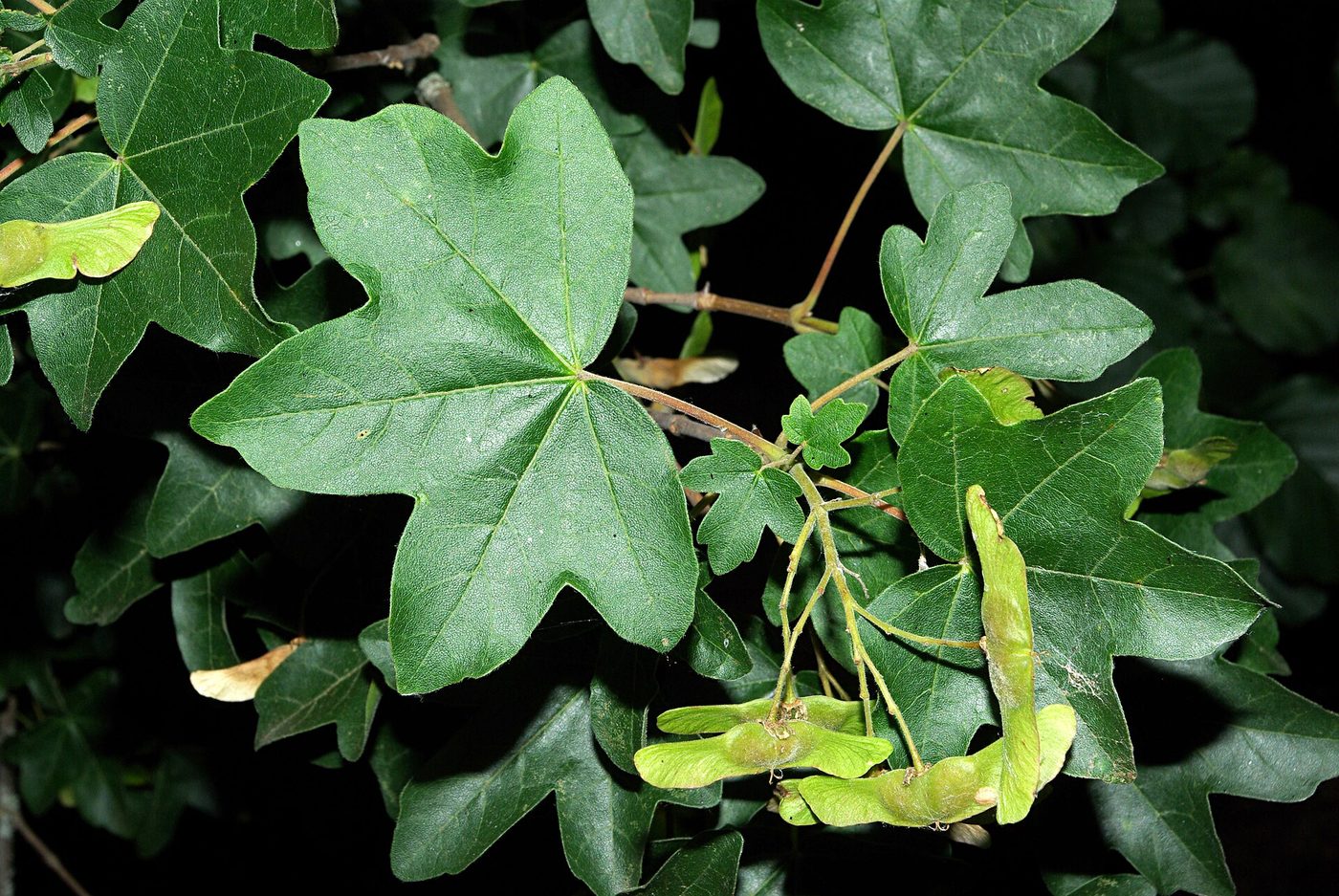
Photo: David Perez · CC BY 3.0
Field maple
Acer campestre
Modest but extremely tough, the field maple is the tree of hedgerows and countryside, able to offer a bright golden yellow in autumn.
Characteristics
A hardy tree of the countryside
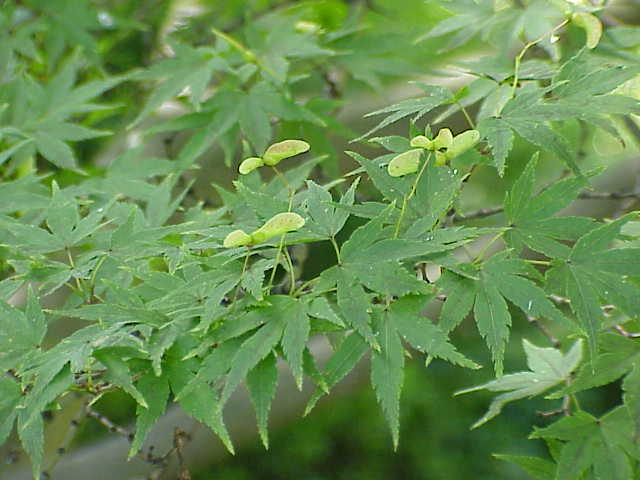
The field maple is a tree of modest size, often regarded more as a large shrub than a majestic tree. It rarely exceeds twenty metres and has a compact habit, with a dense, rounded crown. Its leaves, small and with five soft-outlined lobes, are a deep green in summer and turn a warm golden yellow in autumn, offering one of the finest moments of the year. Its fruits are the typical winged samaras of the maples, arranged almost in a straight line, which the wind disperses spinning like little propellers.
The bark, pale and slightly corky on young branches, is another distinctive feature of the species.
Where it grows
It is a tree widespread across much of Europe and western Asia. It is commonly found at the edges of woods, along country hedges, in clearings and in cultivated land. Its great adaptability makes it present both in lowlands and hills, and it tolerates well the calcareous and poor soils where other trees struggle.
Cultivation and care
The field maple is one of the easiest and hardiest species to grow. It adapts to almost all soil types, withstands drought once established, resists cold and wind and does not fear pruning, which makes it ideal for hedges and windbreaks. It prefers sunny or partly shaded positions. Its growth is slow to moderate, but its longevity and robustness make it a reliable choice for gardens and rural landscapes.
Uses and curiosities
Thanks to its ability to withstand frequent cutting, the field maple has for centuries been the favoured tree for the living hedges that bounded fields. Its wood, hard and compact, is valued in carpentry and for small turning work. It is also an important tree for biodiversity, offering shelter and food to numerous insects and birds.
An ally of the landscape
Classified as least concern, the field maple is not a threatened species. Its hardiness, the beauty of its autumn foliage and its ecological usefulness make it an excellent choice for renaturalising countryside and gardens, helping to keep alive the traditional hedges of the European landscape.
Flowering season
Practical tips
Water needs: Low, drought tolerant — always check soil moisture before watering.
Prefers Full sun or partial shade: provide the right light and rotate the plant for even growth.
Recommended soil: Adaptable, even calcareous and poor. Refresh the substrate every 1-2 years.
Dust the leaves with a damp cloth to support photosynthesis.
Feed during the growing season (spring-summer) and stop in winter.
Pros
- Extremely hardy and adaptable
- Splendid golden-yellow foliage in autumn
- Ideal for hedges and windbreaks
- Tolerates drought, cold and frequent pruning
Cons
- Slow growth
- Less majestic habit than other maples