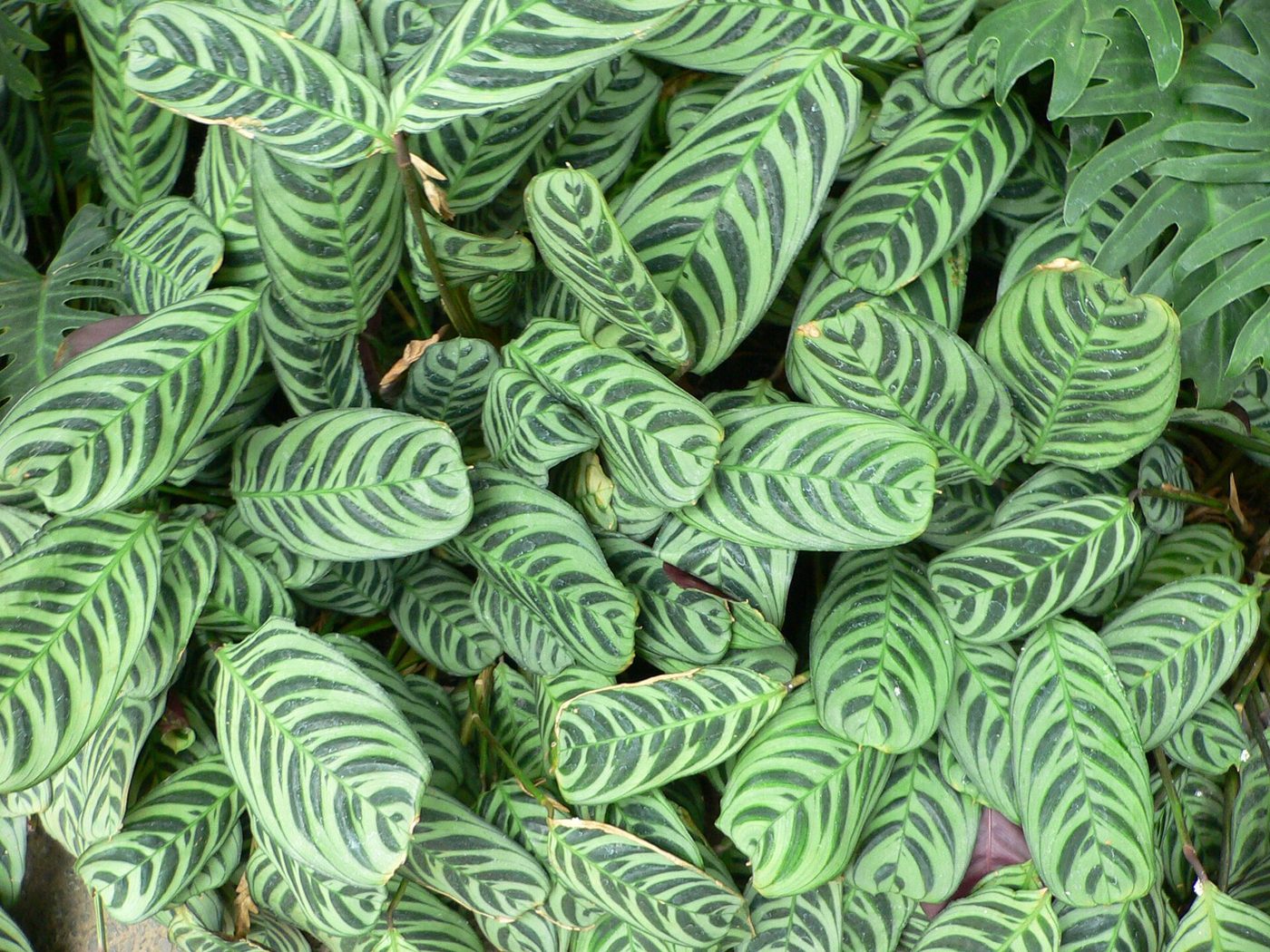
Photo: Mark Pellegrini · CC BY-SA 2.5
Fishbone prayer plant
Ctenanthe burle-marxii
The fishbone prayer plant is a houseplant with leaves patterned like a fish skeleton, which lift up at night as if in prayer.
Characteristics
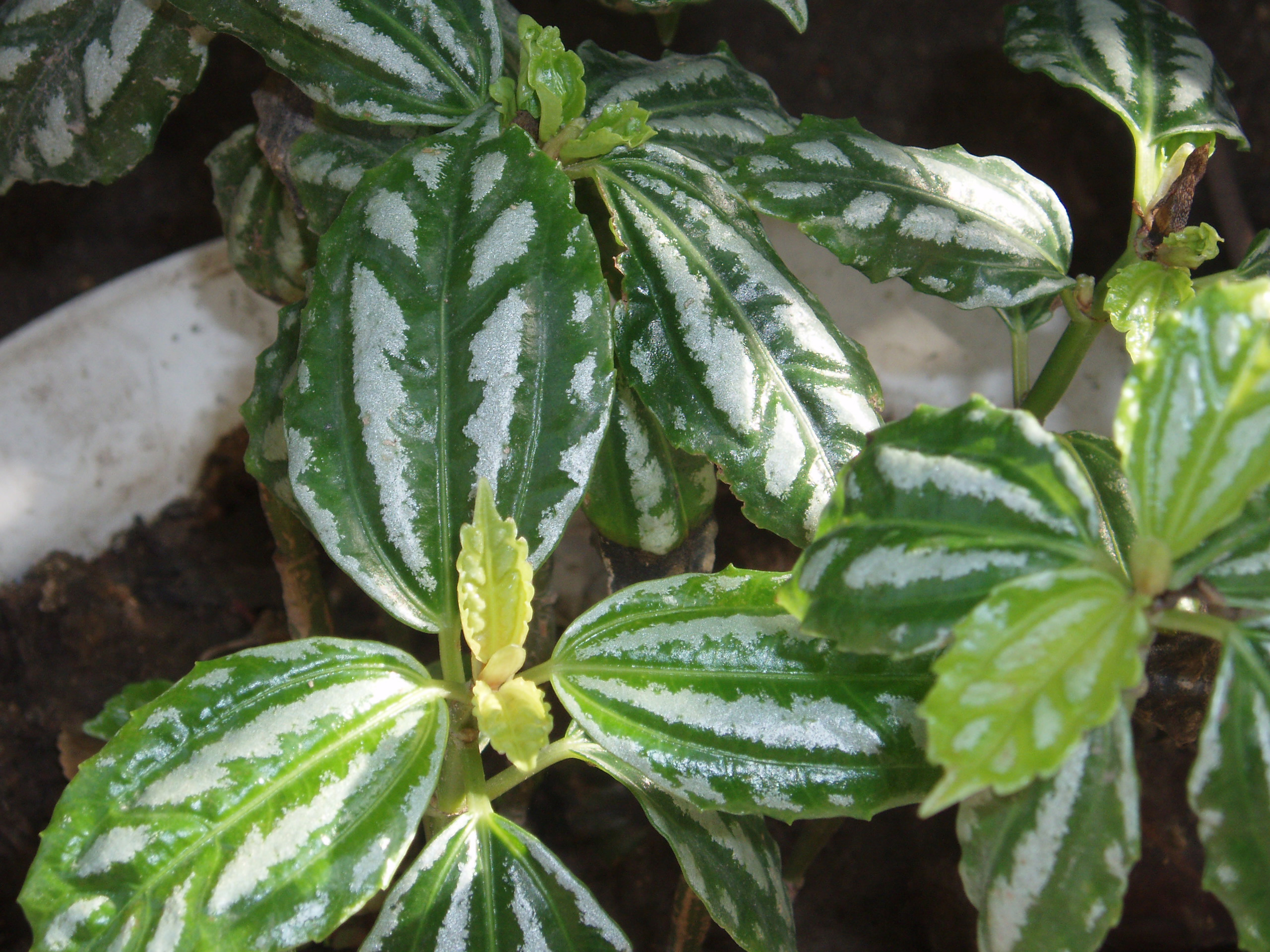
Leaves patterned like a fish skeleton
The fishbone prayer plant is a perennial herb of the arrowroot family, Marantaceae, the same as calatheas and marantas. Its oval, pale-green leaves are decorated with an elegant pattern of alternating dark bars along the central vein, recalling the skeleton of a fish — hence the common name. The undersides of the leaves are often flushed with purple. The scientific name honours the celebrated Brazilian landscape architect Roberto Burle Marx.
Origin and habitat
It is native to Brazil, where it grows as a ground-covering plant in the rainforest understorey, often in shade. It therefore prefers warm, humid, filtered-light settings, without direct sun that would fade its foliage.
The prayer plant
Like its Marantaceae relatives, it shows nyctinasty: at nightfall the leaves lift and fold upward, reopening in the morning. This movement, recalling hands joined in prayer, earns it the nickname prayer plant.
Cultivation
It loves filtered light or bright part shade, a light, rich mix kept always slightly moist, and high ambient humidity. Water it with non-hard water, avoiding waterlogging. It dislikes cold below 13 °C and draughts. It enjoys misting and the company of other tropical plants.
Care
Dry leaf tips usually mean air that is too dry or water that is too hard. It is non-toxic, so it is safe even in homes with children and pets. It propagates by dividing the clump in spring.
Flowering season
Practical tips
Water needs: Regular, mix always slightly moist — always check soil moisture before watering.
Prefers Filtered light or part shade, no direct sun: provide the right light and rotate the plant for even growth.
Recommended soil: Light, humus-rich and free-draining. Refresh the substrate every 1-2 years.
Dust the leaves with a damp cloth to support photosynthesis.
Feed during the growing season (spring-summer) and stop in winter.
Pros
- Decorative fishbone-patterned leaves
- Night-time 'prayer' movement
- Non-toxic, safe with children and pets
Cons
- Demanding about humidity and non-hard water
- Dislikes cold and draughts