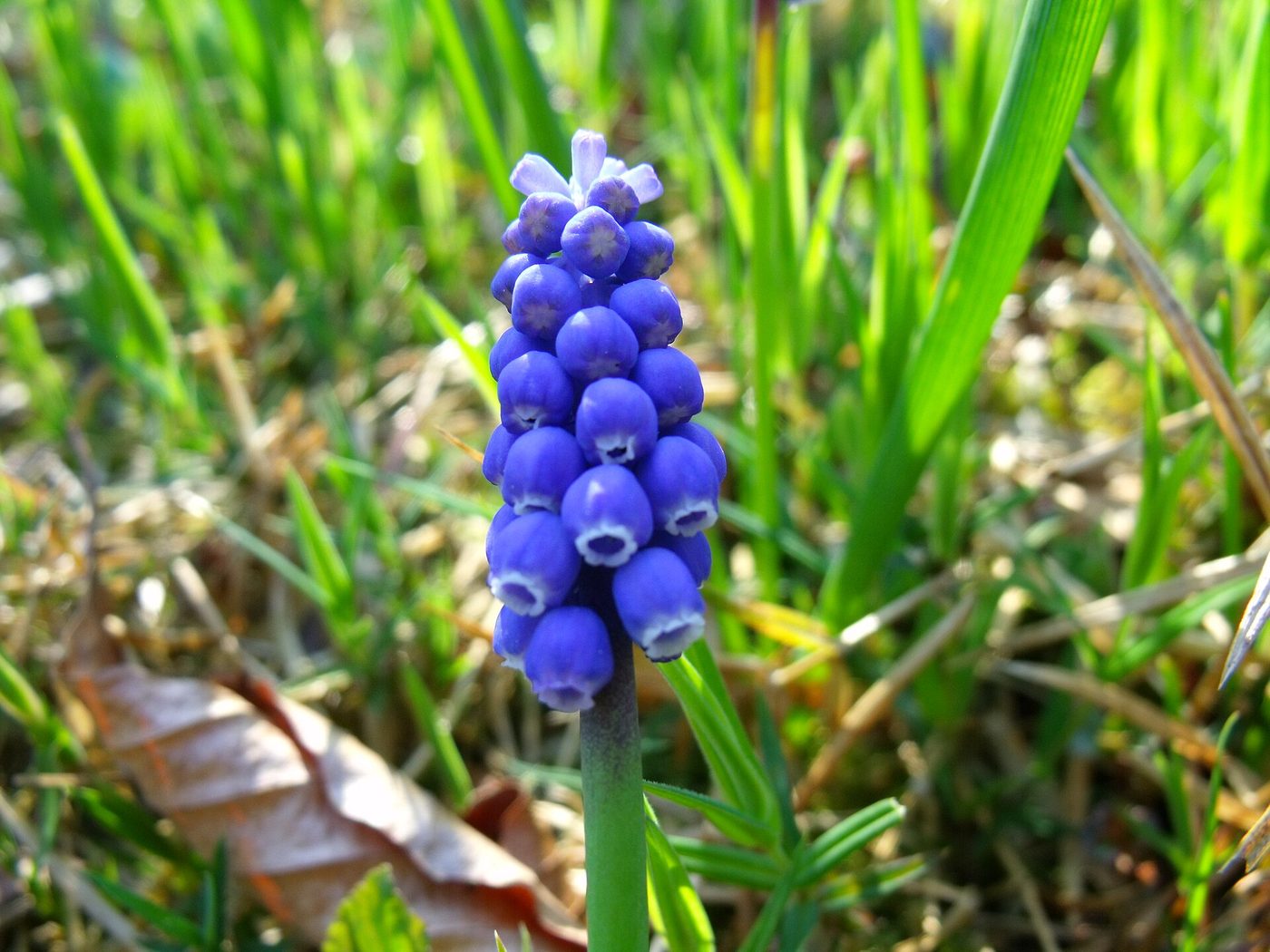
Photo: Oceancetaceen Alice Chodura · CC BY-SA 3.0
Grape hyacinth
Muscari armeniacum
The grape hyacinth is a small bulbous plant that in spring forms dense carpets of spikes of tiny blue flowers like upside-down bunches of grapes.
Characteristics
Description
The grape hyacinth, or Armenian grape hyacinth, is a small bulbous perennial of the asparagus family. Growing 15-20 centimetres tall, it forms tufts of narrow, strap-shaped leaves from which short flower spikes rise in spring. The flowers, tiny and urn-shaped, are an intense blue-violet, arranged in dense clusters that resemble small upside-down bunches of grapes. There are also white and pink varieties.
Origin and distribution
It is native to the eastern Mediterranean, from Greece and Turkey to the Caucasus, including Armenia, which gives it its name. It grows wild in open woods and meadows, and is widely cultivated in gardens around the world.
Cultivation
It is a very easy, hardy bulb, perfect for borders, beds and woodland. It wants full sun or part shade and a well-drained soil. The bulbs are planted in autumn; the leaves often appear before winter. After spring flowering the plant goes into summer dormancy. It naturalises easily, forming broad flowery carpets over time.
- Plant the bulbs in autumn, a few centimetres deep
- Let the foliage die down after flowering
- Divide the bulbs when the clumps become too dense
Did you know?
Grape hyacinths are among the flowers most loved by bees in early spring. Their early flowering and intense blue make them ideal for creating drifts of colour under deciduous trees and shrubs.
Flowering season
Practical tips
Water needs: Moderate in spring, low in summer — always check soil moisture before watering.
Prefers Full sun or part shade: provide the right light and rotate the plant for even growth.
Recommended soil: Well-drained, ordinary. Refresh the substrate every 1-2 years.
Dust the leaves with a damp cloth to support photosynthesis.
Feed during the growing season (spring-summer) and stop in winter.
Pros
- Early, generous spring flowering
- Very easy and hardy, naturalises by itself
- Flowers much loved by bees
Cons
- Can spread and become invasive
- Foliage withers and disappears in summer
- Mildly toxic if eaten in quantity