Photo: Wikimedia Commons · CC BY-SA 3.0
Lily of the valley
Convallaria majalis
Small and delicate, with its intensely fragrant white bells, lily of the valley is a symbol flower of spring, but the whole plant is very poisonous.
Characteristics
The fragrant bells of spring
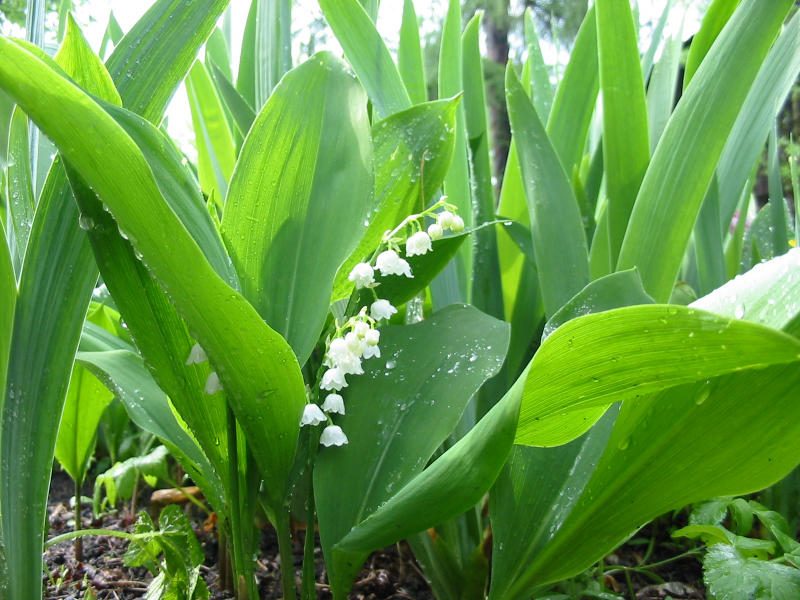
Lily of the valley is a small perennial herbaceous plant, famous for its very delicate flowers and its intense, unmistakable fragrance. From a slender, elegant stem hang numerous white, round, waxy little bells, all arranged on one side, which bloom in spring between two large, bright green leaves. The flowering is followed by small red berries. Despite its pretty and innocent appearance, it is worth remembering from the outset that the whole plant, including the berries, is very poisonous.
Habitat and distribution
Lily of the valley grows wild in the shady, cool woods of much of Europe and temperate Asia, often forming extensive carpets in the undergrowth. It prefers shaded places and cool soils rich in humus, typical of beech woods and broadleaf forests. It spreads by creeping rhizomes, from which new plants sprout, colonising wide areas.
A beauty not to be consumed
Lily of the valley contains substances that act powerfully on the heart, present in all parts of the plant. For this reason it must never be ingested: the pretty red berries in particular can be dangerous if mistaken for edible fruit, especially by children. It should therefore be grown and admired with awareness of its toxicity, and handled with care.
Cultivation
It is a much-loved plant in gardens, ideal for brightening shady, moist corners where few other plants flower. It is easily grown in cool, rich soil, in shade or partial shade, and once established it tends to spread vigorously through its rhizomes. It is also prized as a fragrant cut flower, but must be kept out of the reach of children and pets.
Symbolism and curiosities
Lily of the valley has for centuries been a flower rich in meaning: a symbol of sweetness, humility and the return of happiness, in many cultures it is associated with spring and the month of May. In some countries it is a tradition to give a sprig of it as a wish for good luck. Its delicate fragrance is also much used in perfumery.
Flowering season
Practical tips
Water needs: Regular, cool soil — always check soil moisture before watering.
Prefers Shade or partial shade: provide the right light and rotate the plant for even growth.
Recommended soil: Rich in humus, cool. Refresh the substrate every 1-2 years.
Dust the leaves with a damp cloth to support photosynthesis.
Feed during the growing season (spring-summer) and stop in winter.
Pros
- Very fragrant, delicate flowers
- Ideal for shady, cool corners
- Hardy and easy to grow
- Rich in symbolism and traditions
Cons
- Very poisonous in all its parts
- The red berries are dangerous, especially to children
- Can spread invasively