Photo: Kor!An (Андрей Корзун) · CC BY-SA 3.0
Sweet William
Dianthus barbatus
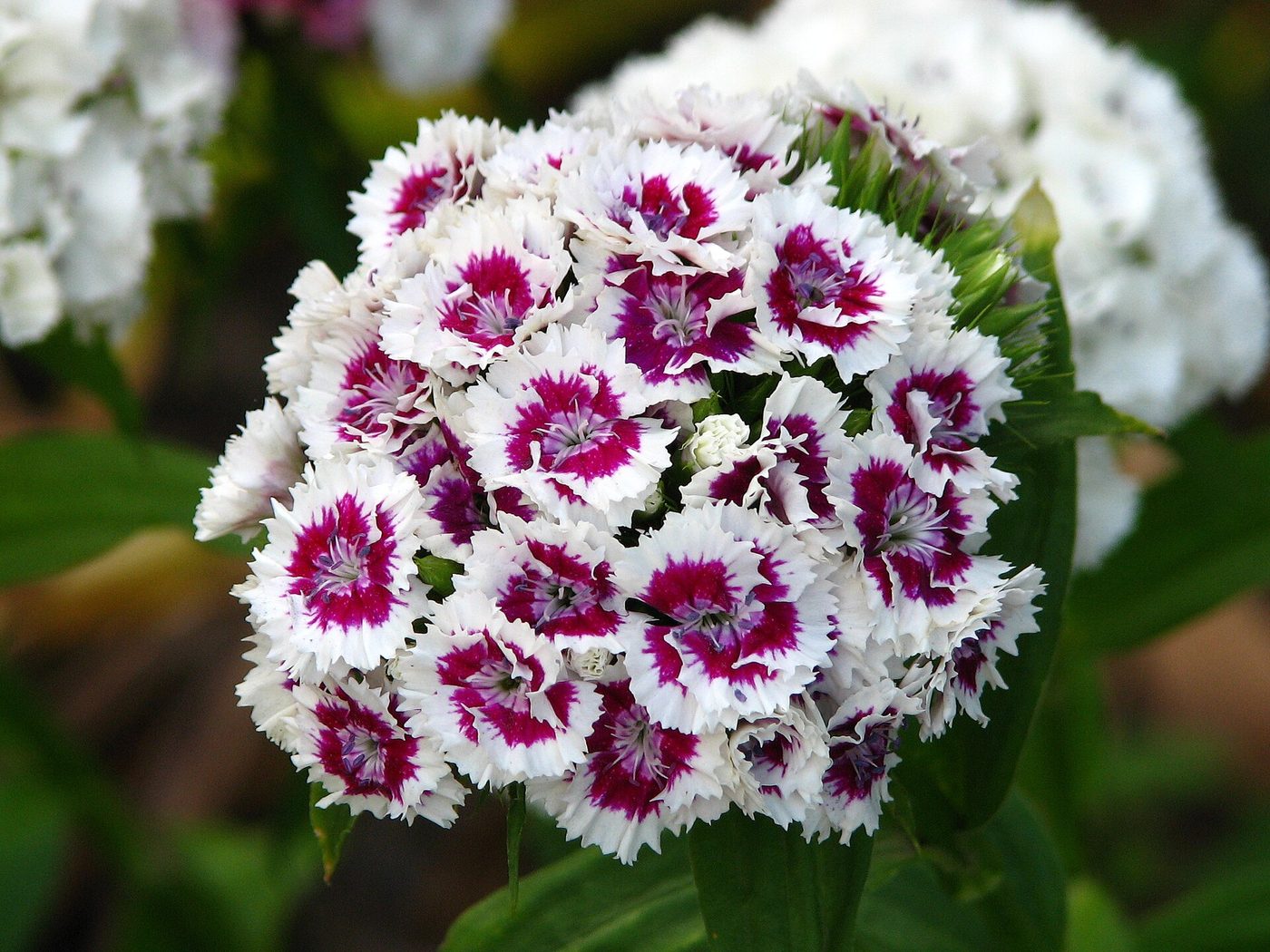
A fragrant, colourful garden flower, sweet William forms dense clusters of small blooms with serrated petals in countless shades of pink, red and white.
Characteristics
A posy of colour
Sweet William is one of the most beloved bedding plants in gardens. It belongs to the pink genus (Dianthus) and forms upright stems topped by dense clusters of up to thirty small flowers each. Every flower, a few centimetres across, has five petals with finely serrated edges and gives off a sweet, spicy scent. Wild forms are red with a white base, but the countless cultivated varieties range from white to pink, red and purple, and even bicoloured and eyed patterns.
Origin and habitat
It is native to southern Europe and parts of Asia, from the Pyrenees and the Balkans to eastern Asia. It has become a classic in gardens the world over, where it sometimes naturalises and runs wild.
Cultivation
It is a herbaceous biennial or short-lived perennial: it is often sown one year to flower abundantly the next. It wants full sun or partial shade and a fertile, well-drained soil, neutral to slightly limy. It is hardy and stands cold well. It flowers from late spring into summer, giving long fragrant displays; removing the spent flowers prolongs the show.
Curiosities and uses
The flowers are edible and are sometimes used to decorate dishes and desserts. It is an excellent nectar plant: it attracts bees, butterflies and birds, contributing to garden biodiversity. It is also ideal for borders and cut-flower bunches.
Care
It needs little attention: moderate watering, avoiding the waterlogging that rots the crown, and a sunny position. It is easy to sow and readily reproduces.
Flowering season
Practical tips
Water needs: Moderate — always check soil moisture before watering.
Prefers Full sun or partial shade: provide the right light and rotate the plant for even growth.
Recommended soil: Fertile, well-drained, neutral to limy. Refresh the substrate every 1-2 years.
Dust the leaves with a damp cloth to support photosynthesis.
Feed during the growing season (spring-summer) and stop in winter.
Pros
- Colourful, fragrant flower clusters
- Easy to sow and grow
- Attracts bees, butterflies and birds; edible flowers
Cons
- Short-lived: biennial or short-lived perennial
- Rots with waterlogging
- Must be resown for consistent flowering