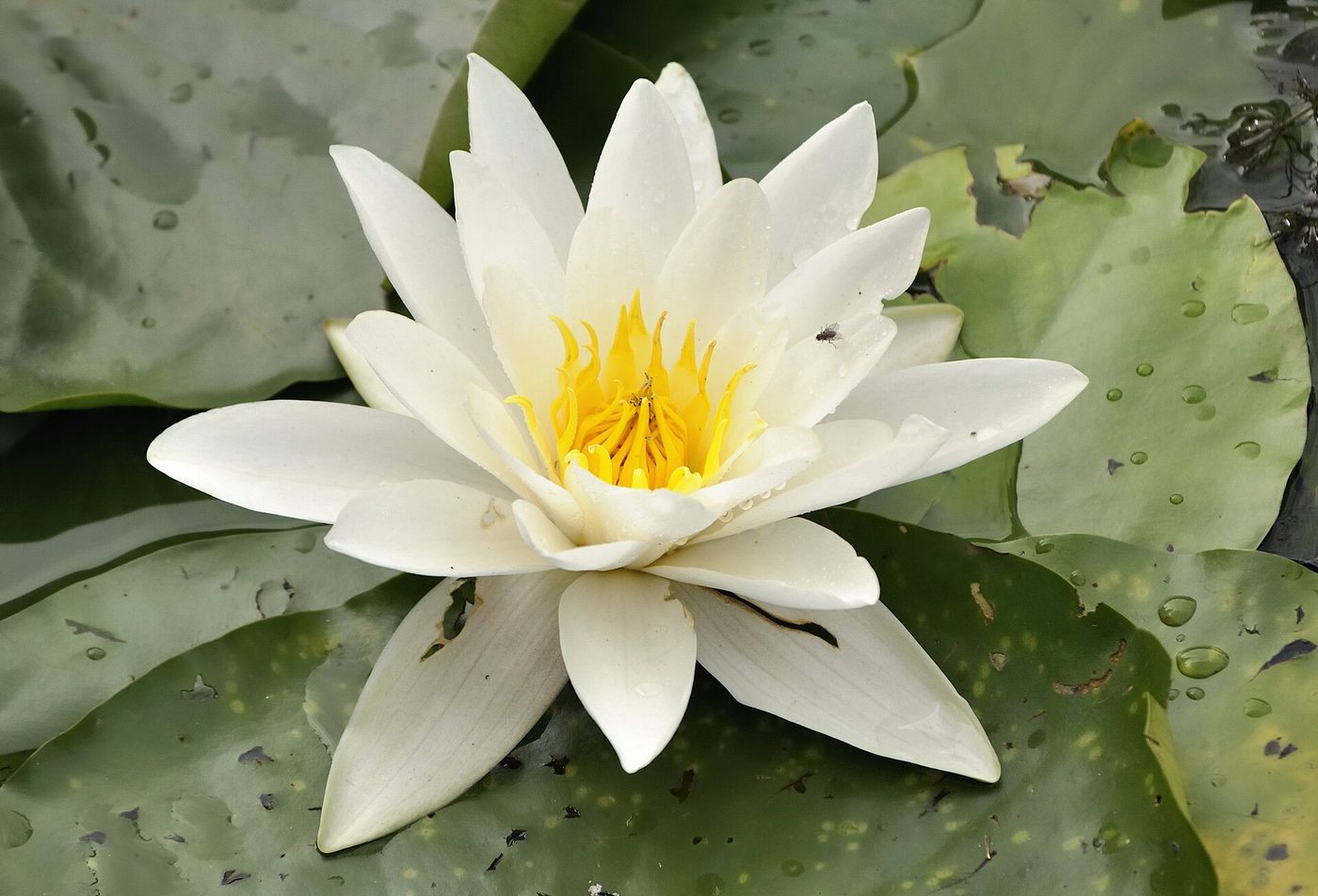
Photo: DerHexer · CC BY-SA 3.0
White water lily
Nymphaea alba
Queen of the ponds, the white water lily floats on the water with its round leaves and pure white flowers, rooted in the mud but reaching for the light.
Characteristics
A flower that floats on water
The white water lily is one of the most beautiful and well-known aquatic plants in Europe. It lives in still or slow-moving fresh waters, such as ponds, small lakes and canals, where it sinks its roots into the mud of the bottom while leaves and flowers float on the surface. The leaves are large, round and leathery, with a slit that makes them heart-shaped, and they form green carpets on the water. The flowers, pure white and fragrant, with numerous petals arranged in a spiral around a yellow centre, open in the morning and close in the evening.
A plant rooted in water
The water lily is perfectly adapted to aquatic life. From the sturdy rhizome anchored to the bottom rise long, flexible stems that reach the surface, carrying the leaves and flowers. This structure lets it thrive in even deep waters, exploiting the sunlight at the surface while remaining firmly rooted below. It is a perennial plant that in autumn loses its aerial part and overwinters with the rhizome on the bottom.
Cultivation in the garden
The white water lily is much used to adorn garden ponds and pools. It requires still water, a sunny exposure and a muddy bottom or a container with suitable soil in which to root the rhizome. It should be placed at an appropriate depth, neither too shallow nor too deep. It is a hardy, cold-resistant plant, able to overwinter outdoors in temperate climates. Besides its beauty, it offers bodies of water shade and shelter for fish and other animals.
Curiosities
Water lilies have fascinated artists and cultures of every age, becoming a symbol of purity and rebirth for the way the immaculate flower rises from the water and mud. Their image recurs in art, from ancient decorations to the famous paintings of Impressionism.
Conservation
The white water lily is widespread and is not considered threatened overall, but like all aquatic plants it depends on the health of wetlands. Water pollution, the draining of ponds and the alteration of freshwater environments can reduce its presence. Keeping ponds and bodies of water clean is important for it and for the whole aquatic ecosystem.
Flowering season
Practical tips
Water needs: Aquatic: lives immersed in still water — always check soil moisture before watering.
Prefers Full sun: provide the right light and rotate the plant for even growth.
Recommended soil: Muddy bottom or container with suitable soil. Refresh the substrate every 1-2 years.
Dust the leaves with a damp cloth to support photosynthesis.
Feed during the growing season (spring-summer) and stop in winter.
Pros
- Splendid fragrant white flowers on the water
- Hardy and cold-resistant
- Offers shade and shelter to fish and pond wildlife
- Perfect for garden ponds and pools
Cons
- Requires a body of still water
- Can spread widely and cover the surface
- Needs appropriate depth and placement