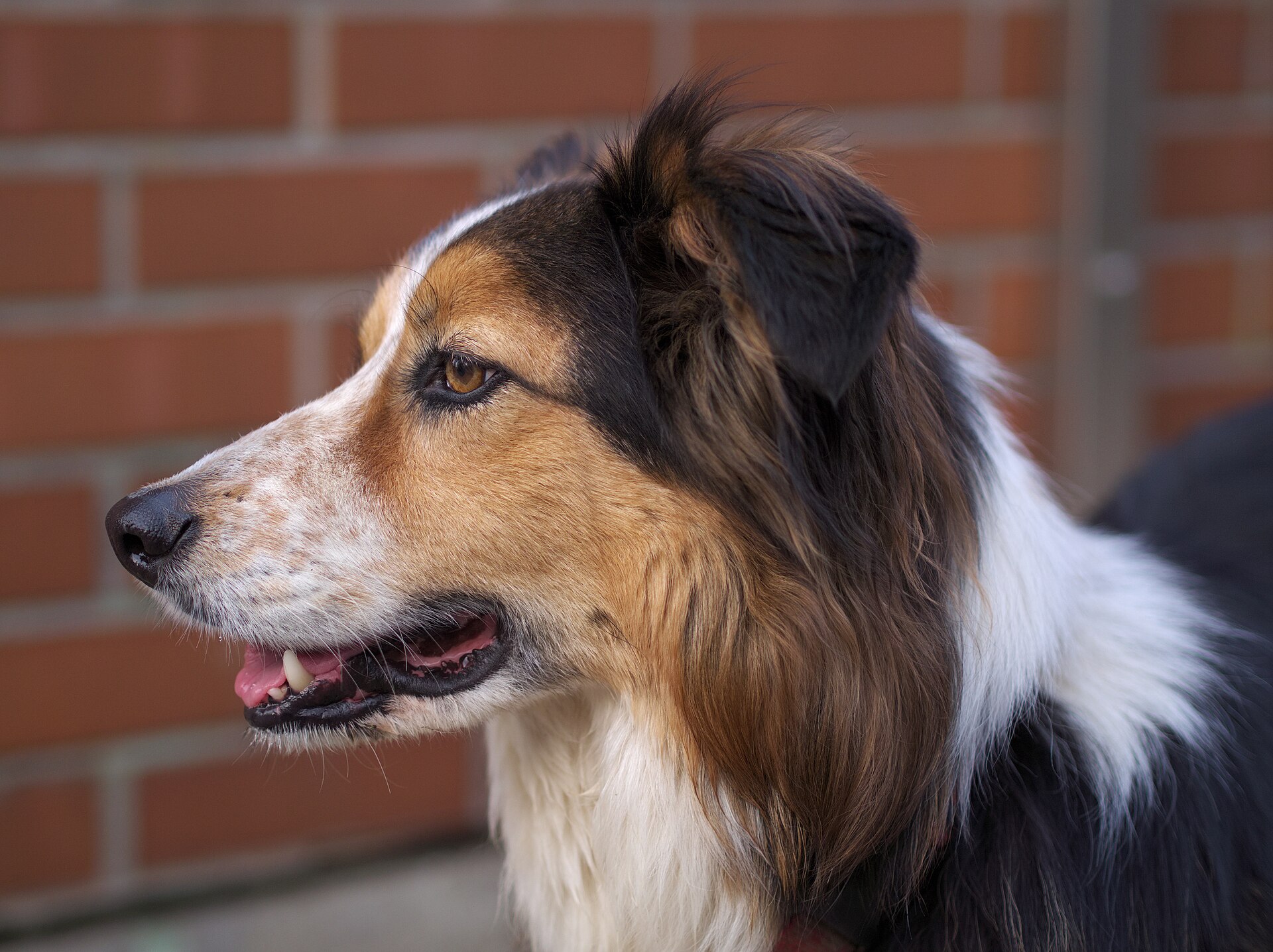
Border Collie
Characteristics
Temperament
Extremely intelligent, sensitive, tireless. Constant need for mental and physical stimulation. Famous "eye" that hypnotises livestock without biting.
Diet
Omnivore with carnivorous tendency: high-quality kibble with 25-30% protein. Sport dogs need 30-50% larger portions.
The Border Collie is universally regarded as the most intelligent dog breed in the world. Native to the border country between Scotland and England, it has been selectively bred for over a century as a shepherd's dog specialised in driving sheep. Its exceptional learning ability, boundless energy and famous "eye" — the controlling stare — make it a truly unique breed in the canine world.
Classification and category
The Border Collie belongs to the species Canis lupus familiaris, class Mammalia, order Carnivora, family Canidae. It is classified by the Fédération Cynologique Internationale (FCI) in Group 1 (sheepdogs and cattle dogs), section 1 (sheepdogs), standard no. 297. The breed was officially recognised by the British Kennel Club in 1976, although its working history goes back to the 19th century.
It is a medium-sized dog: males stand 50-56 cm at the withers and weigh 14-20 kg, females 46-53 cm and 12-19 kg. The build is athletic and harmonious, designed for endurance and agility rather than brute strength.
Habitat and distribution
The ideal habitat of the Border Collie is open countryside, especially pastoral land where it can work with livestock. Historically, its origins lie in the upland border between Northumberland, Cumbria and the Scottish Lowlands, where shepherds needed a dog able to handle large flocks on steep slopes and in harsh weather.
Today the Border Collie is found worldwide, both as a working dog and as a sport breed. It dominates sheepdog trials, agility, obedience, flyball and disc dog competitions. The largest populations of working specimens are found in the United Kingdom, Australia, New Zealand, the United States and Argentina, where the breed is used to herd sheep and cattle across vast properties.
Diet
The Border Collie is an omnivore with a carnivorous tendency, like all domestic dogs. Its diet must support a very high level of physical activity: high-quality kibble with a protein content of 25-30% and a good fat intake is recommended, split into two daily meals.
Individuals engaged in sports or intensive work may require 30-50% more food than a sedentary dog. Fresh water should always be available, and the calcium/phosphorus balance in puppies must be monitored to prevent bone-development problems. In adults, joint overload should be watched closely, especially in dogs practising high-level agility.
Physical features
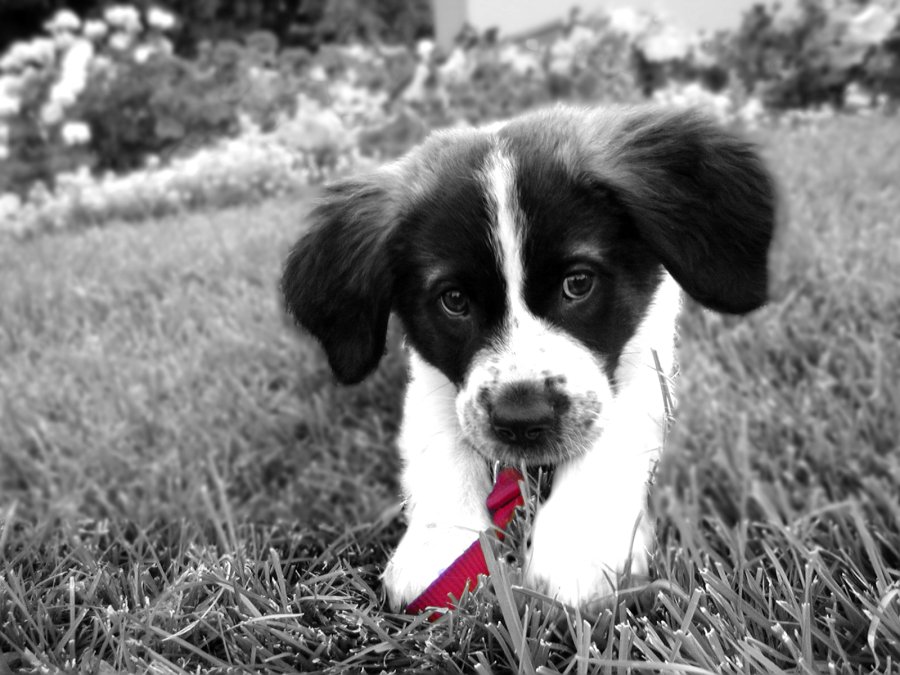
The Border Collie has a coat that comes in two varieties: moderately long (with feathering on ears, chest and legs) and smooth (short and coarse). The most familiar colours are black and white, but many combinations are accepted: tricolour, blue merle, red merle, lilac, sable. A frequent trait is heterochromia, eyes of different colours (one brown, one blue), typical of merle individuals.
The head is well proportioned, with a defined stop, semi-erect ears set well apart. The gaze is intense, alert and characteristically fixed: the famous eye with which the Border Collie literally hypnotises sheep, controlling their movement without need to bark or bite.
Behaviour and curiosities
The Border Collie has entered scientific history thanks to canine cognition studies. Psychologist Stanley Coren, in his book "The Intelligence of Dogs" (1994), ranked it first out of 79 breeds for working intelligence. The most famous case is that of Chaser, an American Border Collie who managed to memorise the names of over 1,000 different objects, showing learning ability comparable to that of a three-year-old child.
The flip side is the enormous demand for mental and physical stimulation: a Border Collie kept in an apartment without adequate work tends to develop compulsive behaviours (chasing shadows, cars, lights), destructiveness and anxiety. It is not a breed for everyone: it requires active, experienced owners willing to dedicate at least 2-3 hours a day to exercise and mental activity. Typical lifespan is 12-15 years, with generally good health; genetic predispositions include progressive retinal atrophy (PRA), Collie Eye Anomaly (CEA) and the MDR1 syndrome, all now manageable through DNA testing in serious breeding programmes.
Pros
- Intelligenza top assoluta
- Eccezionale in agility, obedience, lavoro
- Longevo (12-15 anni)
- Molto legato al proprietario
Cons
- Richiede 2-3 ore di stimolazione al giorno
- Non adatto in appartamento senza attività
- Tende a sviluppare comportamenti compulsivi
- Predisposizioni genetiche (PRA, CEA, MDR1)