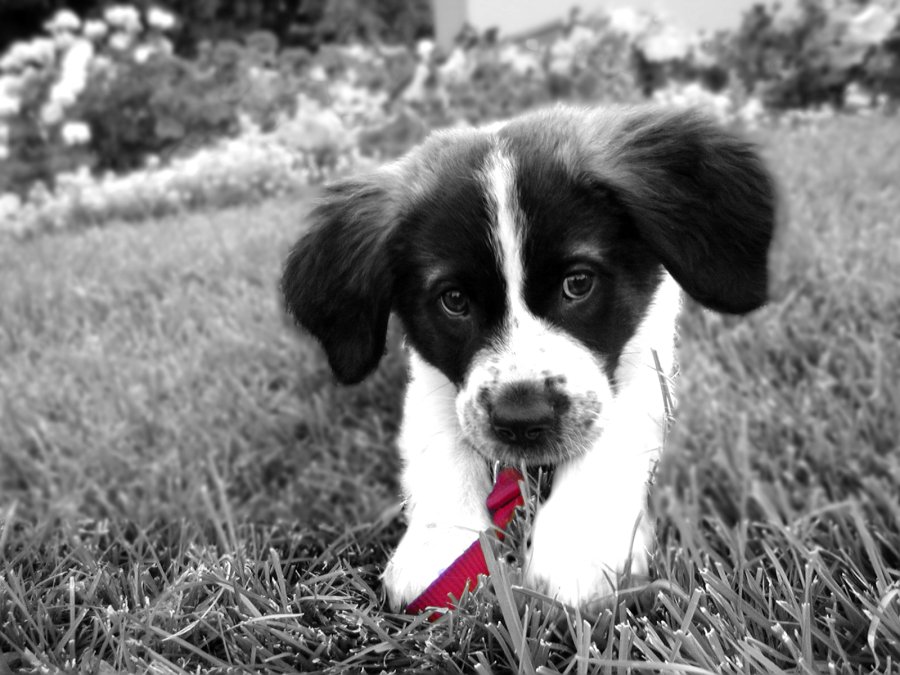
Saint Bernard
Characteristics
Temperament
Calm, patient, loyal, "gentle giant" — exceptionally non-aggressive for a giant. Iconic Alpine rescue dog of the Great St. Bernard Hospice (17th-20th centuries). "Barry" saved 40+ lives. Drools abundantly. Moderate exercise (no sprint). Suitable for families with children.
Diet
Specific "Giant Breed" kibble, 600-900 g/day in 2-3 meals (never one — risk of fatal gastric torsion). 22-26% protein, 12-15% fat, controlled Ca/P 1.2-1.4:1. 4-6 litres water/day. NO exercise 1h before/after meals. Monthly food cost 80-150 €.
The Saint Bernard (in French Saint-Bernard, in German Bernhardiner) is a giant dog breed, FCI Group 2 Section 2.2 "Mountain Type", originally from the Swiss Alps, specifically the Great St. Bernard Pass (2,469 m above sea level, Swiss-Italian border). It is one of the most iconic dogs in the world, legendary for the alpine rescue work carried out for over 3 centuries (from 1700 to 1950) at the Hospice du Grand-Saint-Bernard, an Augustinian monastery founded in 1050 AD by Saint Bernard of Menthon to assist pilgrims transiting the Alps. Extraordinary dimensions: height 70-90 cm at the withers, weight 64-90 kg (record "Benedictine": 167 kg in 1981, the heaviest dog ever documented!). There are two coat varieties: short coat (original, more suitable for mountain work — long coat became covered in ice) and long coat (developed in the 19th century, more common today). The famous "Barry der Menschenretter" (Barry the Saviour of Men), who lived at the Hospice between 1800 and 1814, is considered the most famous rescue dog in history: he saved over 40 human lives, mainly from avalanches. The legendary "brandy barrel around the neck" is actually an artistic myth: born from Edwin Landseer's painting "Alpine Mastiffs Reanimating a Distressed Traveler" (1820); real dogs never wore it. Conservation status: popular domestic breed, FCI recognised since 1888. Life expectancy: 8-10 years (relatively short due to large size). Official national symbol of Switzerland.
Classification and category
The Saint Bernard belongs to Canis lupus familiaris. The FCI classification is Group 2 — Pinscher and Schnauzer Type, Molossoids, Swiss Mountain and Cattle Dogs and other Breeds, Section 2.2 — Molossoids, Mountain Type. Official FCI standard n° 61 (Switzerland as country of origin, recognised 1888). The AKC classifies it in the "Working Group", recognised since 1885. The British Kennel Club also classifies it as "Working Group".
The historical origins are very ancient. The dogs used at the Hospice derive from a cross between:
- Tibetan Mastiff, introduced to Europe by the Romans as a fighting dog (called "Alpine Mastiffs")
- Mountain Dog of the Alpine Type, local
- Probably Newfoundland (introduced in the 19th century to "reinvigorate" the breed after an avalanche in 1816-17 killed nearly all the Hospice dogs)
The first dogs at the Great St. Bernard Hospice are documented around 1660. The monastery archives record paintings of "alpine molossoid type" dogs from 1695. The breed was formally codified in 1884 by the Swiss Saint Bernard Club. The first standard was published in 1887. The name "Saint Bernard" derives from Saint Bernard of Menthon (1020-1081), founding monk of the Hospice.
The morphological parameters are: height at withers 70-90 cm (M minimum 70 cm, F minimum 65 cm); weight 64-90 kg (M 75-90 kg, F 64-75 kg). The FCI standard imposes no maximum weight limit — modern show specimens can weigh 100-120 kg. Absolute record: "Benedictine V Schwarzwald Hof" (1981), 167.4 kg — the heaviest dog ever officially weighed. Longevity: 8-10 years (relatively short, common among giants — greater weight = faster ageing). Sexual maturity: 15-18 months. Females give birth to litters of 6-10 puppies (record 14). Growth: puppies weigh 700-900 g at birth, reach 50 kg at 6 months, adult size at 18-24 months.
Habitat and distribution
As a domestic breed, the Saint Bernard is today distributed worldwide. Ideal habitat: the Saint Bernard thrives in cold and temperate climates, with ample spaces. Suitable for:
- Houses with gardens of at least 200 m² (the indoor space must be adequate for a giant dog)
- Farms, ranches
- Mountain or high-altitude areas — the breed was selected for cold, suffers intensely from heat
- Northern temperate climates: central-northern Europe, Canada, northern USA
The Saint Bernard is NOT suitable for:
- Small apartments (size and space needs)
- Warm climates (>25°C) — easily affected by heat strokes
- Inactive families (requires moderate daily exercise)
- Families without budget for veterinary care (large sizes need specialist care and higher costs)
World population: estimated 200,000-300,000 individuals worldwide (Fédération Cynologique Internationale). The main breeding countries are: Switzerland (origin, ~1,500 puppies/year), Germany (~3,000/year), USA (44th place AKC 2023), Russia (~5,000/year — largest market). In Italy, the Saint Bernard is a relatively popular breed (~500-800 ENCI puppies/year). The "Hospice du Grand-Saint-Bernard" in Switzerland continues to maintain a small population of dogs (~20 specimens) for historical-tourist purposes, although the rescue work has been replaced by helicopters and smaller rescue dogs (German Shepherd, Labrador) since 1955. The "Barryland" museum in Martigny (Switzerland) celebrates the breed's history. The average cost of a puppy with FCI pedigree: 1,200-2,500 € (higher for show lines).
Diet
The Saint Bernard is a giant dog with particularly high feeding needs. The breed requires a controlled and balanced diet to avoid:
- Too rapid growth: giant breed puppies must grow SLOWLY to avoid permanent joint problems (hip/elbow dysplasia)
- Obesity: overweight accelerates joint wear
- Gastric torsion (GDV): high risk in giant dogs, fatal without surgery
Dietary recommendations:
- Quantity: 600-900 g of quality kibble per day for an adult (about 1 kg for growing puppies)
- Frequency: 2-3 small meals/day (never a single big meal — reduces GDV risk)
- Puppies: 3-4 meals/day until 6 months, then 2-3
- Proteins: 22-26% (high quality, no excesses)
- Fats: 12-15%
- Calcium/Phosphorus: ratio 1.2-1.4:1, do NOT exceed — excess calcium causes skeletal problems in giant puppies
- "Giant Breed" specific kibble: brands such as Royal Canin Saint Bernard 28, Eukanuba Large Breed, Pro Plan Giant
- Water: 4-6 litres/day; a constantly available container needed (they drool a lot!)
- Do not exercise for 1 hour before/after the meal (reduces GDV)
Food costs: the Saint Bernard is one of the most expensive dogs to maintain. A bag of quality kibble (15 kg) lasts about 15-18 days with an adult, monthly food cost: 80-150 €/month.
Physical features
The Saint Bernard has an imposing, powerful, well-proportioned structure. The breed has two official varieties:
- Short-Haired Saint Bernard (original variety, "Stockhaar"): dense, hard, adherent coat, length 4-5 cm. It was the preferred variety at the Hospice because long hair became covered in ice and snow in the mountains. Rarer today.
- Long-Haired Saint Bernard ("Langstockhaar"): longer coat (7-15 cm), slightly wavy on the body, with fringes on the thighs/rear. Developed in the 19th century from crosses with Newfoundland. More common today, but not suitable for mountain work (forms icicles).
Both varieties share the typical colour:
- White with brown-red spots ("red-white" or "red & white"): the most recognised variant
- Brown-red with white spots ("brown-white")
- Always mandatory: white chest, white legs, white tail, white muzzle, a white band around the neck, and in many cases the "dark mask" (black/dark eyes and ears)
The head is massive, broad, round; the skull is broad and slightly domed. The stop (muzzle-skull transition) is well marked. The muzzle is square, broad, deep. The nose is large, black. The eyes are dark (dark brown), medium, slightly sunken — friendly, intelligent expression. The ears are medium, high, pendant, broad at the base, set high. The neck is muscular, short, with an abundant ruff "mane" (more evident in males).
The body is massive, powerful; chest deep and broad; back straight, strong; limbs sturdy, muscular, with large paws. The tail is long, heavy, pendant at rest, sabre-shaped in action. The paws are wide, with compact toes, black or dark nails. The movement is slow but powerful: the Saint Bernard is NOT fast (maximum speed 25-30 km/h), but incredibly strong and resistant (can pull 100-150 kg, like a small pony).
Important physiological feature: the Saint Bernard drools abundantly due to pendulous lips (molossoid characteristic). Saliva accumulates in the lip folds and falls everywhere — sometimes thrown metres away with a head shake. For owners, it is an important aspect to accept. Furthermore, facial and eye folds are subject to infections if not cleaned regularly.
Behaviour and curiosities
The Saint Bernard is a calm, gentle, patient, loyal, affectionate dog. Its temperament is considered one of the best for families with children: it is the classic "gentle giant". AKC score: 5/5 for affectionate, 5/5 for children, 4/5 for other dogs, 3/5 for strangers (reserved but not aggressive). Energy: 3/5 — needs 1-1.5 hours of moderate exercise/day (NO sprinting, NO running, large joints would be damaged). Trainability: 4/5 — intelligent, eager-to-please but slow to learn (patient positive reinforcement needed). Feature: NOT aggressive — exceptional among giants. Historically selected at the Hospice for gentleness with lost/injured people.
The shedding is significant (4/5), with two spring/autumn seasonal moults. Brushing 2-3 times/week; during moulting, every day. The care includes: regular cleaning of eyes, ears and facial folds to prevent infections; dental cleaning; nail trimming every 2-3 weeks.
Famous curiosities: "Barry der Menschenretter" (Barry the Saviour of Men) is the most famous Saint Bernard in history. Born in 1800 at the Great St. Bernard Hospice, he worked as a rescue dog until 1812. He saved over 40 human lives (the most famous: a child swept away by an avalanche, whom Barry carried on his shoulders to the monastery). He died in 1814; his body is preserved and stuffed at the Natural History Museum of Bern today. A statue to Barry is at the entrance of the canine cemetery in Asnières-sur-Seine (France). The name "Barry" has been given subsequently to many Hospice dogs, and today the "Barry der Menschenretter" is an honorary title awarded to the best rescue dog of the year.
The brandy barrel myth is one of the most persistent myths in the dog world. Origin: in 1820, the English painter Edwin Landseer painted "Alpine Mastiffs Reanimating a Distressed Traveler" — depicting two large dogs rescuing a frozen traveller, one of whom carries a small brandy barrel attached to his neck. The painting became enormously popular and the belief that the Hospice dogs really carried brandy spread quickly. In reality: the monks of the Hospice NEVER gave brandy to the rescue dogs (alcohol would have accelerated hypothermia, damaging the traveller!); the dogs generally carried a small sack with chocolate, bread and bandages. Landseer's painting was so influential that the barrel is today part of the breed's iconography, although all Saint Bernards who wear it do so for tradition/folklore, not for real purpose.
Work at the Hospice curiosity: the rescue dogs worked in teams of 2-3. After an avalanche, the dogs used exceptional smell to locate those buried under the snow (up to 3 m deep). Once they found the victim, one dog dug toward her, the other returned to the Hospice to call the monks. The dogs were able to cover extraordinary distances in the most hostile alpine climates. It is estimated that, in total, the Hospice Saint Bernards saved over 2,000 lives between the 17th and 20th centuries.
"Beethoven" (1992) curiosity: the Universal Pictures film comedy starring a Saint Bernard named Beethoven (played by a dog named "Chris", later replaced in sequels) is one of the most popular films about the breed. It generated 7 sequels (1993-2014) and gave the breed unprecedented popularity in the 1990s (going from 30th to 18th place AKC USA in 3 years). As with other dog films, it also generated impulse purchases followed by abandonment.
Red Cross curiosity: the International Red Cross (founded by Henri Dunant in Switzerland in 1863) used the Saint Bernard as a symbol in its early years — a Saint Bernard dog with a red cross around its neck was the propaganda image of the Swiss Red Cross until 1900.
"Plinius" curiosity: the tallest Saint Bernard ever recorded was "Major F", a British specimen measured at 105 cm at the withers in 1934 — taller than a bicycle. Never officially weighed, estimated 110+ kg. "Benedictine V Schwarzwald Hof" curiosity: this female weighed 167.4 kg in Grand Rapids, USA in 1981 — the heaviest dog ever weighed according to Guinness World Records. Naming curiosity: the breed was initially called "Sacro Cane", "Cane di Barry", "Alpine Spaniel", "Alpine Mastiff" before adopting the name "Saint Bernard" in 1880 in honour of the monastery. Historical milestones curiosity: in 1816-17, the "year without summer" (Tambora eruption) caused terrible winters in the Alps; an avalanche in 1817 killed most of the Hospice dogs. The breed was rebuilt by crossing the survivors with Newfoundland, from which derive the modern characteristics (longer coat, larger size). Animated film curiosity: the Disney character "Beethoven" of "Pongo and Perdita" (no — that's Beethoven of the films) and "Up" (no — that's the Golden Retriever). The Saint Bernard appears in "Peter Pan" (Disney 1953) as "Nana" — the Darling children's nanny, slightly fictionalised. Nana curiosity: actually in J.M. Barrie's original novel (1904), the Nana character was a Newfoundland, but Disney changed it to Saint Bernard for aesthetic reasons. Longevity curiosity: the Saint Bernard, like all giants, has a relatively short life (8-10 years vs 12-14 of medium dogs). Documented longevity record: "Bramble" (UK, 2002), a Saint Bernard who lived 16 years 7 months — extraordinary for the breed. "Saint Bernard Day" curiosity: 22 September, feast of Saint Bernard of Menthon, is officially celebrated as "Saint Bernard Day" in Switzerland since 2005. Sports curiosity: the Saint Bernard is excellent at weight pulling: world record in giant category is 3,500 kg pulled for 4.5 m by "Hercules" in 2002 — equivalent to a small truck!
Pros
- Temperamento eccezionalmente dolce ('gentle giant'), perfetto per famiglie con bambini
- Iconico cane da soccorso alpino, simbolo nazionale svizzero
- Leale, paziente, intelligente
- Straordinariamente forte (può trainare 100-150 kg)
Cons
- Aspettativa di vita breve (8-10 anni) tipica dei giganti
- Problemi articolari (displasia anca/gomito) molto comuni
- Sbava abbondantemente — accettazione necessaria
- Necessita spazio, clima fresco e budget elevato (alimentazione 80-150€/mese)