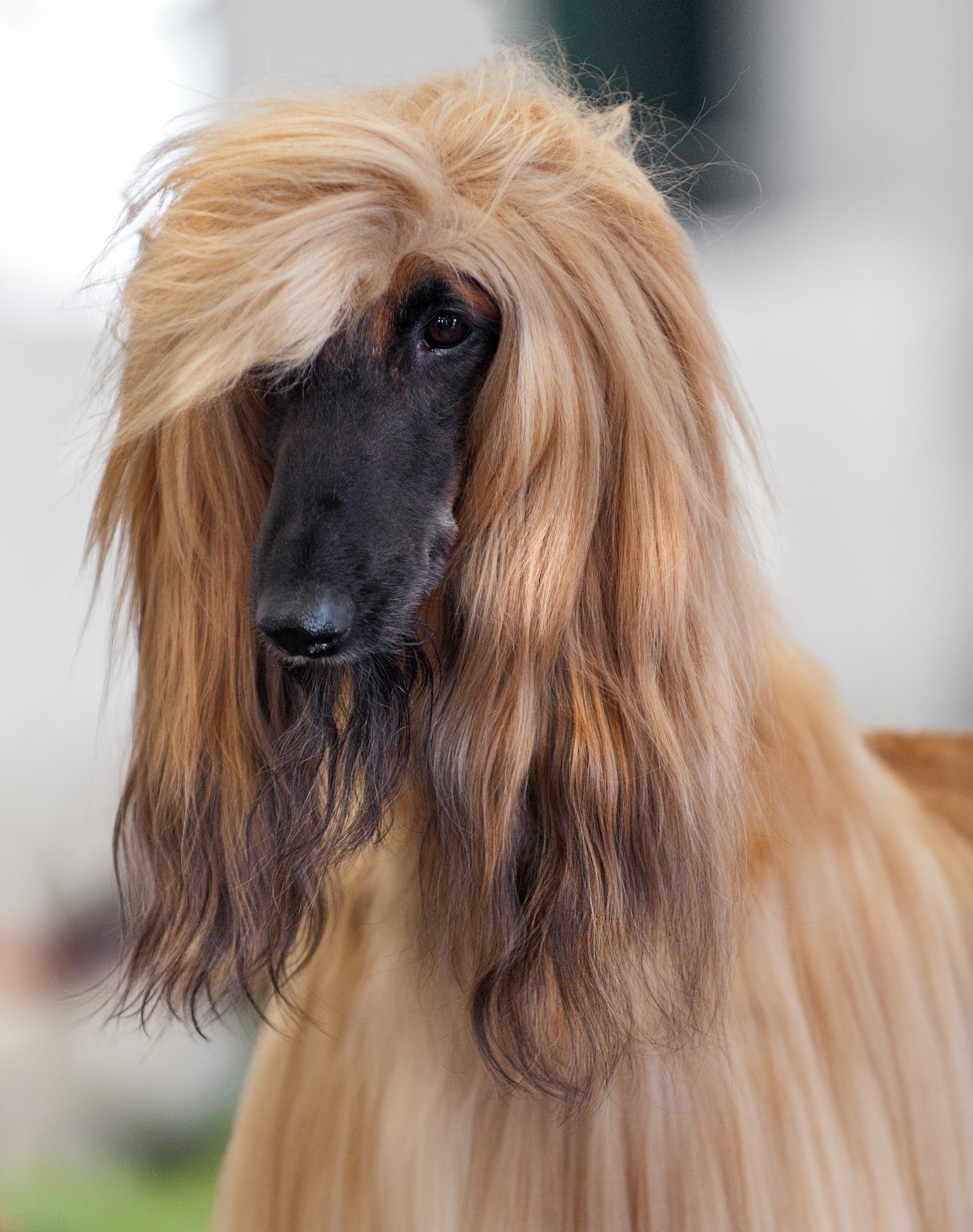
Afghan Hound
Characteristics
Temperament
A sighthound with an independent, dignified and reserved temperament, often described as almost "catlike". It is proud, sensitive and attached to its people, but little inclined to blind obedience: it likes to do things its own way, a legacy of its past as an autonomous mountain hunter. With strangers it tends to be aloof. It has a strong sighthound chasing instinct (recall unreliable in the presence of stimuli) and a great need to run. Splendid but demanding: it does best with patient owners, plenty of safe exercise and assiduous care of its long coat.
Diet
As an athletic sighthound, it needs a complete, balanced diet for active large-breed dogs, with the right protein and energy supply to support musculature and activity. Its naturally lean build (ribs slightly visible) should be respected: it should not be fattened to look "fuller", nor kept too thin. As with deep-chested dogs, it is prudent to avoid intense exercise right after meals. Diet and exercise must be thought of together: it is a dog built for running.
The Afghan Hound is one of the most elegant and spectacular dogs in the world: an ancient sighthound breed, wrapped in a long silky coat and an aristocratic aura. Famous for:
- The long, silky coat: flowing and silky, especially on the body, legs and ears
- The topknot: the long fringe of hair that frames its face
- The proud, elegant bearing: head held high, a far-off gaze, a haughty gait
- The speed and agility: a born athlete, able to run and leap over difficult terrain
- The independent character: dignified, reserved and almost "catlike"
- The antiquity: one of the oldest sighthound breeds, from the Afghan mountains
It enters the portal as the first sighthound, inaugurating the category of sighthounds (the dogs that hunt "by sight"): a group with a slender body and deep chest, built for running, until now not represented among the many dog breeds already present.
Classification and category
The Afghan Hound is a Canis lupus familiaris, a sighthound breed native to Afghanistan and the mountainous regions of Central Asia. In the portal it opens the new category of sighthounds, the dogs that hunt by spotting prey with their sight and chasing it at speed, rather than by scent like the hounds. It is useful to tell it apart from other sighthounds and similar dogs: the Saluki and the Borzoi — other elegant sighthounds with feathering, but of different structure and coat; the Afghan has longer, more abundant hair and a characteristic topknot; the Greyhound and the Whippet — short-coated sighthounds, with a bare, aerodynamic silhouette, quite different from the "coated" Afghan; long-coated non-sighthound dogs (such as some Setters or Collies) — of completely different structure and function. Etymology: the name simply recalls the geographic origin, Afghanistan, where the breed was used for hunting on mountainous terrain. It is one of the oldest and most fascinating sighthound breeds. Parameters: Height at the withers roughly 63-74 cm (males taller). Weight roughly 20-27 kg. Build slender and elegant, with a deep chest, prominent hips and long limbs. Longevity: good, on average 12-14 years with proper care. Reproduction: the puppies are born with shorter, "woolly" hair, and develop the characteristic long coat only as they grow.
Habitat and distribution
The Afghan Hound is a domestic breed: its "habitat" is life beside people, as a companion and show dog. Some notes on origin and spread: origin the mountainous regions of Afghanistan and Central Asia, where it was used as a sighthound on rough terrain; current spread worldwide as an elegant companion and show dog, particularly prized for the beauty of its coat. The ideal environment for this dog: spaces to run safely (it is a sighthound and needs to vent its speed in fenced, secure areas); abundant daily exercise (long walks and chances for controlled free running); and time for coat care (the long silky coat requires frequent, careful brushing). Historically, the Afghan was a mountain sighthound: it spotted prey from afar and chased it at speed over rocky slopes and difficult terrain, abilities for which its athletic, flexible body was selected. Today this heritage translates into a strong chasing instinct and a great need for exercise. Status: a well-established domestic breed, with no conservation issues; as with all breeds, it is important to rely on serious breeders attentive to health and temperament.
Diet
The Afghan Hound, as a fine athletic sighthound, needs a diet suited to its lean, muscular body and its activity level. In general: a complete, balanced diet for active large-breed dogs, suited to age, weight and amount of exercise; the right protein and energy supply, to support the musculature and the activity; and attention to the natural build (sighthounds are physiologically slender, with the ribs slightly visible; they should not be "fattened" to make them look fuller). Practical tips: keep ideal weight (neither overweight nor excessively thin, respecting the lean conformation typical of the breed); meals and activity (as with many deep-chested dogs, it is prudent to avoid intense exercise right after meals); and always-fresh water and a regular diet, combined with a good level of exercise. Crucially, for a sighthound like the Afghan, diet must be thought of together with exercise. It is a dog built for running, and diet and activity must go hand in hand to keep it healthy, lean and fit.
Physical features
A large, slender dog of extraordinary elegance, made unique by its coat. The coat — the distinguishing trait: long, fine, silky hair, flowing on the body, legs and ears; a topknot, a long fringe of silky hair on the head; a "saddle" on the back, in adults, an area of shorter hair along the spine; and varied colours, from sand to fawn, from black to cream and other shades. The sighthound structure: a slender body with a deep chest and tucked-up belly; prominent hips and long, powerful limbs, for running; large, sturdy feet, adapted to rough mountain terrain; and a tail with a characteristic ring (curl) at the tip. The bearing: a fine head held high, with a proud, far-off expression; an elastic, haughty gait, of great effect; and considerable grooming demands (the long coat tends to mat and requires assiduous care).
Character, curiosities and care
The Afghan Hound is famous for its independent, dignified and reserved temperament, often described as almost "catlike". It is a proud, sensitive dog, attached to its people but neither servile nor particularly inclined to blind obedience: it likes to do things its own way, a legacy of its history as an autonomous mountain hunter. With strangers it tends to be aloof.
The "catlike" dog: for its aloof air, its independence and a certain unpredictability, the Afghan is often compared to a cat; it is not the classic dog always eager to please: it does best with patient owners who respect its nature and know how to win its trust without imposing themselves harshly. The mountain sighthound: unlike scent hounds, which follow trails with their nose, sighthounds like the Afghan hunt "by sight", spotting prey with their eyes and chasing it at speed; the Afghan was selected to do this on mountainous, rough terrain: hence its flexible body, large feet and extraordinary agility in leaps and changes of direction. The coat to protect: the long silky coat is not just aesthetics: in the cold mountains of origin it offered protection from the harsh climate; today, however, it is also a great commitment: without frequent, careful brushing it tends to knot and mat; coat care is an important (and onerous) part of life with an Afghan. The chasing instinct: like all sighthounds, the Afghan has a strong instinct to chase what moves quickly; this means recall can be unreliable in the presence of stimuli, and it is prudent to let it off-lead only in fenced, secure areas, to prevent it from giving chase. The style icon: for its scenic beauty, the Afghan Hound has always been a favourite of dog shows and a recurring presence in the glamour imagination, in fashion and advertising; it is one of the most "photogenic" dogs of all. Practical care: the Afghan needs plenty of exercise (safe running and long walks), assiduous coat care, adequate space and an owner able to patiently manage its independent nature and predatory instinct. It is not a dog for everyone, but to those who understand it, it offers elegance, charm and a deep, if discreet, bond.
Pros
- Cane di straordinaria eleganza, dal mantello spettacolare: uno dei più fotogenici
- Atletico, veloce e agile: ideale per chi ama un compagno sportivo
- Indole dignitosa e tranquilla in casa, se ben gestito
- Primo levriero del portale: rappresenta un'intera, distintiva famiglia di cani da corsa
Cons
- Cura del pelo molto impegnativa: spazzolature frequenti per evitare nodi
- Indipendente e poco incline all'obbedienza: non adatto a chi cerca un cane 'facile'
- Forte istinto di inseguimento: libertà solo in aree recintate e sicure
- Ha bisogno di moltissimo movimento e di spazi adeguati