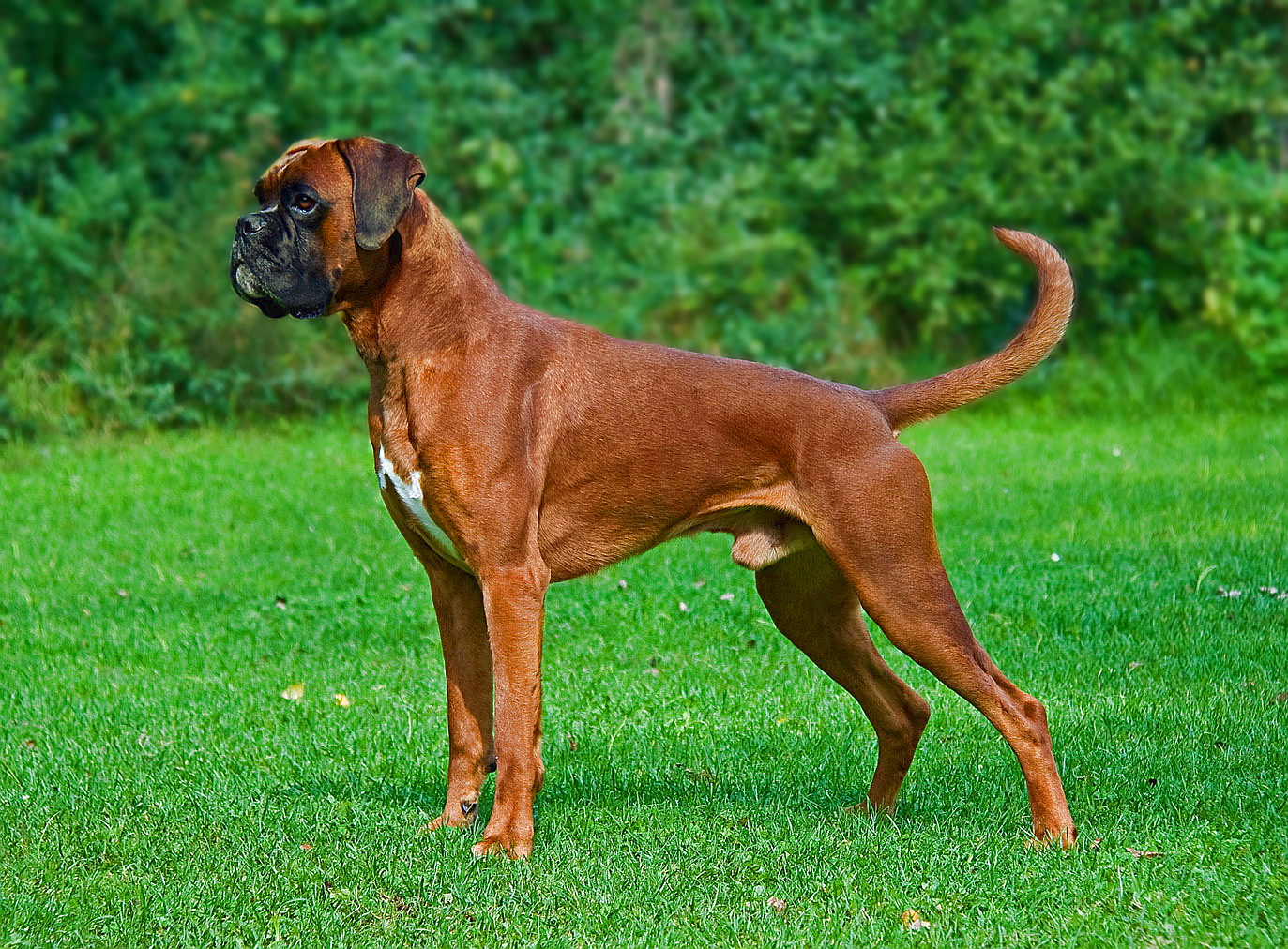
Boxer
Canis lupus familiaris
Characteristics
Temperament
Energetic, playful, affectionate, loyal. "ETERNAL PUPPY" (slow behavioral maturity until 2-3 years). Excellent family dog and with children, protective guard. German breed (1890s) from Bullenbeisser + Bulldog. Name from "boxing" with front paws. Historically war, police, guide dog. Brachycephalic with prognathism. Intelligent but stubborn. Requires 1-2 hours exercise/day.
Diet
Domestic carnivore. Quality kibble (25-30% animal protein) or balanced homemade/BARF diet. 1,500-2,200 kcal/day, 2 meals/day (adults). Caution: BLOAT/GDV RISK (deep-chested breed — small frequent meals, no exercise after eating), obesity tendency, food sensitivities, brachycephaly makes eating harder. Weight control crucial (cardiac/tumor predisposition).
The Boxer is one of the most popular dog breeds in the world — consistently in the top 15 of the American Kennel Club (AKC). A medium-large breed developed in Germany, famous for:
- "Eternal puppy" temperament: energetic, playful, affectionate — maintains youthful behavior until age 3 (slow maturity)
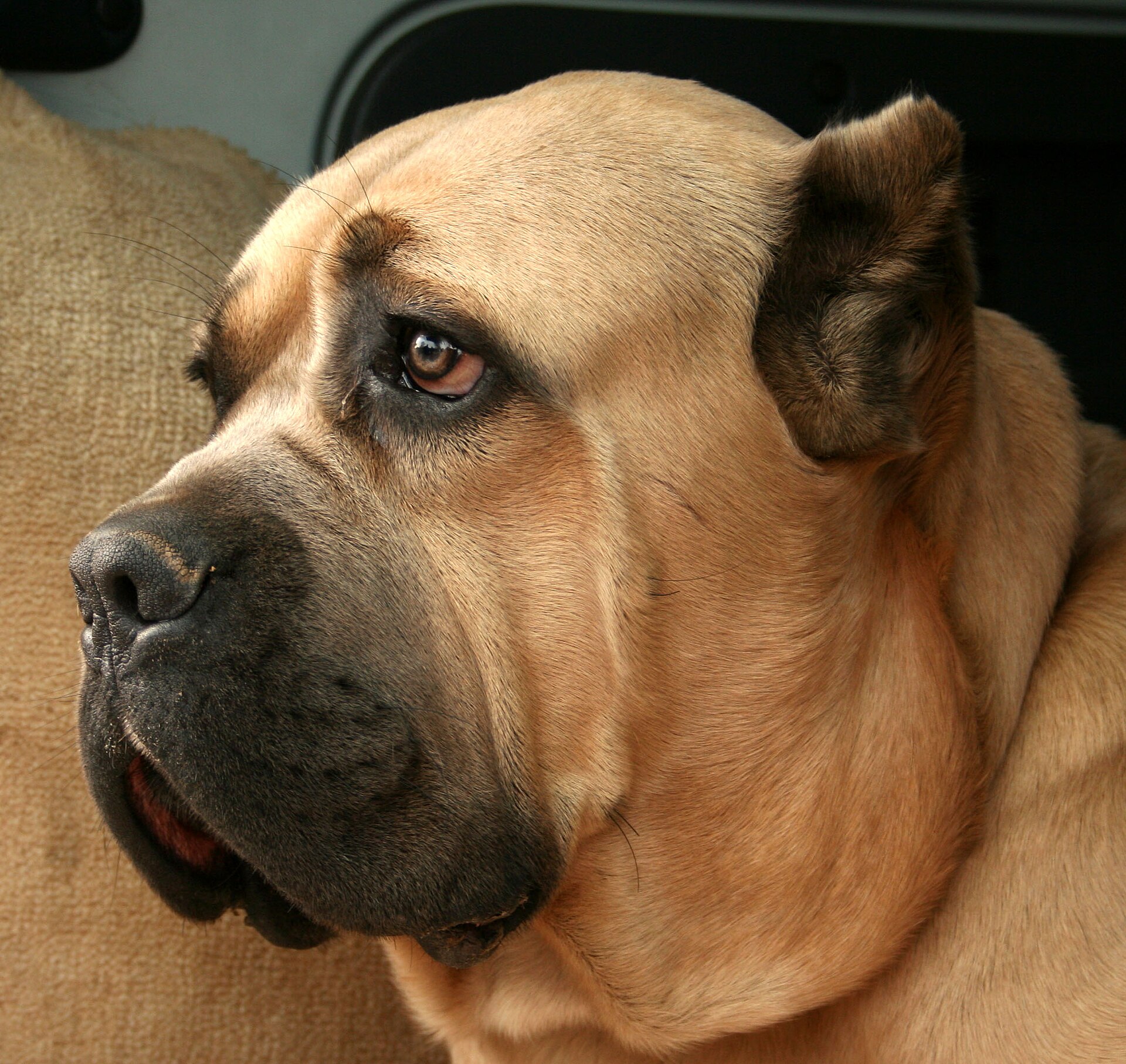
- Brachycephalic muzzle: square head with short flat muzzle and prognathism (protruding lower jaw)
- Fawn or brindle coat: with or without white markings
- Name "Boxer": from the habit of "boxing" with front paws during play and fighting
- Working versatility: historically a war dog (WWI/WWII messenger), police, guide dog (first German guide dog was a Boxer!)
- Excellent family and guard dog: loyal, protective, patient with children
The Boxer is valued for its combination of energy, intelligence, affection, and protective ability. Requires abundant exercise and social interaction. Average lifespan: 10-12 years.
Classification and category
Domestic dog breed (Canis lupus familiaris), FCI Group 2 (Pinscher, Schnauzer, Molossoid, Swiss Mountain Dogs) — Molossoid Mastiff section. Recognized by all major registries (FCI, AKC, KC, ENCI). Origin: developed in Munich, Germany, in the 1890s from crossing the Bullenbeisser ("bull-biter", an extinct German hunting dog) and the English Bulldog. First standard 1904. German Boxer Club founded 1895. Etymology: "Boxer" probably from the dog's habit of "boxing" with front paws. Parameters: Weight M 25-32 kg, F 22-27 kg. Height M 57-63 cm, F 53-59 cm. Lifespan 10-12 years. Litter 6-8 puppies. Slow behavioral maturity (2-3 years).
Habitat and distribution
As a domestic breed, the Boxer lives worldwide as companion, working, and guard dog. Popular in USA (top 15 AKC), Germany (origin country), Europe, all continents. Ideal environment: house with garden (energetic, needs space), active family (excellent with children), temperate climate (brachycephalic muzzle makes it heat-sensitive). NOT suited for sedentary life, long solitude, extreme climates. Requires 1-2 hours daily exercise + mental stimulation.
Diet
Domestic carnivore with commercial or balanced homemade diet. Quality kibble (25-30% animal protein), BARF/homemade options. Caloric needs 1,500-2,200 kcal/day. 2 meals/day (adults). Specific considerations: bloat/GDV risk (deep-chested breed — small frequent meals, no exercise after eating), obesity tendency, food sensitivities, brachycephaly (flat muzzle makes eating/drinking harder). Weight control crucial given cardiac/tumor predisposition.
Physical features
Athletic, muscular, compact body. Coat: fawn (light beige to red-brown) or brindle (dark stripes on fawn), white markings often on chest/legs/muzzle, ~25% of puppies born white (whitening gene, not albino — deafness risk). Short smooth shiny hair, often black mask. Head (distinctive): BRACHYCEPHALIC (square, short flat muzzle), PROGNATHISM (protruding lower jaw — Bullenbeisser heritage for "holding grip"), pronounced stop, dark expressive eyes, naturally drooping ears (historically cropped, now banned in many countries), forehead wrinkles. Body: muscular compact square, deep chest (bloat risk), strong straight legs, tail historically docked (now banned in EU). Speed 50-60 km/h, high energy (1-2 hours exercise/day), brachycephaly (heat-sensitive). "Woo-woo" vocalization.
Behaviour and curiosities
Energetic, playful, affectionate, loyal. "Eternal puppy" (youthful until 2-3 years). Affectionate with family, excellent with children, protective guard dog, intelligent but stubborn, sociable.
Famous: "boxing" — name from habit of standing on hind legs and striking with FRONT PAWS like a boxer. First guide dog: Boxers among first guide dogs for blind (Germany post-WWI). War dog: served WWI/WWII as messenger, transport, sentinel, rescue. Prognathism: protruding jaw from Bullenbeisser to "hold grip" on large prey while breathing. White Boxers: ~25% of puppies, deafness risk (~18%), sun-sensitive, not show-standard. Boxer Cardiomyopathy (ARVC): breed-specific hereditary heart disease, named after the breed. High cancer incidence: 38-50% die of cancer (mast cell tumors, lymphoma). "Woo-woo": characteristic vocalization when excited. Brachycephaly: breathing/heat issues (less extreme than Bulldog). Ear/tail: cropping/docking now banned in many countries. Longevity: 10-12 years (limited by cardiac/cancer predisposition).
Pros
- Eccellente cane da famiglia, paziente con i bambini
- Energico, giocoso, leale, intelligente
- Versatile (guardia, lavoro, compagnia)
- Una delle razze più popolari al mondo (top 15 AKC)
Cons
- Alta incidenza di tumori (38-50% mortalità)
- Cardiomiopatia ereditaria del Boxer (ARVC)
- Brachicefalia (problemi respiratori, sensibile al caldo)
- Richiede molto esercizio (1-2 ore/giorno)