English Setter
Characteristics
Temperament
A pointing dog with a sweet, gentle, sociable temperament, often described as a true "gentleman" of dogs: affectionate with the family, excellent with children and other dogs, little inclined to aggression. In the field, however, it turns into a passionate, tireless hunter with a very strong hunting instinct. It thus has two souls: the calm one of home and the ardent one of work. It is an energetic dog that needs a great deal of exercise, stimulation and company: it is NOT suited to a sedentary life. With active owners, it returns sweetness, loyalty and enthusiasm.
Diet
An athletic, active dog, it requires a complete, balanced diet for active medium-large dogs, with an adequate energy and protein supply to support musculature and stamina, especially in hunting dogs. The calorie requirement varies a lot with the activity level: a Setter working in the hunting season consumes far more than one living a quiet life, and rations should be adapted accordingly. It should be kept lean and athletic, avoiding overweight; as with other large dogs, it is prudent not to follow meals with intense exercise.
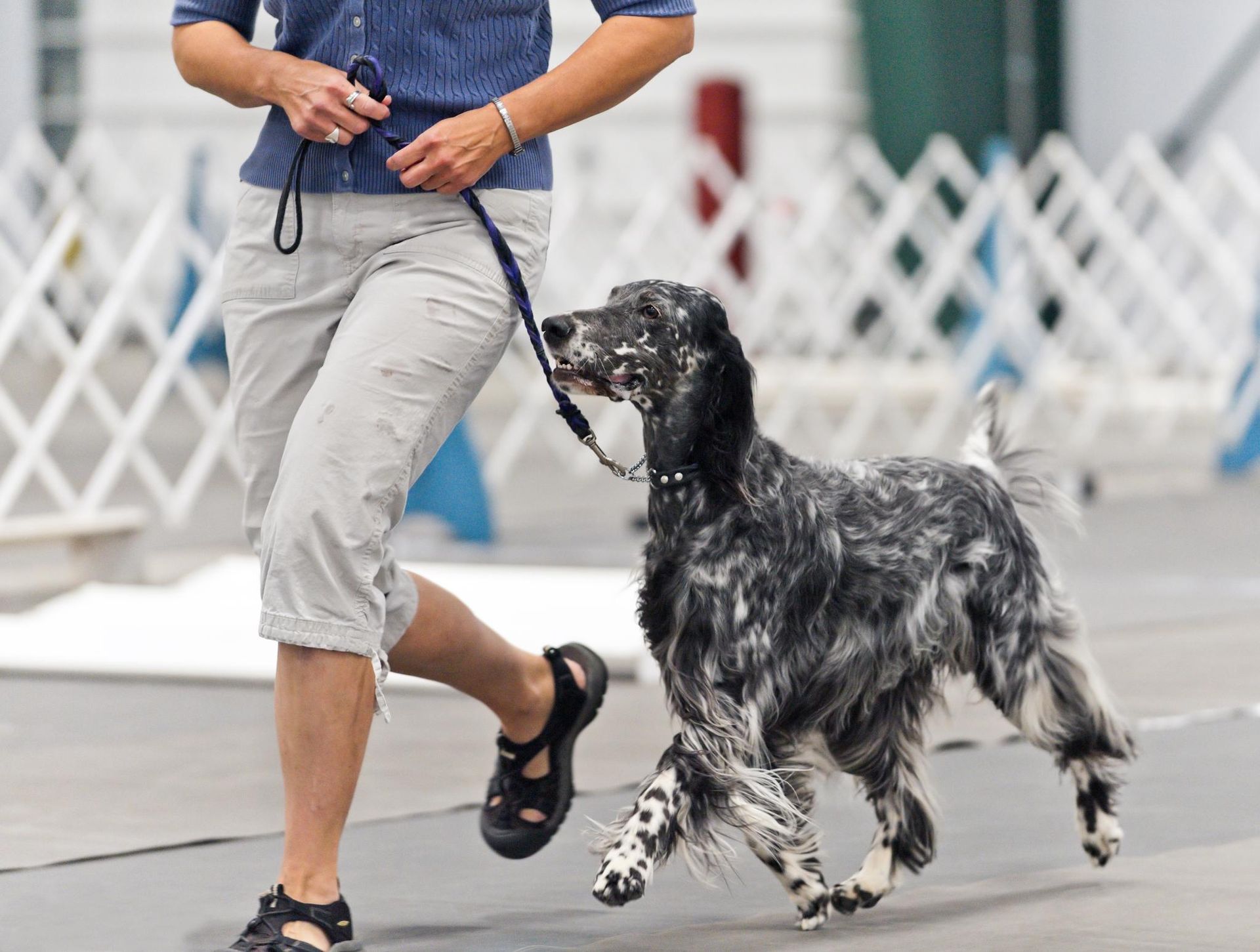
The English Setter is one of the most elegant and beloved hunting dogs: a refined British pointing dog with a silky, flecked coat, a flowing gait and a famously gentle character. Famous for:
- The "belton" coat: white finely ticked and flecked with colour (blue belton, orange belton, etc.)
- The silky feathering: long hair on ears, chest, belly, legs and tail
- The elegant "set": it finds game and freezes to indicate it to the hunter
- The sweet temperament: gentle, sociable and affectionate, a true "gentleman"
- The working-dog energy: tireless in the field, it needs plenty of exercise
- The popularity in Italy: among the most widespread and prized hunting dogs
It enters the portal among the pointing dogs, alongside the Weimaraner: with it it shares the calling of "pointing" hunting (finding game and indicating it motionless), here in a more "British", elegant and feathered style.
Classification and category
The English Setter is a Canis lupus familiaris, a British breed of pointing dog, belonging to the setter group. It was refined in the 19th century by breeders such as Edward Laverack and Purcell Llewellin, who fixed its modern characteristics. In the portal it is placed among the pointing dogs. It is useful to tell it apart from the other setters and pointing dogs: the Irish Setter — of a characteristic uniform mahogany red, without the English Setter's flecked pattern; the Gordon Setter — black and tan, sturdier; the Weimaraner (in the portal) — another pointing dog, but short-haired and of a uniform grey coat; pointers and continental pointing dogs — pointing dogs of a different type, generally short-haired and of a more "sculptural" bearing. The combination of flecked belton coat + silky feathering + sweet nature makes the English Setter unmistakable among pointing dogs. Etymology: the term "setter" comes from the English "to set" ("to position, to crouch"), referring to the old habit of these dogs of dropping to the ground once they had located game, awaiting the hunter; "English" indicates the British origin. Parameters: Height at the withers roughly 61-69 cm (males taller). Weight roughly 20-36 kg. Build medium-large, slender, elegant and harmonious, of a hardy athlete. Longevity: on average 11-14 years with proper care. Reproduction: litters of normal size; the puppies are often born almost entirely white and develop the flecked pattern as they grow.
Habitat and distribution
The English Setter is a domestic breed: its "habitat" is life beside people, as a hunting and companion dog. Some notes on origin and spread: origin Britain, where it was developed as a refined pointing dog for bird hunting; current spread worldwide; in Italy in particular it is one of the most widespread and loved hunting dogs, as well as a prized companion. The ideal environment for this dog: space and plenty of exercise (long runs, walks and exercise; it tolerates a sedentary life poorly); activity and stimulation (hunting, dog sports, play and search keep it balanced); and company and family life (it is a sociable dog that loves to be with people). Bred as a field pointing dog, the English Setter retains a very strong hunting instinct, a wide, efficient gait and extraordinary stamina in searching for game over open ground. This heritage translates, in everyday life too, into a dog that needs a lot of movement and does its best with active owners. Status: a well-established domestic breed; there are no conservation issues, but it is important to choose serious breeders and to assess honestly whether one can meet its high exercise needs.
Diet
The English Setter is an athletic, active dog, and its feeding must be calibrated accordingly. In general: a complete, balanced diet for active medium-large dogs, suited to age, weight and activity level; the right energy and protein supply, to support musculature and stamina, especially in working dogs; and controlled puppy growth (as with all good-sized dogs, avoiding too rapid growth). Practical tips: energy and movement (the calorie requirement changes a lot between a very active dog in the hunting season and one living a quieter life); keep ideal weight (the setter must stay lean and athletic); and attention to the deep chest (as with other large dogs, it is prudent to avoid intense exercise right after meals). Crucially, for such a hardy working dog, diet and exercise must be thought of together, adapting the rations to the individual dog's real activity level.
Physical features
A medium-large, slender, elegant dog, made unmistakable by its coat. The "belton" coat — the distinguishing trait: a white base finely ticked and flecked with colour; colour varieties (belton) blue belton (black), orange belton, lemon belton, liver belton and tricolour; and a silky, long, feathered coat on the ears, chest, belly, back of the legs and tail. The structure: a slender, harmonious body, muscular but elegant; a flowing, elastic gait, highly efficient in the field; and a tail carried in line with the back, feathered, waved lively in action. The face: a noble, dry head, with pendulous, feathered ears; a sweet, gentle gaze that well reflects the character; and moderate shedding (the feathering needs regular brushing to avoid knots).
Character, curiosities and care
The English Setter is famous for its sweet, gentle, sociable temperament. It is often described as a true "gentleman" of dogs: affectionate with the family, generally excellent with children and other dogs, and little inclined to aggression. In the field, however, it turns into a passionate, tireless hunter with a very strong instinct: two souls, the calm one of home and the ardent one of work.
The "set" that gives the name: the name "setter" comes from the English verb "to set"; originally, once they had scented game, these dogs would lower and crouch to the ground ("set"), staying motionless to indicate it to the hunter, who could thus approach and throw the net or, later, shoot; from this historic behaviour comes the name of the whole setter group. The "belton" coat: the English Setter's characteristic flecked pattern has a name all its own, "belton", said to come from an English locality dear to Edward Laverack, one of the breed's fathers; the various colours are indicated with this very term — blue belton, orange belton, lemon belton — and it is one of the breed's unmistakable signatures. The two "fathers" of the breed: the modern English Setter is mainly the fruit of the work of two 19th-century British breeders, Edward Laverack and Purcell Llewellin; their bloodlines gave rise, respectively, to a more "show" type and a more "working" type, a distinction still partly found today. The puppy that "colours up": English Setter puppies are often born almost entirely white; the characteristic ticking and coloured flecks of the belton coat appear and define themselves only with growth, in the first weeks and months of life; it is a bit like watching the definitive coat pattern gradually "emerge". The "national" hunting dog: in Italy the English Setter has for generations been one of the most widespread and loved hunting dogs, a true icon of hunting with a pointing dog; elegance, an exceptional nose and searching style have made it hugely popular among hunters, but also among those simply seeking a sweet, sporty companion. Practical care: the English Setter needs a great deal of exercise (running, long outings, activity), mental stimulation, company and regular care of its feathered coat (brushing to avoid knots). It is not suited to those seeking a sedentary dog or who are often away. To those who can offer it movement and affection, it returns sweetness, loyalty and a contagious enthusiasm.
Pros
- Carattere dolce, gentile e socievole: un vero 'gentleman', ottimo in famiglia
- Elegantissimo, dal caratteristico e bellissimo manto 'belton'
- Intelligente e versatile: eccellente cane da caccia e da lavoro
- Molto amato e diffuso in Italia, con una lunga tradizione cinofila
Cons
- Energia altissima: NON adatto a chi cerca un cane tranquillo o è spesso fuori casa
- Forte istinto venatorio: ha bisogno di sfogo e di una guida adeguata
- Il mantello frangiato richiede spazzolature regolari per evitare nodi
- Soffre la solitudine e la mancanza di movimento: può diventare irrequieto