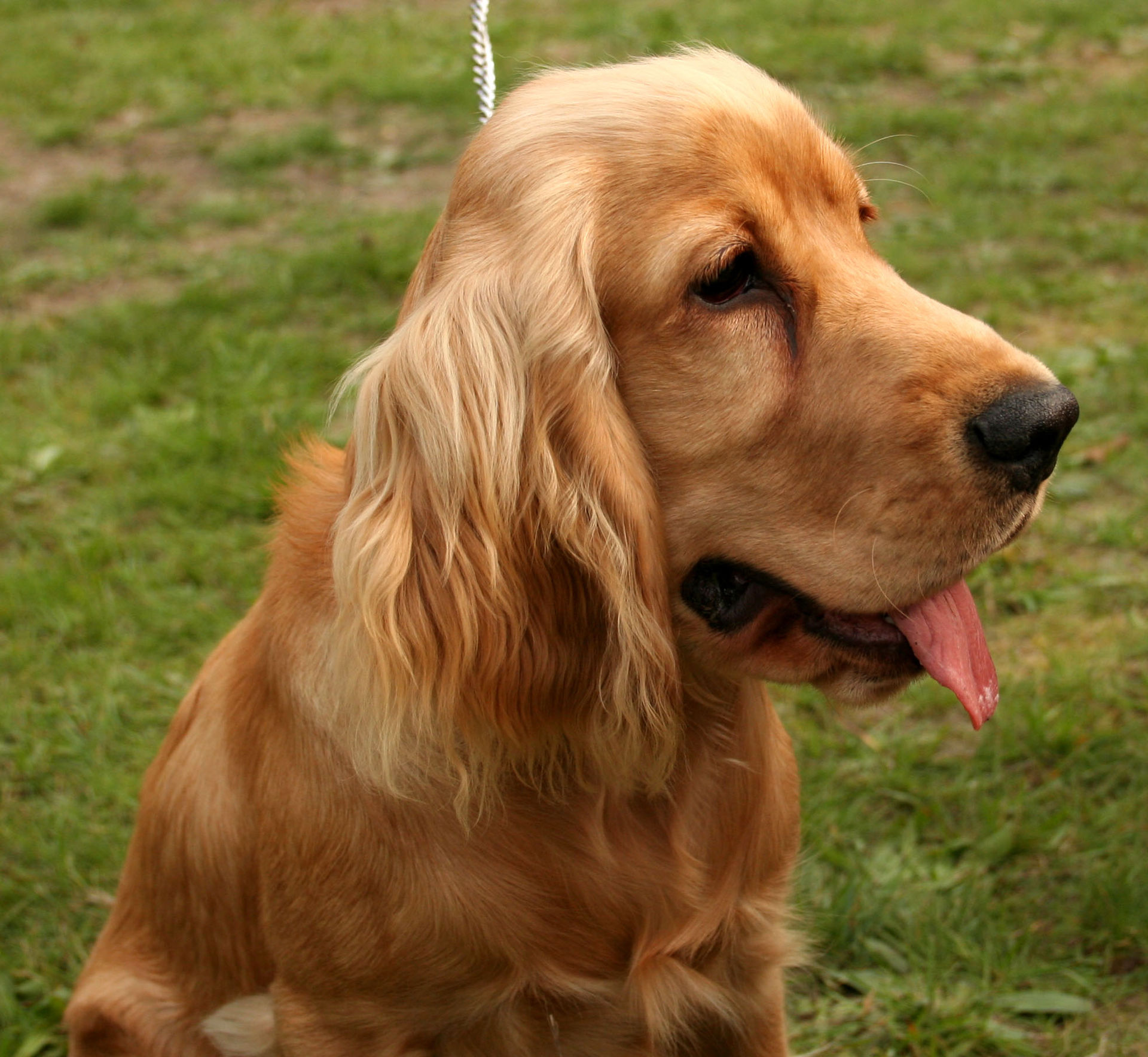
English Cocker Spaniel
Canis lupus familiaris
Characteristics
Temperament
A merry, affectionate, sociable and energetic dog with the famous "merry attitude" (the festive nature with an ever-moving tail). Deeply attached to its family, it loves the company of adults and children and is generally friendly with strangers and other animals. Intelligent and eager to please, it is easy to train and is very well motivated by food (it is very greedy). It keeps, however, energy and a strong hunting-dog instinct: it needs exercise, play and stimulation, and suffers solitude. An excellent family dog for those who can give it time and activity.
Diet
An omnivore with a carnivorous bent, like all dogs: it needs a good-quality complete, balanced food, suited to age and activity level, with fresh water always available. Rations should be energetic but well measured: the Cocker is notoriously greedy and easily tends to become overweight if overfed or under-exercised. Particular attention goes to the long pendulous ears, which can get dirty in the bowl: they must be kept clean and dry. Measured portions and regular exercise are the key to keeping it fit and healthy.
The English Cocker Spaniel is one of the most popular and beloved breeds in the world, the perfect cross between a skilled hunting dog and a very sweet companion dog. Famous for:
- Long, silky ears: pendulous, feathered and very soft, its most unmistakable trait
- A merry character: the famous "merry attitude", a joyful, festive nature with a perpetually wagging tail
- Hunting origin: bred to flush and retrieve game, especially woodcock
- Affection: gentle, sociable and very attached to the family
- The silky coat: medium-length, feathered and in very many colours
- Versatility: an excellent working, sporting and above all family dog
The Cocker Spaniel is a domestic dog and enters the portal in the spaniels group, alongside the Cavalier King Charles Spaniel: two spaniels of great charm, one bred mainly as a court companion dog, the other as a hunting dog that also became a much-loved house companion.
Classification and category
The English Cocker Spaniel is a pedigree domestic dog (Canis lupus familiaris), and in the portal it is classified among the spaniels. Spaniels are a group of hunting dogs specialized in "flushing" (putting to flight) and retrieving game birds; in the international canine classification (FCI) the Cocker belongs to Group 8 (retrievers, flushing dogs, water dogs). It is important to tell it apart from some similar breeds: the American Cocker Spaniel is a distinct breed, smaller, with a more domed skull, a shorter muzzle and an even longer, more profuse coat (it is "Lady" from the famous cartoon "Lady and the Tramp"); the Springer Spaniel is larger and higher on the legs; the Cavalier King Charles Spaniel, also in the portal, is a smaller companion spaniel. Etymology: the word "spaniel" points to a "Spanish" origin of this type of dog; "cocker" comes from the English woodcock, the bird these dogs were specialized to hunt. Parameters: Height at the withers about 38-41 cm. Weight about 12-15 kg. Appearance compact, sturdy and well-proportioned. Longevity: good, generally 12-14 years and more with proper care. Reproduction: litters of a few puppies; given its energy and hunting origin, socialization and a good level of activity are important from puppyhood.
Habitat and distribution
As a domestic breed, the Cocker Spaniel has no wild range: it lives everywhere alongside humans and is widespread and loved worldwide. It does, however, have a precise origin, the British Isles, and a history as a hunting dog. Ideal living environment: active families (an affectionate dog suited to domestic life, but needing exercise); homes with outdoor access (it loves walks, games and activities; it adapts to a flat too if well exercised); and company and stimulation (very attached to people, it suffers prolonged solitude). Historically the Cocker was a hunting dog used to flush game from dense vegetation and retrieve it to the hunter, even from water. Today, while remaining an excellent hunting aid in the "working" lines, it is above all one of the most widespread family dogs in the world. It keeps, however, the energy, the nose and the urge to explore of the hunting dog: it needs walks, play and stimulation to be happy and balanced. Not being a wild animal, it has no IUCN conservation status.
Diet
Like all dogs, the Cocker Spaniel is an omnivore with a carnivorous bent and needs a complete, balanced diet calibrated to size and energy. As a domestic dog: good-quality complete dog foods, suited to age and activity level; proportionate rations, energetic but controlled; and fresh water always available. Particular care: weight control (the Cocker is notoriously greedy and easily tends to become overweight if overfed or under-active); energy to sustain (very active or "working" individuals need the right intake); and ear care (the long pendulous ears can "fish" in the bowl; they must be kept clean and dry, also because of feeding). Crucially, the Cocker's main dietary pitfall is greed. Being a dog that "would never say no" to a treat, it requires measured portions and regular exercise to stay fit and healthy.
Physical features
A compact, harmonious dog with a gentle expression. The ears and head — the distinguishing trait: long, low-set, pendulous ears, covered with long silky hair (the feathering); a well-modelled head with a squared muzzle and large dark eyes with a gentle, intelligent expression. The coat: silky, medium-length fur, smooth or slightly wavy, with abundant feathering on the ears, chest, belly and legs; very many colours allowed: solid colours (black, golden/red, liver), bicolours, tricolours and roan. The body: a compact, sturdy, well-balanced build; a tail carried merrily in line with the back, in constant motion. Performance: an excellent sense of smell and a great passion for searching; remarkable energy and stamina for its size; and a good aptitude for swimming and retrieving.
Behaviour and curiosities
The Cocker Spaniel is a dog of merry, affectionate, sociable and energetic temperament. It is deeply attached to its family, loves the company of adults and children and is generally friendly with strangers and other animals. Intelligent and eager to please, it is generally easy to train, although its liveliness and strong hunting-dog instinct require exercise, stimulation and consistent training.
The "merry cocker": the Cocker Spaniel is famous worldwide for its "merry attitude", its joyful, festive nature; it is described as a perpetually good-humoured dog that wags continuously, moving not only its tail but almost its whole rear end; this joyful, sociable character is one of the main reasons for its enormous popularity as a family dog. The woodcock dog: the name "cocker" comes from the English woodcock; these dogs were indeed selected and specialized precisely for hunting this bird, which lives hidden in dense undergrowth: the cocker's task was to flush it, put it to flight and then retrieve it; the breed's name thus still tells, today, its old hunting vocation. Ears to care for: the Cocker's long, beautiful pendulous ears, besides being its most characteristic trait, require special care; covering the ear canal and poorly ventilated, they can favour ear infections, and tend to get dirty easily, even dipping into the food bowl; this is why cocker owners soon learn to check and clean their dog's ears regularly, and sometimes to use narrow bowls or "snoods" during meals. The English and American cocker: there are two distinct cocker spaniel breeds, the English and the American, which have a common history but then separated; the American Cocker Spaniel is smaller, with a more rounded skull, a shorter muzzle and an even longer, more profuse coat; the English one is slightly larger and more "working-dog" in appearance; the famous dog star of the Disney cartoon "Lady and the Tramp" is an American cocker spaniel. The unrepentant glutton: the Cocker is known for being a particularly greedy dog, always interested in food and ready to ask for treats with its sweet, pleading gaze; this trait makes it easy to motivate in training with treats, but also prone to being overweight: for its health it is important not to give in too much to temptation and to measure the rations carefully. The hunter-companion: one of the reasons for the Cocker's success is its dual nature; on one hand it is a genuine hunting dog, with a fine nose, energy, a passion for searching and an aptitude for retrieving, even from water; on the other it is a gentle, affectionate dog suited to domestic life; this combination of hunting efficiency and family tenderness has made it, for over a century, one of the most loved and widespread dogs in the world.
Pros
- Allegro, affettuoso e socievole: ottimo cane di famiglia, buono con i bambini
- Intelligente e addestrabile, facile da motivare (anche grazie alla golosità)
- Versatile: bravo cane da caccia e da riporto, ma anche tenero compagno di casa
- Di solito robusto e longevo, dal fascino inconfondibile (le lunghe orecchie)
Cons
- Le lunghe orecchie e il pelo setoso richiedono cure e toelettatura regolari (rischio otiti)
- Molto goloso: facile tendenza al sovrappeso se non controllato
- Energico e bisognoso di movimento e stimoli: non adatto a chi è sempre assente
- Soffre molto la solitudine; alcune linee possono essere sensibili o eccitabili