Cavalier King Charles Spaniel
Canis lupus familiaris
Characteristics
Temperament
Very sweet, social, affectionate. "Love on four paws". Perfect for families with children, elderly people, other animals. Eager to please, trainable for pet therapy. Suffers greatly from loneliness. NOT a guard dog. History linked to King Charles II.
Diet
Omnivore, medium metabolism. 400-500 kcal/day in 2 meals. Kibble for toy/small dogs (25-30% protein). Strong predisposition to MVD (mitral valve disease >50% adults) and syringomyelia (30-70%). Cardio and MRI tests in breeders.
The Cavalier King Charles Spaniel (Canis lupus familiaris) is one of the most beloved dog breeds in the world, symbol of British aristocracy and legendary favourite dog of King Charles II of England (1660-1685), from whom it takes its name. Small companion spaniel with silky coat and large expressive eyes, it has conquered European royal courts for centuries and today is one of the top 20 most popular breeds in the world. Affectionately defined "love on four paws", it is characterised by an exceptionally sweet, sociable, affectionate temperament, which makes it the perfect dog for families with children, elderly people, other animals and "beginner" owners. It should not be confused with the King Charles Spaniel (English Toy Spaniel) or the Cavalier King Charles "Toy", distinct breeds; the modern Cavalier is the result of a reconstruction programme from the 1920s wanted by breeder Roswell Eldridge.
Classification and category
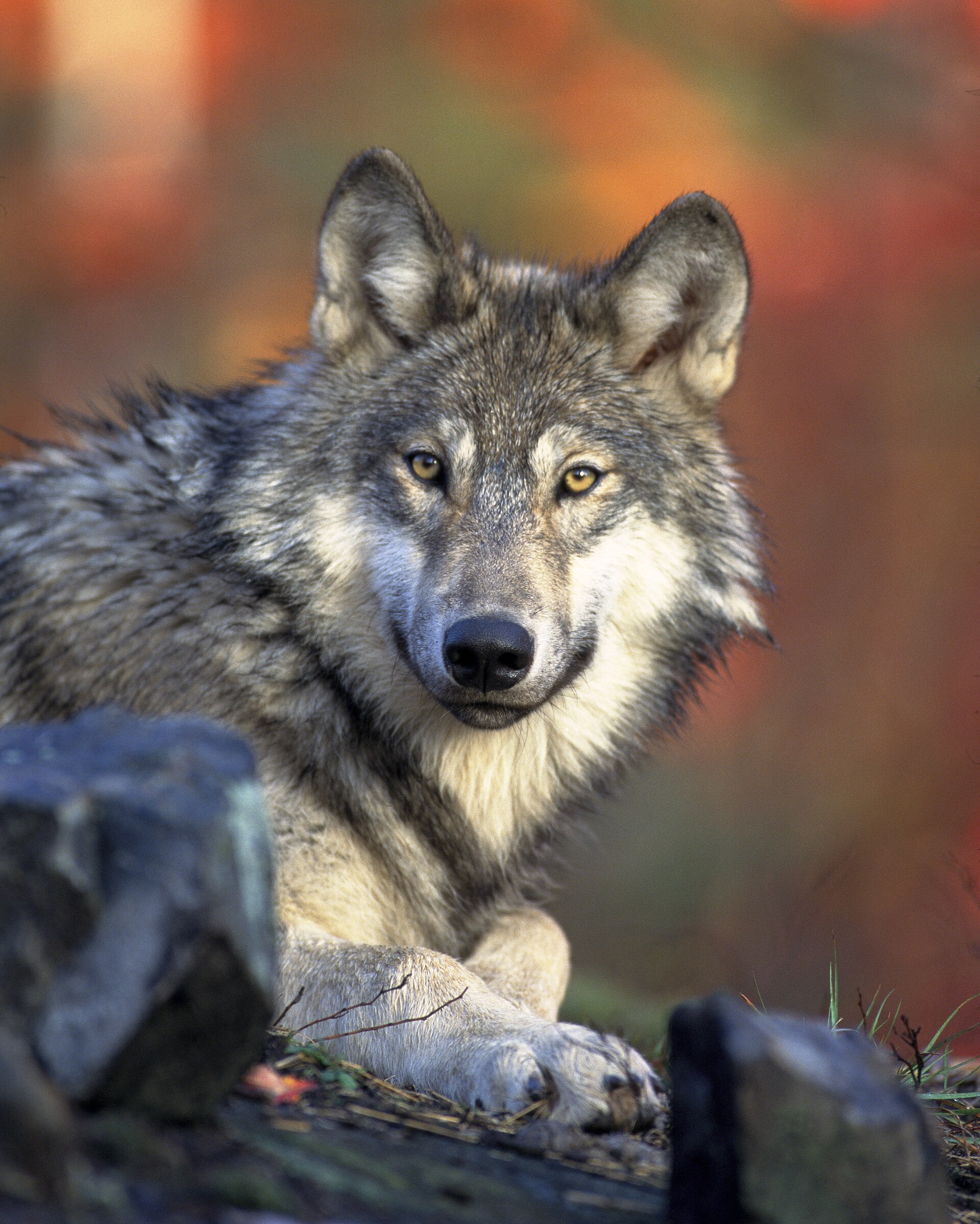
The Cavalier King Charles Spaniel belongs to the species Canis lupus familiaris, the domestic subspecies of the grey wolf. It is classified by the FCI in Group 9 — Companion Dogs, section 7 (English Toy Spaniels). The official standard provides for a withers height of 30-33 cm and a weight of 5.4-8 kg for both sexes (with slight sexual dimorphism: males tend to be slightly larger). The breed has been officially recognised by the British Kennel Club since 1945 and by the FCI since 1955. The standard colours are four: Blenheim (white with chestnut-red markings, the most popular), Tricolor (white with black markings and tan above the eyes, cheeks, under the tail), Ruby (uniform chestnut-red), Black and Tan (black with tan markings). Each colour has a specific historical name linked to the origin of the variant.
Habitat and distribution
The Cavalier King Charles is a dog perfectly adapted to urban apartment life: its small size, calm nature and low requirements for extreme physical exercise make it ideal for urban families, even small ones, with children, elderly people and other animals. It is particularly suited to sedentary families: 1 hour of walking per day is sufficient. It suffers greatly from prolonged solitude (over 4-5 hours) and can develop separation anxiety. It tolerates temperate climates well; it suffers intense heat (long coat increases vulnerability above 28 °C) and intense cold (requires coats in winter).
The history of the breed is fascinating and spans centuries of British history. The origins date back to "toy spaniels" brought to England from Italy and France in the 16th century, and adopted by the English aristocracy. King Charles II of England (1630-1685) was a passionate owner: he was surrounded at all times by his numerous toy spaniels, considered "companion dogs for the ladies" of the court. Queen Mary Stuart of Scotland owned one that accompanied her to the scaffold (1587). For centuries the breed evolved naturally until the early 20th century, when the phenotype had become more similar to the modern King Charles Spaniel (short muzzle, brachycephalic). In 1926 American breeder Roswell Eldridge offered £25 prize to anyone who produced a Cavalier "of the original type of King Charles II" (longer muzzle, flat forehead), and after 4 years the first specimens of the modern Cavalier King Charles were produced. Today it is widespread globally, with concentrations in Great Britain (country of origin), USA, Australia, continental Europe, Japan. In the USA it is in the top 20 of breeds most registered by the AKC (15th position 2023). The average price of a pedigree FCI puppy is 1,500-2,500 euros; show line specimens can reach 3,000-5,000 euros.
Diet
The Cavalier King Charles is a domestic omnivorous dog with medium metabolism: the daily caloric requirement of a 7 kg adult is about 400-500 kcal, distributed in 2 meals. The ideal diet consists of high-quality kibble for toy/small dogs (medium format kibble to facilitate chewing, rich in animal protein 25-30%, low in cereals), or wet feeding or BARF under veterinary supervision.
The breed is particularly predisposed to numerous hereditary pathologies due to strict genetic selection (most modern Cavaliers descend from few founding specimens of the 1920s-1930s). Important pathologies to monitor: mitral valve disease (MVD) — the most widespread, affects >50% of specimens over 5 years; requires annual echocardiography from 3 years; syringomyelia (SM) — cerebral malformation affecting 30-70% of specimens, scratching symptoms, neck pain; MRI test recommended in breeders; hip dysplasia, hereditary cataract, obesity (rigorous portion control, especially after sterilisation). Recommended: heart, brain MRI in parents before mating, regular screenings in adults. Foods to avoid: chocolate, grapes, onions, sweets, cooked bones. Water always available, fresh. For Cavaliers living in apartments, constant control of caloric intake is necessary: the breed easily tends to overweight.
Physical features
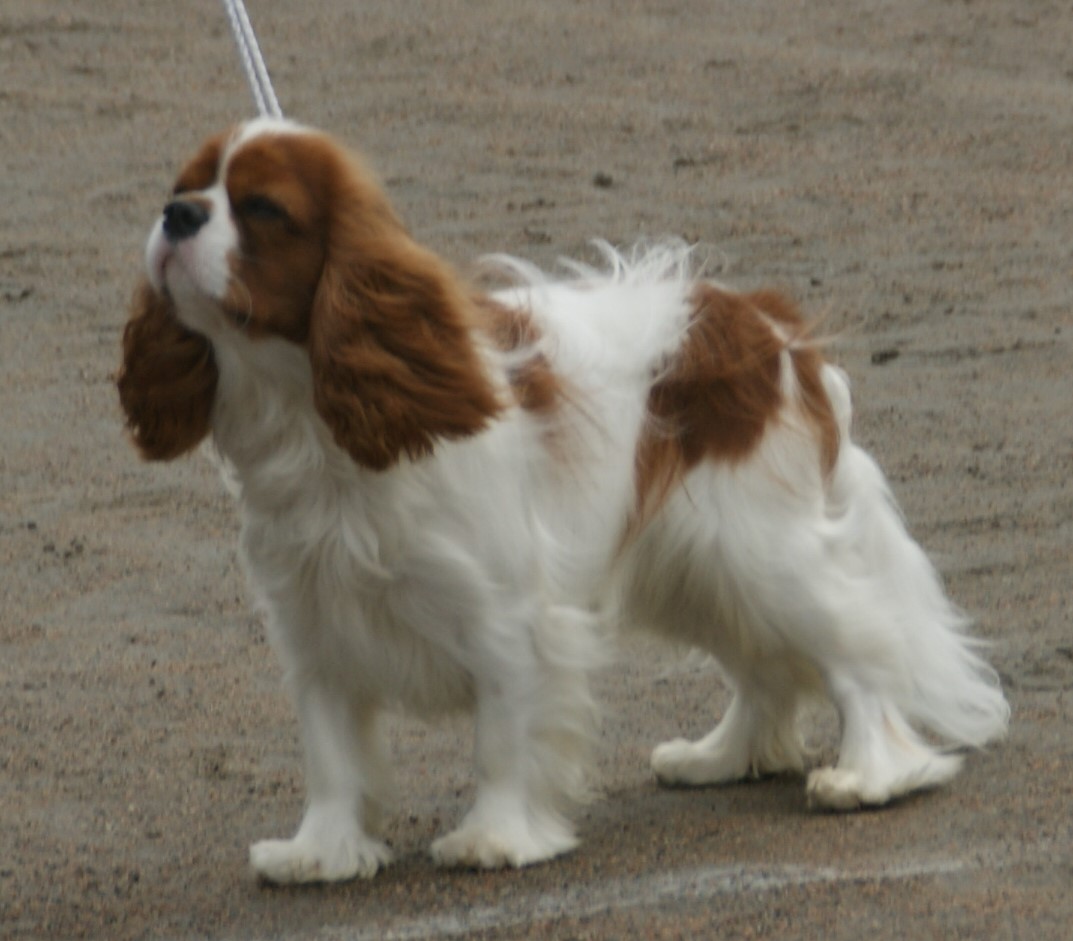
The Cavalier King Charles has an elegant, well-proportioned body, slightly longer than tall. The head is rather flat between the ears (unlike the King Charles Spaniel which has a domed skull), with elongated muzzle (not crushed like the brachycephalic), little marked stop, black nose. The ears are attached high, long (reach the shoulder), covered with long silky hair that forms characteristic "fringes". The eyes are the most iconic trait: large, round, well spaced, of intense dark brown colour, with "tender, pleading" expression typical of the breed. The tail is of medium length, well-haired (fringes), carried horizontally or slightly above the back (never docked, prohibited in Italy since 2007).
The coat is the most distinctive feature: moderately long hair (4-6 cm), silky, smooth (never curly, slight wave accepted), with characteristic abundant fringes on the ears, chest, legs, under the tail and between the toes. The colour can be one of the four standards: Blenheim (white with red-brown markings, the most common and iconic variant, with characteristic "Blenheim mark" — a small red-brown mark on the forehead similar to a "coin" — much appreciated by breeders), Tricolor (white with well-defined black markings and tan markings above the eyes, cheeks, lower part), Ruby (uniform chestnut-red without white), Black and Tan (solid black with well-distributed tan markings). The Blenheim colour owes its name to the Duke of Marlborough (winner of the Battle of Blenheim 1704), who owned a line of red-white Cavaliers. The legs are of medium length, straight, well-haired. The plantar pads are thick. The bearing is elegant and harmonious, with "floating" gait (the tail and fringes move together creating an impression of "dance").
Behaviour and curiosities
The Cavalier King Charles has an extremely affectionate, social, sweet temperament. It is often defined "love on four paws" or "love spaniel" for its exceptional propensity for human attachment. It bonds deeply with the owner, follows everywhere, loves to be picked up, sleeps next to or on top of the owner. It is sociable with everyone: children (even small ones, it is one of the safest dogs with children), elderly people, other dogs, cats, farm animals. It is not territorial, not aggressive, not a barker (rarely barks, never shrill). Poor watchdog (greets strangers as friends).
Intelligence is medium level: the Cavalier easily learns basic commands but is not considered a "brilliant" breed like Border Collie or German Shepherd. However, its propensity to please the owner ("eager to please") makes it highly trainable and suitable for pet therapy courses, assisted activities with elderly people and children, therapy with disabled. It is one of the most chosen dogs for pet therapy due to its balanced temperament. The literary and cultural history is rich: the Cavalier King Charles appears in artworks by Jan van Eyck, Titian, Anthonis van Dyck, Thomas Gainsborough, Hogarth. Queen Victoria owned a Cavalier named "Dash" who was her childhood companion (1820-1830). More recently, Charlotte York of "Sex and the City" owns a Cavalier named "Elizabeth Taylor", and Frank Sinatra, Sylvester Stallone, Ronald Reagan were known owners of the breed. Worrying health curiosity: the breed is today at the centre of an ethical debate for the high prevalence of hereditary pathologies (over 50% of adults develop MVD, 30-70% develop syringomyelia). Numerous responsible breeders and veterinarians recommend controlled outcrossings with other breeds (Cocker Spaniel, Pug, etc.) to rebuild genetic diversity and reduce pathological prevalence. Norway and Holland have introduced restrictions on breeding Cavaliers with clinical symptoms of MVD/SM. Average longevity is 9-14 years, but with frequent heart and neurological problems after 7-8 years.
Pros
- Carattere dolcissimo e socievole, ideale per famiglie
- Ottimo con bambini piccoli, anziani, altri animali
- Mantello bellissimo a 4 colori standard
- Cane da pet therapy per eccellenza
Cons
- Forte predisposizione a MVD (50%+ adulti sviluppano la malattia cardiaca)
- Siringomielia in 30-70% degli esemplari
- Longevità ridotta da patologie cardiache (9-14 anni)
- Etica controversa: il dibattito su outcrossing per ridurre patologie ereditarie