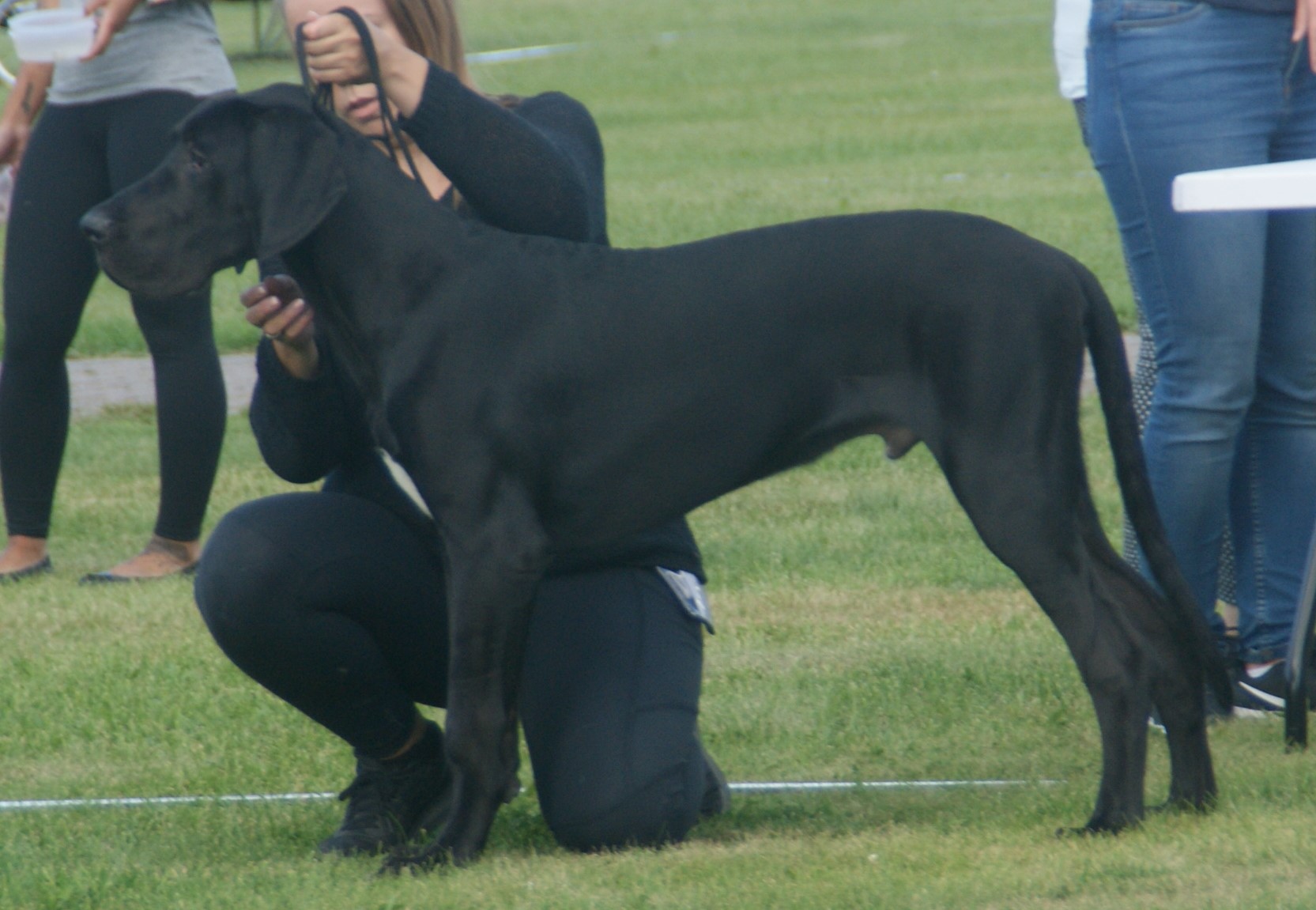
Great Dane
Canis lupus familiaris
Characteristics
Temperament
The quintessential "gentle giant": despite its imposing size, the Great Dane has a balanced, sweet, calm and very affectionate temperament. It is a dog very attached to its family, wanting to share home life and suffering from loneliness: it should not be relegated to the garden. Generally patient and friendly, often excellent with children, it is a "soft" molossoid, more inclined to companionship than defence, though its sheer presence is a deterrent in itself. Indoors it is surprisingly calm and lazy. It needs space, moderate exercise (never excessive, especially as a puppy, for the joints) and attentive care, given its delicacy and the relatively short life typical of giants.
Diet
A giant-sized domestic carnivore: diet is a delicate aspect and must be based on quality animal proteins (meat), with careful balancing of calcium and phosphorus, especially in puppies, for correct bone development and avoiding too rapid growth (which favours joint problems). Crucial is managing the risk of gastric torsion (bloat), to which the Great Dane is predisposed by its deep chest: split food into several meals, avoid large amounts at once and do not allow intense effort right before or after meals. Foods formulated for large/giant sizes are used, calibrated to age and growth, avoiding overweight. Fresh water always available and a diet followed with the vet.
The Great Dane (German Deutsche Dogge) is one of the most imposing and elegant dog breeds in existence: a true giant with a tender heart, nicknamed the "gentle giant" and the "Apollo of dog breeds". Majestic and unmistakable, it is famous for:
- The record height: it is one of the tallest breeds in the world, with several individuals among the records for canine height
- The athletic, elegant body: muscular, square, with a long neck and a noble bearing
- The "gentle giant": despite its size, it is sweet, calm and very affectionate
- The short coat: smooth and glossy, in various colours (fawn, brindle, blue, black, harlequin)
- The German origin: despite the English name "Dane", the breed was developed in Germany
- The bond with the family: it wants to be with people, to whom it is a faithful companion
It enters the portal among the molossoids, alongside the Cane Corso, Rottweiler, St. Bernard and English Bulldog: with them it enriches the group of large molossoid-type dogs, of which the Great Dane is perhaps the tallest and most elegant representative.
Classification and category
The Great Dane is a breed dog (Canis lupus familiaris) of molossoid type. In the portal it is placed among the molossoids, the category of large, sturdy, powerful dogs, often used historically for guarding, defence or big-game hunting. It is useful to tell it apart from the portal's other molossoids and from similar breeds: the St. Bernard — also giant, but much more massive and heavy, with a thick white-and-red coat, an Alpine rescue dog; the Great Dane is instead more slender, athletic and short-coated; the Cane Corso and the Rottweiler — muscular molossoids but of smaller size and a more compact, "stocky" look; the Great Dane is recognized by the unique combination of remarkable height, elegance, a lean body and a long neck: it is the "elegant giant" among the molossoids. The combination of enormous stature + lean, elegant body + long neck + short coat is the Great Dane's "identity card". Etymology and names: the German name Deutsche Dogge ("German mastiff") indicates its origin; the English name Great Dane ("great Danish") is misleading, because the breed is not Danish but was selected in Germany. Parameters: Height at the withers usually about 71-86 cm (males often 76-86 cm and over). Weight about 50-90 kg, with males larger than females. Appearance a giant dog, muscular but elegant, with a proud bearing. Longevity: unfortunately relatively short, as for many giant breeds: on average about 7-10 years. Health: because of its size and deep chest, it is predisposed to gastric torsion (bloat), heart and joint problems; it requires specific care and controlled growth as a puppy.
Origin and ideal environment
The Great Dane is not a wild animal, but a domestic breed with an ancient and noble history: its origin is Germany, where it was selected from large catch-dogs; its historical use was for boar hunting and as a guard and prestige dog on noble estates; today it is above all a beloved companion and family dog. Its ideal "habitat" reflects its nature as a calm, sociable giant: a home with space (given its size, it needs adequate spaces, even though indoors it is surprisingly calm); closeness to people (it is a dog that wants to be with the family and suffers from loneliness; it is not a dog to be "relegated" to the garden); and moderate exercise (regular daily walks, but without excessive effort, especially as a puppy, so as not to overload the growing joints). The Great Dane has a balanced, gentle and affectionate temperament: although its imposing appearance can be intimidating, it is generally patient and friendly, and often excellent with children. It is a "soft" molossoid, more inclined to companionship than aggression. It is widespread and loved worldwide as a family dog of great presence.
Diet
The Great Dane is a giant-sized domestic carnivore, and its very size makes diet a delicate and important aspect. A correct diet must: provide quality animal proteins (meat as the basis, to support muscles and structure); carefully balance calcium and phosphorus, especially in puppies, for correct bone development; and avoid too rapid growth (in giant puppies, excessive growth favours joint problems). Key practical guidance: split meals and attention to bloat (having a deep chest, the Great Dane is at risk of gastric torsion; it is advisable to split food into several meals, avoid large amounts at once and not allow intense effort right before or after eating); food suited to giants (foods formulated for large/giant-breed dogs, calibrated to age and growth stage); and weight control (avoiding overweight, which would further strain joints and heart). As with every dog, fresh water always available and a diet preferably followed with the vet, particularly important for such a large and delicate breed.
Physical features
The Great Dane is the quintessence of the elegant giant dog. The size and structure: one of the tallest breeds in the world (standing on its hind legs it is taller than most people); a muscular but lean body, with square, elegant lines; a long neck and proud bearing, with a long, noble head. The coat and colours: short, smooth, glossy hair, close-lying; various recognized colours (fawn, brindle, blue, black, and the characteristic harlequin — white with irregular black patches). The head and ears: a long, fine, well-chiselled head; ears naturally pendant; in the past often "cropped" to keep them erect, a practice now banned in many countries.
Curiosities and behaviour
The Great Dane is a dog that never goes unnoticed: its majestic size combined with a very gentle temperament make it one of the most loved giants of the dog world, a star of films and comics too.
The height records: the Great Dane has repeatedly held the record for the tallest dog in the world; some famous individuals have reached impressive heights, exceeding, when standing on their hind legs, the height of an adult man; it is this monumental stature that makes it instantly recognizable. The misleading name: the English name "Great Dane" means "great Danish", but the breed has almost nothing to do with Denmark: it was in fact developed in Germany, where it is called Deutsche Dogge ("German mastiff"); it is one of the best-known cases of a misleading common name in the dog world. The boar hunter turned gentle giant: originally the Great Dane was a powerful catch-dog, used for boar hunting and for guarding noble estates; over time, selection softened its character, turning it into a calm, affectionate companion: today only its imposing appearance remains of its warlike past. The (giant) couch dog: despite its size, at home the Great Dane is often surprisingly lazy and calm, and loves to snuggle near its humans, sometimes convinced it is a lap dog; it needs company and copes poorly with loneliness: it is a giant that wants to be part of family life. The screen stars: the Great Dane has entered popular culture thanks to famous characters: the most famous is probably Scooby-Doo, the cowardly cartoon dog, inspired by a Great Dane, as well as the comic-strip Marmaduke; these characters have made its lanky, likeable silhouette iconic. Behaviour and responsible care: the Great Dane is a gentle, faithful dog of great presence, but its size entails important responsibilities; it requires space, a correct diet (with attention to the risk of gastric torsion), moderate exercise and regular veterinary checks, also given its predisposition to heart and joint problems and the relatively short life typical of giants; those who choose a Great Dane choose a wonderful but demanding companion, to love and care for knowingly at every stage of its life.
Pros
- Uno dei cani più alti e maestosi del mondo, dalla presenza scenica unica
- Temperamento dolce, calmo e affettuoso: il vero 'gigante gentile'
- Generalmente ottimo in famiglia e spesso paziente con i bambini
- Pelo corto, facile da pulire e curare
Cons
- Vita relativamente breve (~7-10 anni), tipica delle razze giganti
- Predisposto a torsione gastrica, problemi cardiaci e articolari
- La mole richiede spazio, costi elevati (cibo, cure) e gestione attenta
- Soffre molto la solitudine: non è un cane da lasciare solo a lungo