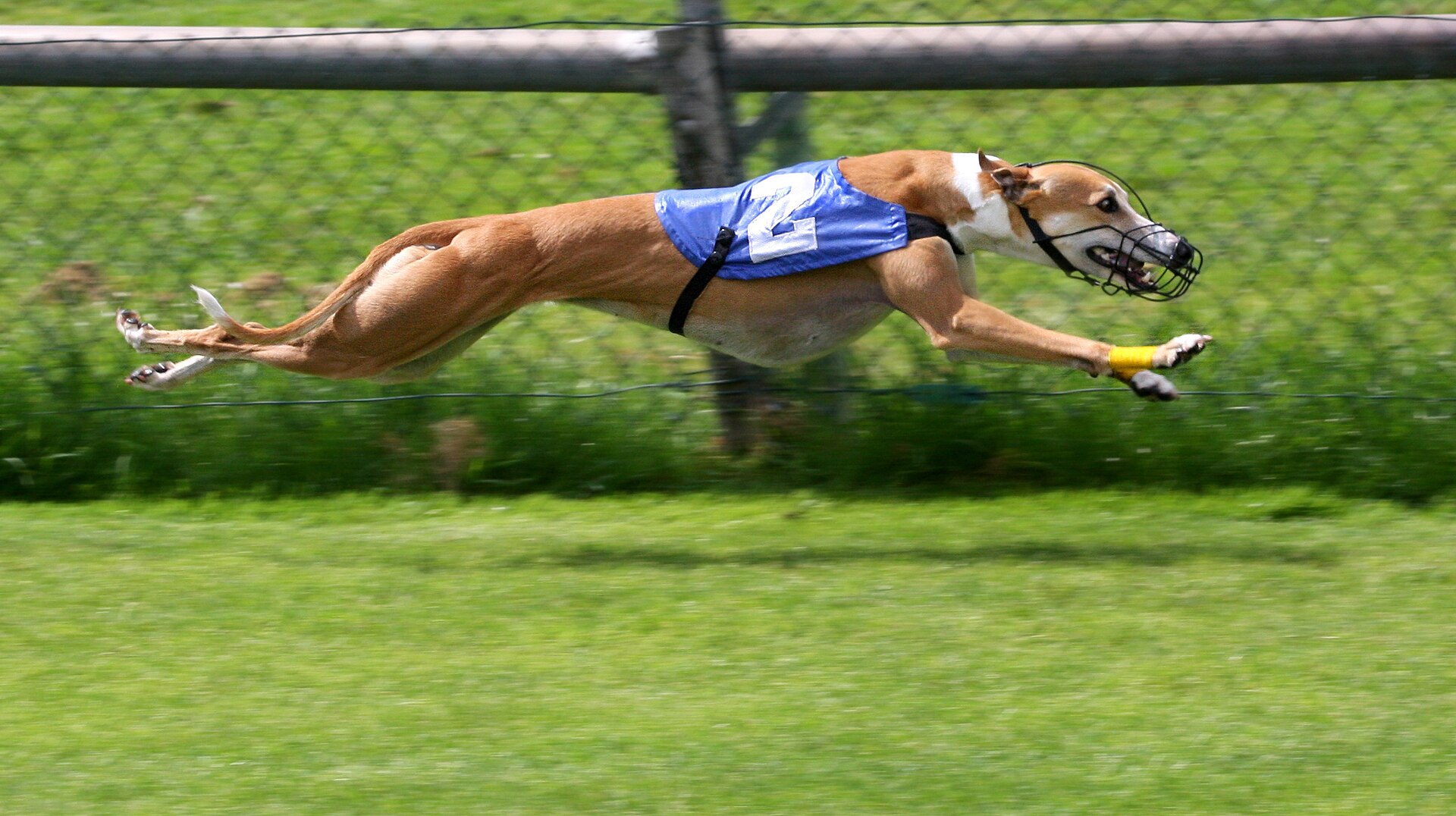
Greyhound
Greyhound
Characteristics
Temperament
A dog of the famous "double nature": the fastest in the world on the track, but at home one of the calmest and quietest there is, nicknamed the "45 mph couch potato". It is a sprinter, not a marathoner: it loves short, very fast bursts, then long hours of rest in soft, warm places. Gentle, sensitive, mild and affectionate by nature, it is often a little shy and reserved, and bonds closely with the family; it is neither a guard dog nor aggressive. It keeps a strong prey drive as a sight hunter, and may chase small moving animals. It suffers from cold (little fat and short coat) and needs soft beds, warmth and safe chances to run. Adopted ex-racers prove docile, grateful companions.
Diet
A domestic carnivore with an athletic body and very little fat mass: the diet must be based on quality animal proteins (meat) for muscles and recovery, with the right amount of fat as energy and balanced carbohydrates and fibre. Rations must be calibrated to the actual activity level (a racing Greyhound consumes more than an ex-racer living as a quiet house dog). Being a large, deep-chested dog, it is prudent to split food into several meals and avoid intense effort right after eating. The Greyhound is naturally lean, with the last ribs often slightly visible: it should not be confused with an underweight dog nor allowed to become overweight. Fresh water always available and a tailored diet, following the vet.
The Greyhound is the sighthound par excellence: the fastest dog in the world and one of the oldest and most elegant breeds in existence. Slender, aerodynamic and powerful, it combines extraordinary speed with a surprisingly gentle character. Famous for:
- The record speed: it is the fastest dog, able to reach and exceed 70 km/h in a sprint
- The runner's body: lean and aerodynamic, with a deep chest, tucked-up belly and very long legs
- Hunting "by sight": it chases prey using sight and speed, not scent
- The calm character: off the track it is quiet, gentle and affectionate, a great sleeper
- The ancient elegance: a noble breed, depicted since antiquity
- The short coat: smooth and fine, in very many colours
It enters the portal among the sighthounds, alongside the Afghan Hound: with it, it doubles the portal's sighthound group, the "sight"-hunting dogs with a slender, fast build. If the Afghan is the long, silky-coated sighthound, the Greyhound is the short-coated sighthound of pure speed.
Classification and category
The Greyhound is a breed dog (Canis lupus familiaris) belonging to the group of sighthounds (sight-hunting dogs). In the portal it is placed among the sighthounds, the category of dogs selected to chase and catch game thanks to very keen sight and exceptional speed, rather than scent. It is useful to tell it apart from the portal's other sighthound and from its similar-shaped "relatives": the Afghan Hound — also a sighthound, but with a long, silky, flowing coat; the Greyhound instead has a short, smooth coat; the Whippet — practically a miniature version of the Greyhound, smaller and lighter; the Italian Greyhound — even tinier, a companion sighthound in reduced format; the Greyhound is recognized by its large size, lean muscular body, short coat and long narrow head with small "rose" ears. The combination of lean, aerodynamic body + short coat + long narrow head + large size is the Greyhound's "identity card". Etymology: the term "sighthound" reflects its hunting by sight; the name "Greyhound" has an ancient and debated origin, not necessarily linked to the colour grey. Parameters: Height at the withers about 68-76 cm. Weight about 27-40 kg, with males larger than females. Appearance a large, slender, muscular and very elegant dog. Longevity: it lives on average about 10-14 years. Physiological peculiarities: because of its very low fat mass and thin skin, it is sensitive to cold (often wearing coats in winter) and requires care with some medicines and anaesthetics.
Habitat and ideal environment
The Greyhound is not a wild animal but a very ancient domestic breed, selected for sight-hunting and, in modern times, for racing. Its ideal environment, however, reflects a surprising nature: the home as a refuge (despite its speed, it is quiet at home and loves comfort, so much so that it is an excellent apartment dog); spaces for sprinting (it needs to be able to run freely, safely, in fenced areas); and warm, soft environments (it suffers from cold and contact with hard surfaces, and seeks soft beds and warm places). It is a dog of the famous double nature: a sprinter, not a marathoner (it is made for short, very fast bursts, not prolonged activity; a few runs and walks are enough, and for the rest it loves to rest); the "45 mph couch potato" (it is nicknamed the lazy couch dog that can yet reach record speeds); and a strong prey drive (being a sight hunter, it may chase small moving animals, and must be managed carefully around cats or small wildlife). In recent years many Greyhounds from the racing world are adopted as companion dogs, proving gentle, grateful companions perfectly suited to home life. It is a breed widespread throughout the world, both as a sporting dog and, increasingly, as a quiet family dog.
Diet
The Greyhound is a domestic carnivore with an athletic body and very little fat mass. A correct diet must support its lean, muscular structure: quality animal proteins (meat as the basis, for muscles and recovery); the right amount of fat (an energy source, important in a dog with few fat reserves); and balanced carbohydrates and fibre (for energy and good digestion). Practical guidance: rations suited to activity (a racing or very active Greyhound has different needs from an ex-racer living as a quiet house dog); deep chest, attention to meals (as in other large, deep-chested dogs, it is prudent to split food into several meals and avoid intense effort right after eating); and form weight (the Greyhound is naturally lean, with the last ribs often slightly visible; it should not be confused with an underweight dog nor allowed to become overweight). As with every dog, fresh water always available and a balanced diet suited to age, size and activity level, preferably following the vet's advice.
Physical features
The Greyhound is the very embodiment of canine speed, a masterpiece of living aerodynamics. The sprinter's body: a lean, muscular build, made for sprinting; a very deep chest (for large lungs and heart) and a strongly tucked-up belly; long, powerful limbs and a flexible spine, which allow the characteristic "double suspension gallop". The head and senses: a long, narrow head, with a sharp profile; small "rose" ears, normally folded back and raised only in excitement; very keen sight, the main hunting tool of a sighthound. The coat: short, smooth, fine hair, close-lying; very many colours (black, fawn, brindle, blue-grey, white and numerous combinations); thin skin and little subcutaneous fat, which make it sensitive to cold.
Curiosities and behaviour
The Greyhound is a fascinating dog full of contrasts: a record-breaking athlete with a gentle heart, able to switch in an instant from the calm of the sofa to lightning-fast running. It is one of the oldest and best-loved breeds in the history of the bond between humans and dogs.
The fastest dog in the world: the Greyhound holds the speed record among dogs, able to reach and exceed 70 km/h; among the great land runners, only the cheetah clearly beats it; this speed comes from a set of adaptations: a deep chest, a large heart, a flexible spine and a gait, the "double suspension gallop", in which twice in each stride all four legs are off the ground. The "45 mph couch potato": despite its reputation as a sprinter, at home the Greyhound is one of the calmest and laziest dogs there is; in English it is affectionately called the "45 mph couch potato"; it is a sprinter, not a marathoner: a few runs are enough, and for the rest of the day it loves to sleep curled up in soft, warm places. The dog of the nobles: the sighthound has always been associated with nobility and aristocratic hunting; in England, in some eras, strict laws reserved its ownership to nobles, forbidding it to common people; elegant and refined, sighthounds appear in paintings, tapestries and sculptures since antiquity, a symbol of status and nobility of spirit. Hunting by sight: unlike scenthounds, which follow scent trails, the Greyhound is a "sight" hunter: it locates prey with its very keen eyes and chases it relying on pure speed; this also explains its strong instinct to chase anything that moves quickly, a behaviour to keep in mind in daily management. The adopted ex-racers: many Greyhounds are born and live in the world of greyhound racing; when their careers end, a growing number of these dogs are adopted as pets; the ex-racers often prove wonderful companions: gentle, calm, grateful and happy to discover the quiet life of home after their years on the track. Behaviour and relationship with humans: the Greyhound is a sensitive, gentle and affectionate dog, sometimes a little shy and reserved, that bonds deeply with the family; it is neither a guard dog nor aggressive: its nature is that of the gentle companion; it needs respect for its sensitivity, soft warm places to rest, safe chances to run and patient guidance; in return it offers unmatched elegance and the sweetest company, showing that behind the fastest dog in the world hides one of the calmest of pets.
Pros
- Il cane più veloce del mondo, elegante e dall'aspetto inconfondibile
- In casa è calmo, tranquillo e affettuoso: ottimo cane d'appartamento
- Pelo corto, facile da pulire e curare
- Gli ex-corridori si adottano facilmente e sono compagni dolci e riconoscenti
Cons
- Forte istinto predatorio: tende a inseguire piccoli animali in movimento
- Sensibile al freddo (poco grasso e pelo corto): spesso necessita di cappottini
- Ha bisogno di spazi sicuri e recintati dove correre liberamente
- Indole sensibile e talvolta timida: richiede gentilezza e pazienza