Reticulated Python
Characteristics
Temperament
Longest snake in the world (record 10 m, 158 kg). Non-venomous constrictor. Solitary, crepuscular-nocturnal, ambush. Female practises active brooding (thermogenesis 31-32°C) for 70-100 days. Hunted for skin (luxury fashion trade).
Diet
Apex predator carnivore: small-medium mammals (rats, small monkeys, young deer), birds (pheasants, ducks), occasionally reptiles. Constriction until cardio-circulatory arrest. Swallows prey 50-70% of body weight. 1-2 prey/month. Jaws dilatable 4-5x.
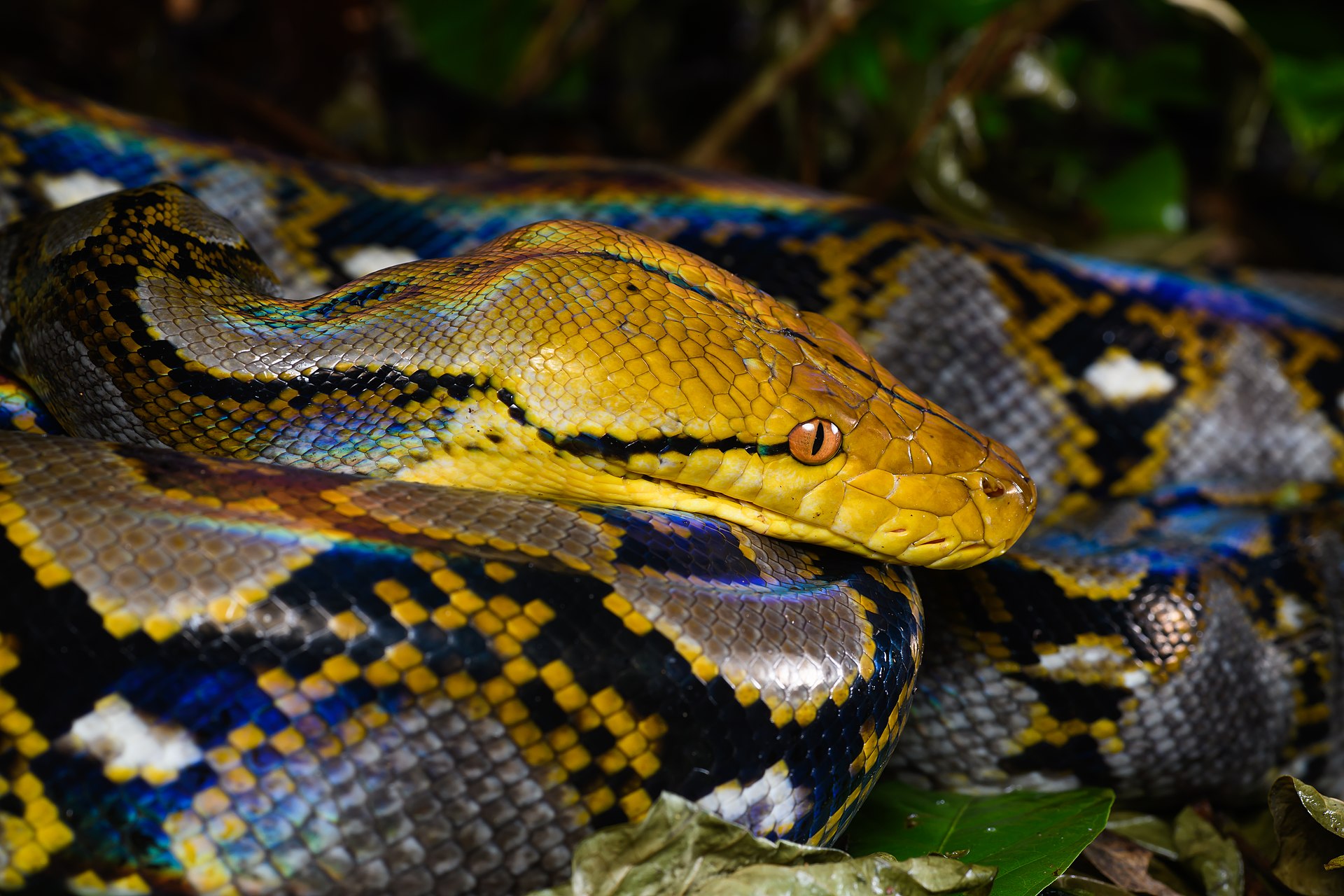
The Reticulated Python (Python reticulatus, today more correctly Malayopython reticulatus after the 2014 taxonomic revision) is one of the most impressive snakes in the world: it holds the record as the longest living snake, with documented lengths up to 10 metres. Native to the tropical forests of Southeast Asia, it is a non-venomous constrictor that kills its prey through mechanical asphyxiation. Its name derives from the characteristic "reticulated" pattern of the skin: a complex design of interconnected dark lines that form an irregular-rhomboidal network, perfect for camouflage in the tropical undergrowth. Despite its scary reputation, it is a rarely dangerous snake for humans: confirmed attacks are very rare (some dozens documented in 100 years) and almost always in defence or for confusion with prey. It is among the most sought species in terraristics (although it requires large structures) and is the subject of commerce for skins (main cause of decline).
Classification and category
The Reticulated Python belongs to the order Squamata, suborder Serpentes, family Pythonidae (pythons), genus Malayopython (previously Python; reclassified in 2014 based on genetic studies). The genus comprises 2 species: M. reticulatus (Reticulated Python) and M. timoriensis (Timor Python). It is the longest snake in the world: the average length of adults is 4-7 metres, with documented record specimens up to 6.95 m (living specimen "Medusa", resident in Kansas City, USA, certified Guinness World Records 2011). The historical longest record ever documented is 10 metres (specimen killed in Sulawesi, Indonesia, 1912 — some sources contest the measurement). Average adult weight is 60-90 kg, with records of 158 kg for a 7.5 m specimen. Females are larger than males (reverse sexual dimorphism). Three geographic subspecies are recognised: M. r. reticulatus (nominal, continental Southeast Asia and Sumatra), M. r. jampeanus (Jampea Island, Indonesia, dwarf), M. r. saputrai (Sulawesi, Indonesia).
Habitat and distribution
The habitat of the Reticulated Python consists of tropical rainforests, mangrove forests, vicinity of rivers and lakes, bordering agricultural areas. It prefers areas with water availability (it is an excellent swimmer) and dense tree cover. It lives mainly on the ground but is also arboreal: it climbs trees up to 20-30 m high to hunt or rest. It can cross great distances at open sea: swimming for dozens of kilometres has allowed the colonisation of numerous Indonesian islands (Philippines, Sulawesi, Borneo, Timor).
The geographic distribution covers vast territories of Southeast Asia: north-eastern India (Bengal, Assam, Bangladesh), Myanmar, Thailand, Laos, Vietnam, Cambodia, peninsular Malaysia, Sumatra, Borneo, Java, Sulawesi, Philippines (Mindanao, Palawan), East Timor. The conservation status is listed as Least Concern (LC) by IUCN, but with local concern: the species is listed in CITES Appendix II (regulated commerce). The main threats are: skin trade (the species is the most hunted in the world for skin: over 500,000 specimens killed per year for fashion industry, leather accessories, shoes), meat (traded in many Asian markets), exotic pet trade (juvenile specimens legally imported for terraristics), killing out of fear, habitat loss (deforestation). Although the total population is still abundant, sustainability programmes (captive skin breeding) seek to reduce pressure on wild populations.
Diet
The Reticulated Python is an apex predator opportunistic carnivore. The diet includes: small and medium mammals (main prey: rats, mice, squirrels, cuscus, small monkeys, young antelopes, young wild boars, small deer), birds (also large like pheasants, chickens, wild ducks), occasionally reptiles (small monitor lizards), rarely humans (the few documented cases concern specimens over 6 m attacking children or weak adults in isolated rural areas). The food requirement is low: an adult can survive on 1-2 large prey per month.
The hunting technique is based on "constriction": the Python silently approaches the prey (it is an "ambush" snake rather than a pursuer), attacks with a lightning bite to immobilise it (curved hook-shaped teeth, but not venomous), and immediately wraps the body forming 2-3 "rings" around the chest of the prey. With each exhalation of the prey, the Python tightens slightly more, until stopping the cerebral and cardiac blood flow (death occurs from circulatory asphyxiation in 3-7 minutes, not from pulmonary suffocation as commonly believed). Once dead, the prey is ingested whole, usually starting from the head, in a process that can last 30 minutes for a rat, 2-4 hours for a deer. The elastic jaws of the Python (the quadrato-articular bones are mobile) allow dilating the mouth up to 4-5 times the normal diameter. Digestion lasts 4-14 days depending on prey size; during this period, the Python's metabolism increases by 4,500% (one of the highest metabolic rates in the animal kingdom). An adult Reticulated Python can swallow prey 50-70% of its own body weight; documented record: 5 m python that swallowed a 30 kg Sambar deer.
Physical features
The Reticulated Python has an extremely long, slender, muscular body, perfectly adapted to semi-arboreal life. The head is large, elongated, with pointed snout (characteristic of Reticulated Python distinct from Ball Python). It possesses labial thermal pits (infrared sensory organs present in the scales of the upper lip) that allow detecting warm-blooded prey in total darkness: the python "sees" the body temperature of prey as a real thermal image. The eyes are medium, with elliptical vertical pupil (characteristic of nocturnal-crepuscular snakes).
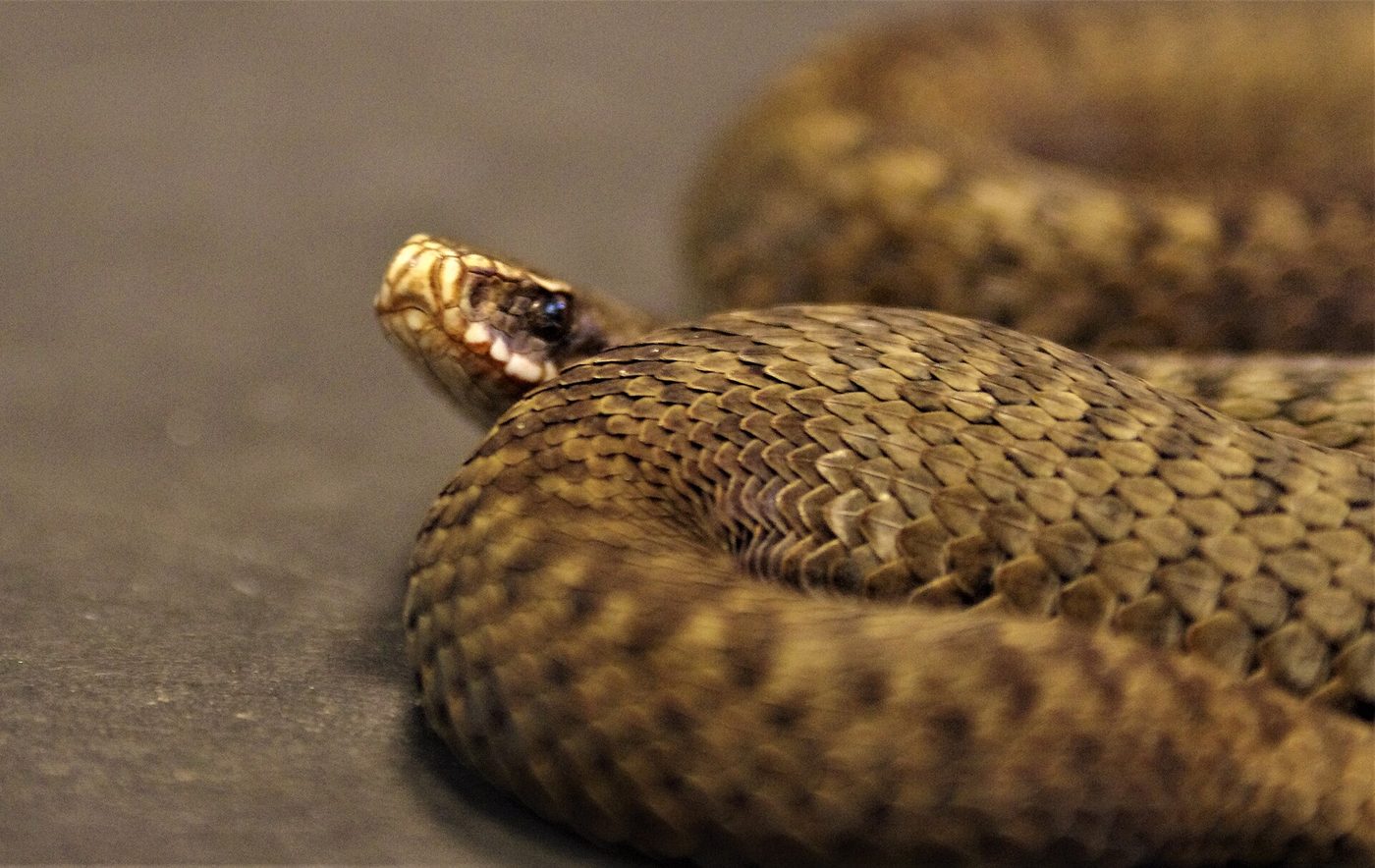
The coat (scales) is the most distinctive characteristic: complex "reticulated" pattern composed of dark spots (black, brown, gold) interconnected by light lines (yellow, cream, white) that form an irregular rhomboidal network. Each specimen has a unique pattern (like a fingerprint). The colouration provides excellent camouflage in the tropical undergrowth dappled with sun and shadow. In captivity colour variants ("morphs") have been selected: tiger (predominance of black), genetic stripe (longitudinal lines), albino (lack of melanin), platinum (white skin with slightly visible pattern), caramel, lavender, motley. The body is cylindrical, long and slender (greater length/circumference ratio than other pythons). The tail is short in proportion to the body (1/6 of total length). The scales are smooth and shiny. It still possesses the "anal spurs" (small vestigial legs, evolutionary residues from when pythons had limbs, millions of years ago) visible as small protuberances at the sides of the cloaca.
Behaviour and curiosities
The Reticulated Python is a solitary, crepuscular-nocturnal, mainly terrestrial with arboreal-aquatic habits animal. It is sedentary: each specimen occupies a relatively small territory (1-5 km²) for years, alternating shelters (burrows dug by other animals, tree cavities, rocky crevices). Communication is limited: it includes defensive hisses, threat postures (raising the head in "S"), pheromones during the breeding season.
Reproduction takes place between January and March (in equatorial areas): males fight for females in ritual combats (they intertwine their bodies trying to lower the opponent's head, but without bites). The female lays 30-80 eggs in hidden cavities and — unique characteristic among reptiles — practises active brooding: she wraps herself around the eggs for 70-100 days, generating heat through slight involuntary muscle contractions ("muscle shivering"), maintaining the nest temperature at 31-32 °C even if the environment is colder. It is one of the rare examples of "thermogenesis" in reptiles (normally ectothermic). Once the eggs hatch, the female abandons the young: at birth they measure 60-75 cm and are already completely autonomous and predators. Longevity in nature is 15-20 years; in captivity specimens of 25-30 years documented. Sexual maturity is reached at 3-5 years (females 4 m, males 3 m).
Culturally and curiously, the Reticulated Python is the subject of numerous Asian legends: in Indonesian and Malay cultures it is often considered the "guardian of the forests", revered in some tribes and hunted in others. Sport curiosities: the famous python "Medusa" (Kansas City, USA, 2011) is registered by Guinness World Records as "longest living captive snake" at 7.67 m and over 158 kg. The python "Fluffy" (Columbus Zoo, USA, 2010) held the previous record at 7.3 m (died in 2010). Historically, the most contested length record is of a specimen killed in Sulawesi in 1912 (10 m), but some sources maintain that the measurement was inflated. In modern commerce, the skin of the Reticulated Python is highly sought in the luxury fashion industry (Gucci, Louis Vuitton, Hermès use reticulated python skins for bags, shoes, belts). Recent studies (2020) have discovered that the venom of other snake species is effective against the Reticulated Python (even though it is non-venomous): their immune system is less resistant than other pythons. In rural areas of Southeast Asia, the killing of pythons for skin, meat and protection of livestock is still common practice; conservation programmes seek to reduce pressure on wild populations.
Pros
- Serpente più lungo del mondo (record 10 m, 158 kg)
- Costrittore non velenoso, raramente pericoloso per l'uomo
- Femmina pratica cova attiva (unica nei rettili)
- Mascelle dilatabili 4-5 volte il normale
Cons
- Specie più cacciata al mondo per pelle (500.000/anno per moda lusso)
- Terrariofilia richiede strutture giganti (min 4×2×2 m)
- Ricchiede prede vive grandi (ratti adulti, polli)
- Vietato come pet in molti stati USA per dimensioni