Photo: Peter Krimbacher · CC BY 3.0
Rosalia longicorn
Rosalia alpina
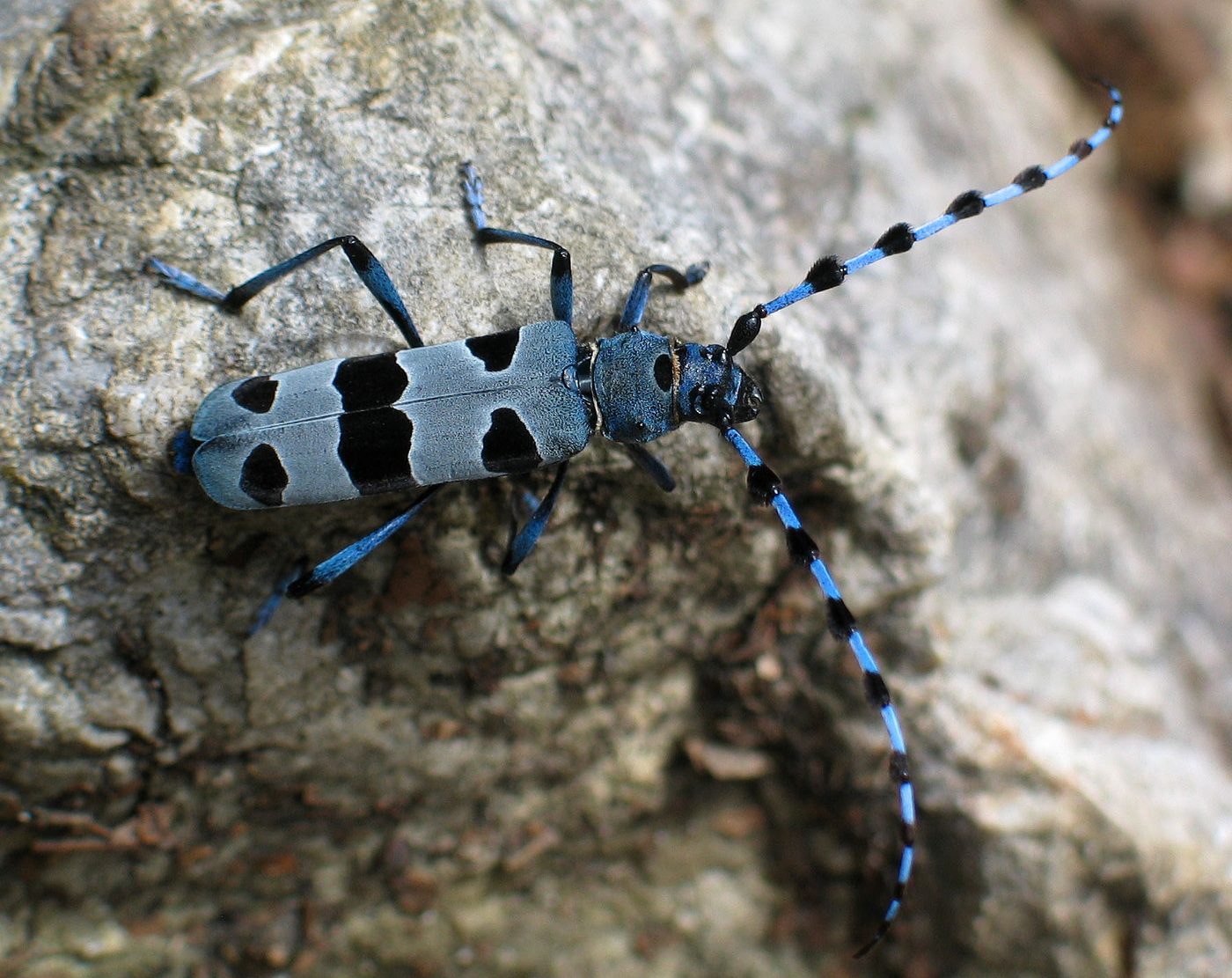
With its splendid blue livery spotted with black and its very long antennae, the Rosalia longicorn is one of the most beautiful and protected beetles of the European beech woods.
Characteristics
Temperament
Diurnal, tied to beech woods, short-lived adults
Diet
The larvae feed on the dead wood of beech
A blue jewel of the woods
The Rosalia longicorn is one of the most elegant and sought-after beetles in Europe, famous for its beauty. It has a slender body of a delicate grey-blue colour, adorned with striking black spots arranged in a characteristic pattern on the elytra, the hardened forewings. Even more remarkable are its antennae: very long, often longer than the body, and also adorned with tufts of dark hair. It belongs to the group of longhorn beetles, the so-called 'long-horned' beetles, to which it owes its unmistakable appearance.
Habitat and distribution
The Rosalia longicorn is closely tied to the mature beech woods of Europe, in particular those of mountains and hills, where old beech trees grow. It is an inhabitant of ancient, well-preserved woods, rich in dead wood and old trees, elements fundamental to its life cycle.
Life cycle in wood
The Rosalia's bond with the beech is deep and concerns above all its larvae. After the eggs are laid, the larvae develop inside the dead or decaying wood of old beeches, where they dig tunnels, feeding on the timber for years before turning into adults. The adults, seen mainly in summer, have a short life and fly among the trees. This cycle makes the species totally dependent on the presence of old trees and dead wood in the forest.
Curiosities
The Rosalia longicorn is considered by many one of the most beautiful insects on the European continent, so much so that it has become a symbol of the conservation of ancient forests. Its blue colouring, unusual among beetles, makes it immediately recognisable.
Conservation
The Rosalia longicorn is classified as a vulnerable species and is protected by European law. The main threat is the disappearance of mature beech woods and the removal of dead wood from forests, practices that eliminate the very habitats the larvae need. Preserving ancient woods and leaving old trees and decaying timber in place is essential for the survival of this splendid beetle.
Pros
- Unique and splendid spotted blue livery
- Very long antennae, a 'long-horned' beetle
- Symbol of the conservation of ancient forests
- Valuable for the recycling of dead wood
Cons
- Vulnerable and protected species
- Depends on mature beech woods and dead wood
- Threatened by the removal of old trees