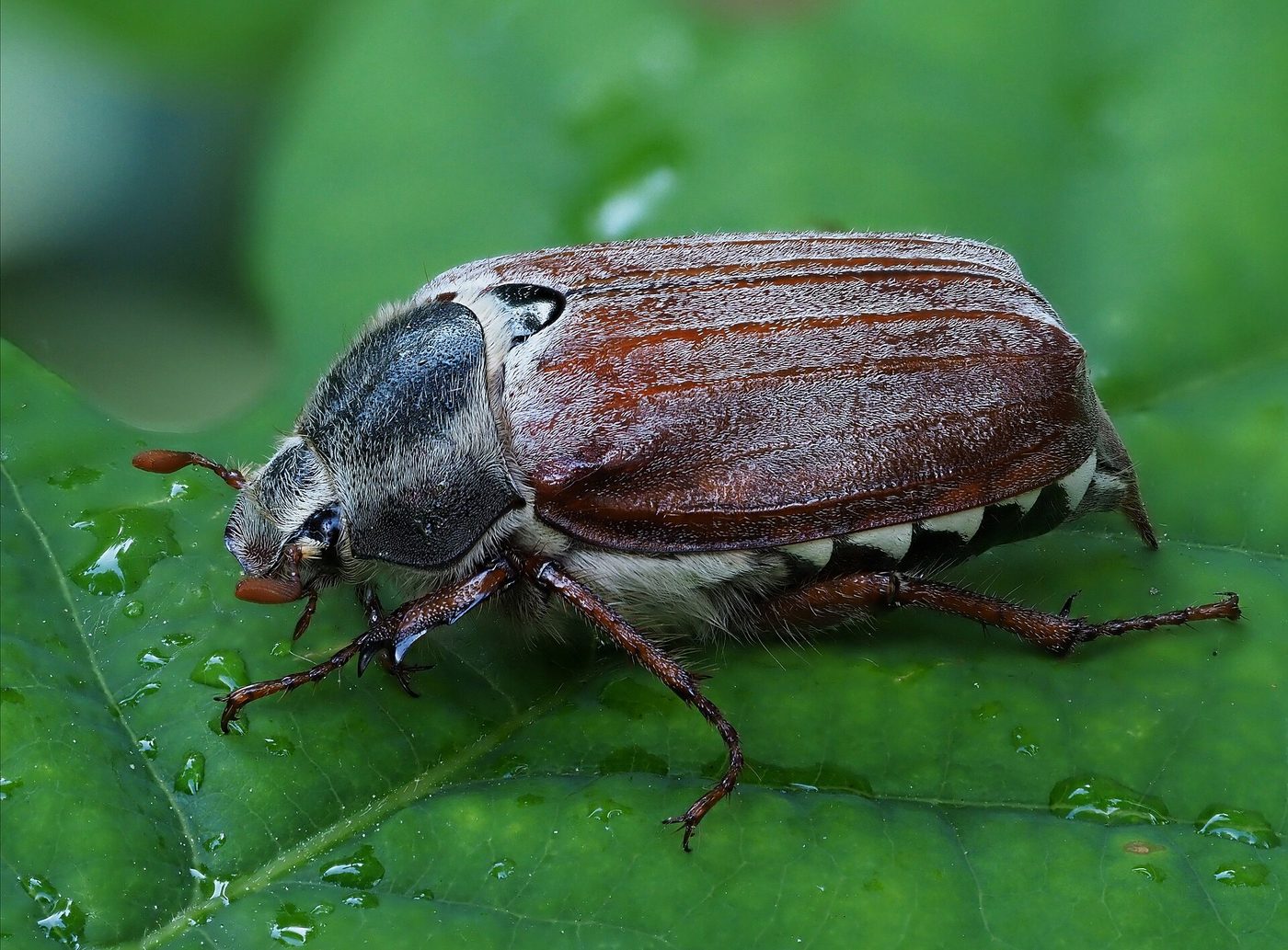
Cockchafer
Melolontha melolontha
The cockchafer is a large brown beetle with fan-shaped antennae, once very common, appearing in spring with clumsy, buzzing flights at dusk.
Characteristics
Temperament
Crepuscular, clumsy flier, spring insect
Diet
Adults: tree leaves; larvae: roots
Description
The common cockchafer is a large beetle of the scarab family, about 2.5-3 centimetres long. It has a black head and thorax and warm reddish-brown wing cases, with the sides of the abdomen marked by typical white triangles. Its most distinctive feature is its antennae, which in the male open into a striking fan of seven leaves, used to scent the air. Its flight is heavy and loud.
Habitat and distribution
It occurs throughout Europe, in lowlands and at low altitudes. It frequents open woodland, fields, orchards and wooded gardens. The adults appear in spring, between April and May, hence the name Maybug, flying especially at dusk around tree canopies.
Life cycle
It has a long developmental cycle, usually three or four years. The larvae, stout whitish grubs curled in a C shape, live in the soil feeding on plant roots. The adults, by contrast, feed on the leaves of trees such as oaks and beeches. Population explosions could once defoliate entire woods.
Did you know?
In the past the cockchafer was very common and appeared in millions on May nights; today, due to insecticide use and habitat loss, it is much rarer. Its clumsy, noisy flight and fan-shaped antennae make it unmistakable.
Notes and role
Both the larvae, harmful to roots, and the adults, which defoliate trees, were regarded as agricultural pests. Today, far less abundant, the cockchafer has returned to being above all a fascinating insect of spring evenings.
Pros
- Large and unmistakable, with fan-shaped antennae
- Fascinating insect of spring evenings
- Important prey for birds and bats
Cons
- Larvae and adults harmful to agriculture
- Much rarer through insecticides and habitat loss
- Clumsy, noisy flight, often hits obstacles