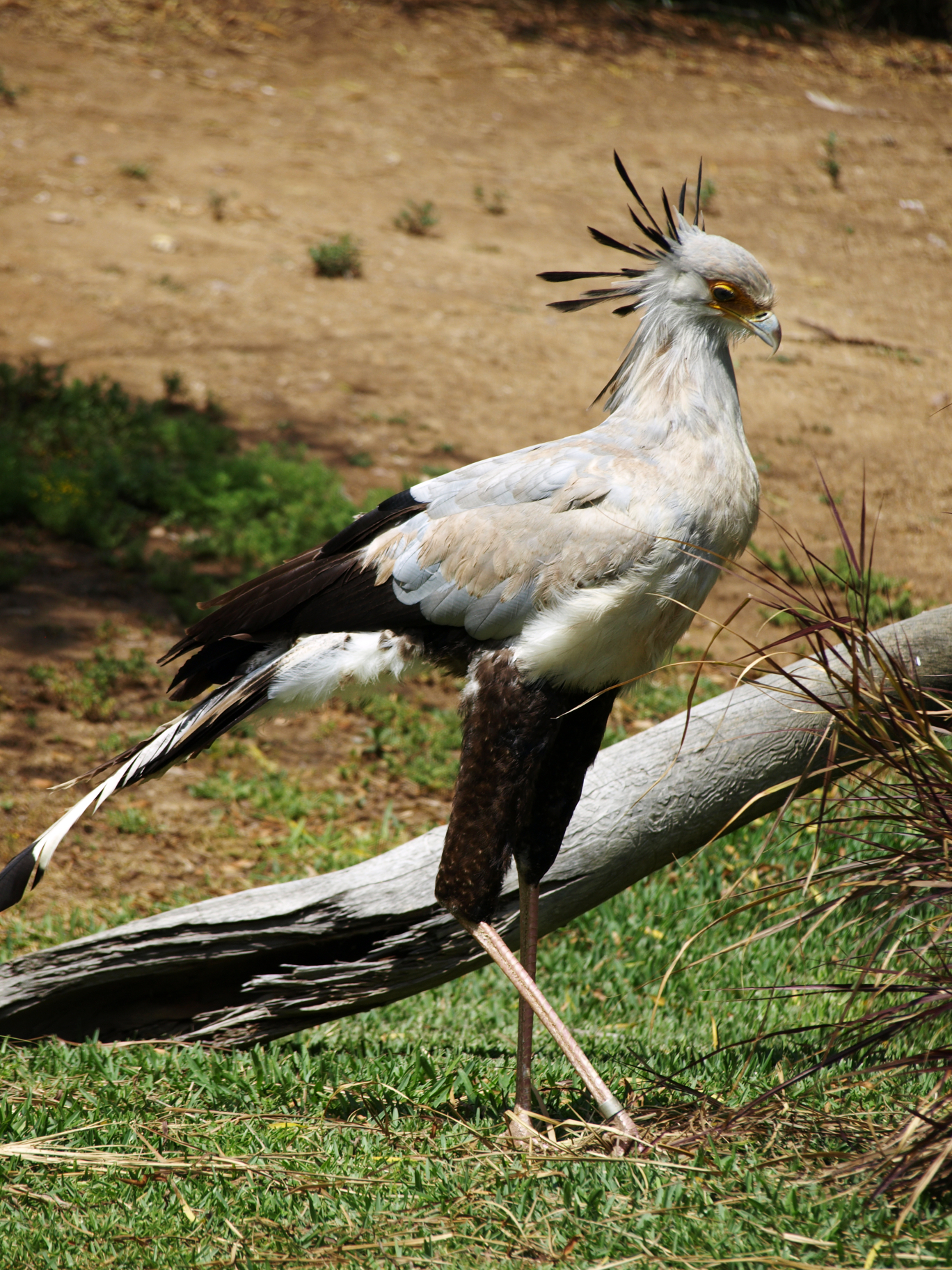
Secretary Bird
Sagittarius serpentarius
Characteristics
Temperament
Diurnal, solitary or paired, lifelong monogamous. UNIQUE WALKING RAPTOR (not flying) 20-30 km/day in African savannas. KILLS VENOMOUS SNAKES with 5-7G KICK in 15 ms. MONOTYPIC family Sagittariidae — living fossil 80 Mya. Height 1.3 m (TALLEST RAPTOR in world). Name from nape feathers resembling secretarial quill pens. South Africa national symbol. IUCN Endangered.
Diet
Generalist ground carnivore. Snakes up to 50% diet (cobras, mambas, vipers — most important snake predator among African raptors), lizards, small turtles, rodents, hares, birds/eggs, amphibians, large insects, occasional gazelle young. Hunts by walking 20-30 km/day + sprint + LETHAL KICK 5-7G in 15 ms (Portugal et al., 2016). 0.3-1 kg meat/day. 8-15 prey/day.
The Secretary Bird (Sagittarius serpentarius) is one of the most iconic and UNIQUE raptors in the world. Endemic to sub-Saharan savannas, famous for:
- RAPTOR THAT WALKS: unlike all other raptors, spends most time walking on land (20-30 km/day), flying only for night roost or emergencies
- Venomous snake predator: cobras, black mambas, vipers — kills them by KICKING with 5-7G force in just 15 milliseconds (Portugal et al., 2016)
- Monotypic family: Sagittariidae contains only Sagittarius genus — no close living relatives
- Height 1.3 m: tallest raptor in the world
- Wingspan 2 m: large wings, rarely used
- "Secretarial" plumes: long black feathers on nape resembling 18th-century quill pens behind secretaries' ears
- National symbol: South Africa's coat of arms, Sudan's emblem
- Lifelong monogamous
IUCN status: Endangered (EN) since 2020. Estimated global population: 6,700-67,000 mature individuals (80% decline in 60 years).
Classification and category
Order Accipitriformes, family Sagittariidae (monotypic — only genus Sagittarius with only species S. serpentarius). One of few birds with entirely monotypic family. Most basal of Accipitriformes — separated from all other raptors ~80 Mya. Closest living relatives (distant): possibly cuckoo roller (Leptosomidae) of Madagascar, or New World vultures (Cathartidae). Etymology: "Sagittarius" Latin "archer" (feather arrows). "Serpentarius" Latin "serpent" (snake diet). "Secretary" from black nape feathers resembling 18th-century quill pens. Described by Miller 1779. Parameters: Weight 2.3-4.3 kg. Height 1.2-1.5 m (TALLEST raptor!). Length 1.1-1.5 m. Wingspan 1.9-2.2 m. Tarsi 60% of height. Longevity 10-15 years natural, 25 captive. Sexual maturity 2-3 years. 2-3 eggs/year. Incubation 42-46 days. Chicks at nest 65-106 days.
Habitat and distribution
Endemic to sub-Saharan Africa. West Africa: fragmented populations. Central Africa: moderate. East Africa: dense populations (Maasai Mara, Serengeti, Tsavo). Southern Africa: stable (Kruger NP). Habitats: open grass savannas (main), Acacia savannas, Miombo woodland, semi-arid pastures, seasonal flooded plains. Avoids dense rainforests, extreme deserts, mountains above 3,000 m, urban areas. IUCN: Endangered (EN) since 2020 (Vulnerable 2011, Least Concern before). 80% decline in 60 years. Threats: habitat loss (main), secondary poisoning, hunting, power line accidents, fragmentation, nest disturbance, livestock conflict. CITES: Appendix II.
Diet
Generalist carnivore, ground-prey specialist. Diet: snakes (up to 50%! — cobras, mambas, vipers; most important snake predator among African raptors), lizards, small turtles, rodents, hares/leverets, birds/eggs, amphibians, large insects, occasional gazelle young, small mongoose. Hunting: walks 20-30 km/day, visual location, charges with strides, KICKS prey with 5-7G force in 15 ms (more than 1000 N), beak finish. Portugal et al. (2016) measurements: kick acceleration like fighter jet pilot at 9G, 15 ms reaction faster than human blink. Eats 0.3-1 kg meat/day.
Physical features
ABSOLUTELY UNIQUE silhouette among raptors. Plumage: grey/white body, black wings with white tips, black tail with white-tipped ends + central elongated "arrow" feathers, black "trousers" on legs, black "secretarial" nape plumes (10-15 cm — diagnostic). Head: hooked beak, ORANGE-RED bare facial skin, amber eyes. Body: EXTREMELY LONG legs (60% of height), 25-30 cm tarsi (exceptional), 4 toes with short curved claws, hardened plantar pads, broad rigid wings (rarely used). Speed: walks 8-10 km/h, runs 20-25 km/h, flies 50-60 km/h. Vision 8-10× human. Kick: 5-7G, 1000+ N, 15 ms.
Behaviour and curiosities
Diurnal, solitary or paired, long-term monogamous. Territory 50-100 km² per pair. Nest on solitary acacia trees 3-15 m high, used 30+ years. 2-3 eggs, 42-46 days incubation, chicks at nest 65-106 days. Defence: rapid walking flight or kicking attack.
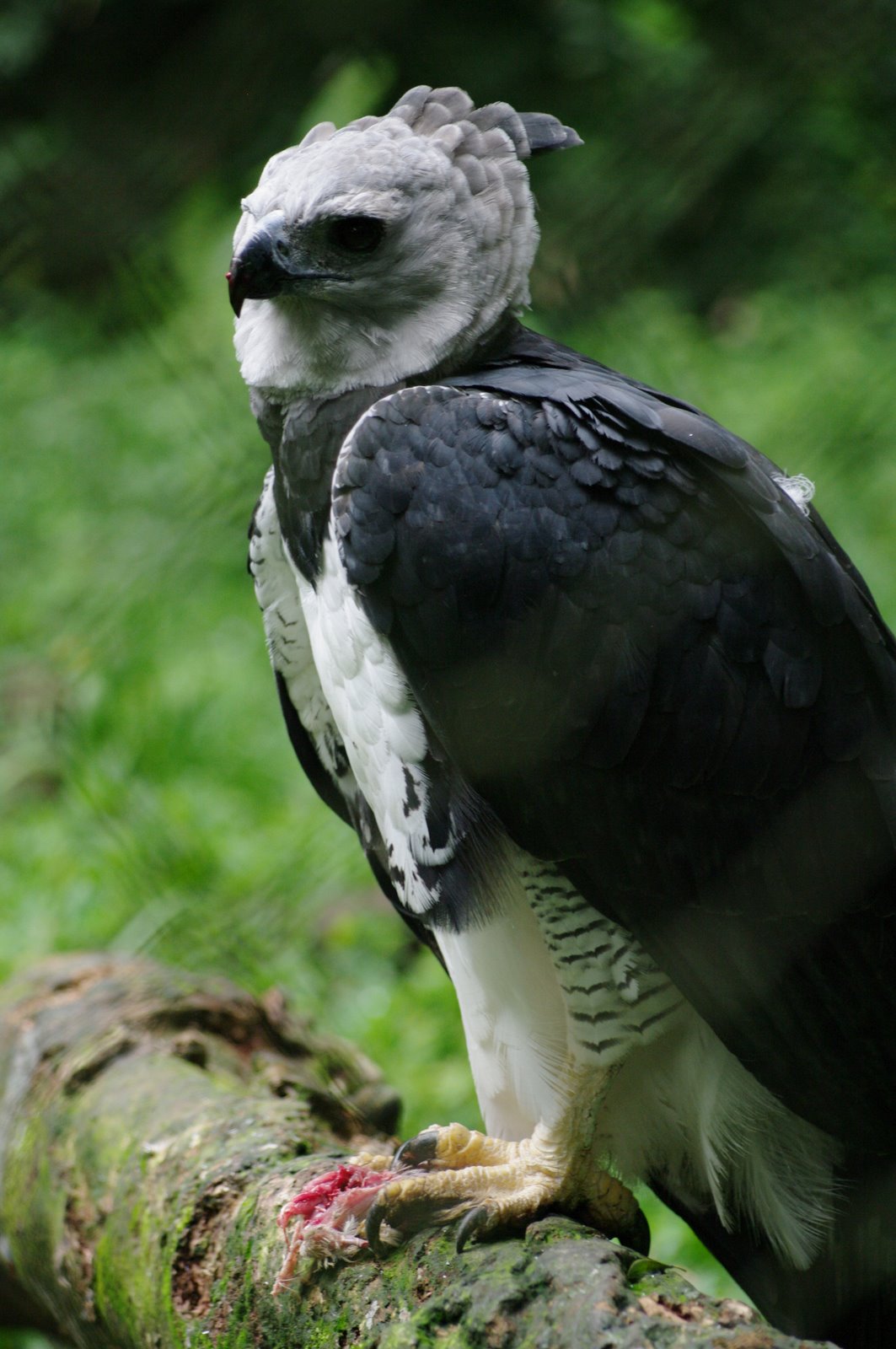
Famous curiosities: "lethal kick" studied by Portugal et al. 2016 (Current Biology). 5-7G acceleration, 15 ms reaction (faster than blink), 1000+ N force, 90%+ accuracy on snake heads. One of most powerful kickers in animal kingdom relative to weight. "Secretary" name: black nape plumes resembling 18th-century quill pens behind ears. Alternative Arabic origin: "saqr-et-tair" (hunter falcon). Monotypic family: one of oldest and most isolated bird families, separated 80 Mya, "living fossil". National symbol: South Africa coat of arms (2000), Sudan emblem, Kenya conservation logos. Walking speed: 20-30 km/day (20,000-30,000 steps!). Tallest raptor: 1.3 m vs Harpy Eagle 90-105 cm, Andean Condor 100-130 cm. Pair courtship: spectacular flight displays, partners for life. Pair hunting: cooperative for large/dangerous prey. Fire opportunist: captures fleeing prey during savanna fires. Possible snake venom resistance: not fully characterised. Concerning decline: 80% in 60 years, IUCN EN 2020. Longevity: 19 years natural, 25 captive (National Zoo Washington).
Pros
- Predatore UNICO al mondo: rapace che cammina e calcia
- Famiglia monotipica isolata da 80 milioni di anni
- Simbolo nazionale del Sudafrica (stemma 2000)
- Forza del calcio tra le più alte del regno animale
Cons
- IUCN Endangered dal 2020, declino 80% in 60 anni
- Vulnerabile a perdita habitat e avvelenamento
- Frammentazione popolazione in Africa Occidentale
- Disturbo umano dei nidi causa fallimento riproduttivo