Black Locust: The Hardy Tree with Fragrant White Flowers
Trees

Black Locust: The Hardy Tree with Fragrant White Flowers

Robinia pseudoacacia

Growing black locust: fast-growing hardy tree with fragrant white nectar-rich flowers. Full sun, poor soil, source of prized acacia honey.

Characteristics

Scientific nameRobinia pseudoacacia
Height15-25 m
Sunlightpieno sole
Waterbassa
Soildrenante povero
Toxicitytossica
Growthveloce
Temperature-25 a 35 °C
FloweringMay, Jun
IrrigationWater only in the first years after planting; mature trees are very drought-resistant and self-sufficient.

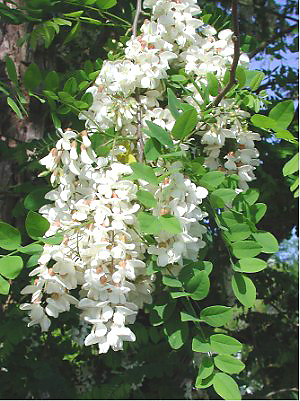
Black locust (Robinia pseudoacacia), or false acacia, is a fast-growing hardy tree with fragrant hanging clusters of white flowers, from which bees make the prized ‘acacia honey’. It grows in full sun even on poor soil, fixing nitrogen. It must be managed as it can become invasive.

Flowering season

JanFebMarAprMayJunJulAugSepOctNovDec

Practical tips

Watering

Water needs: bassa — always check soil moisture before watering.

Position

Prefers pieno sole: provide the right light and rotate the plant for even growth.

Substrate

Recommended soil: drenante povero. Refresh the substrate every 1-2 years.

Leaves

Dust the leaves with a damp cloth to support photosynthesis.

Feeding

Feed during the growing season (spring-summer) and stop in winter.
FAQ

Is black locust an invasive plant?
Yes, in many regions it is considered invasive: it spreads vigorously by root suckers and seed, colonising wasteland and slopes. It should be planted thoughtfully and controlled regularly.
Why does acacia honey come from black locust?
'Acacia honey' actually comes from black locust (false acacia) flowers, not from true acacias. It is very pale, runny and delicately flavoured, among the most prized honeys.

You may also like