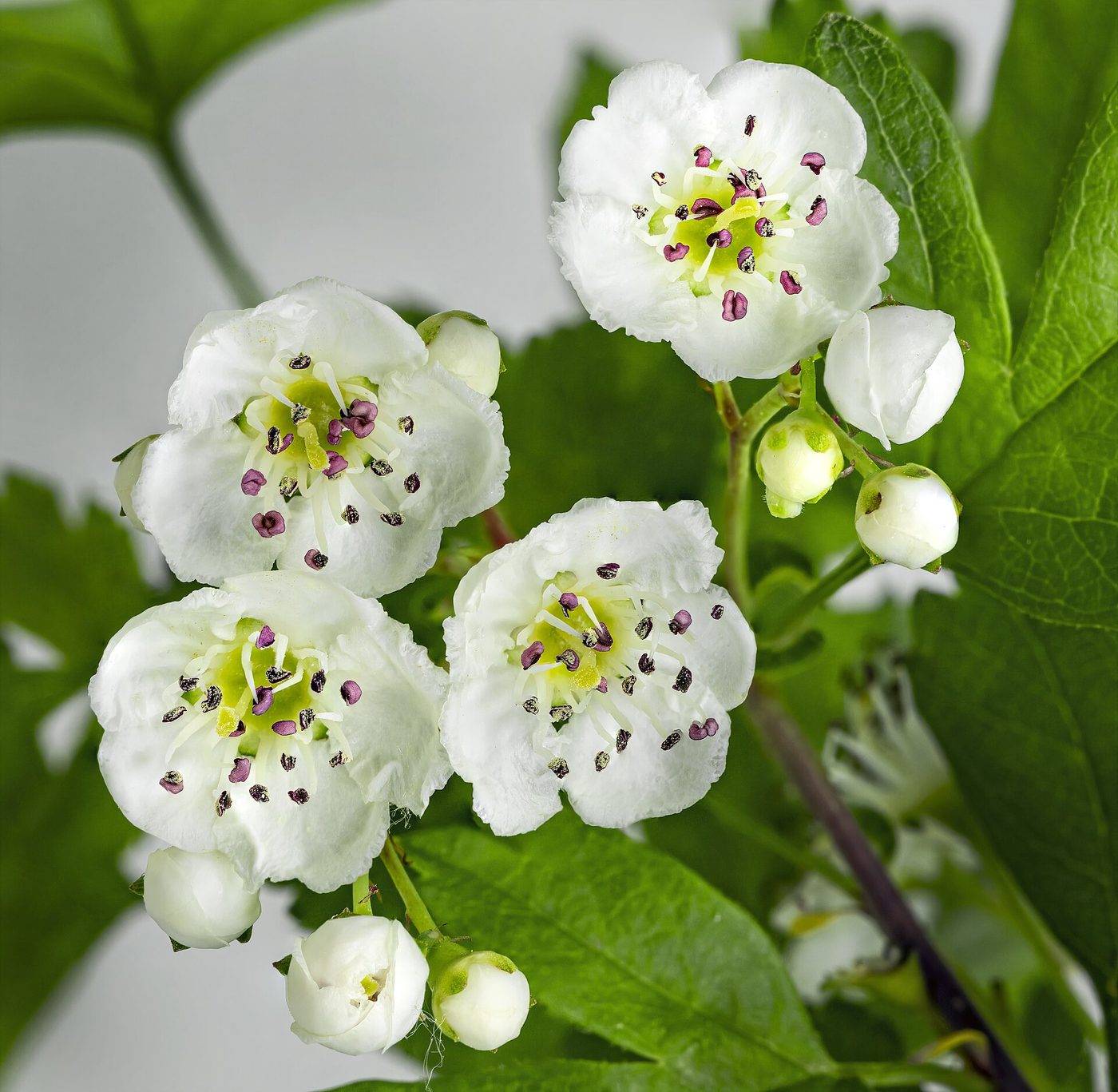
Photo: Didier Descouens · CC BY-SA 4.0
Common hawthorn
Crataegus monogyna
Common hawthorn is a thorny shrub that covers itself in fragrant white flowers in spring and small red berries in autumn, prized by wildlife.
Characteristics
Description
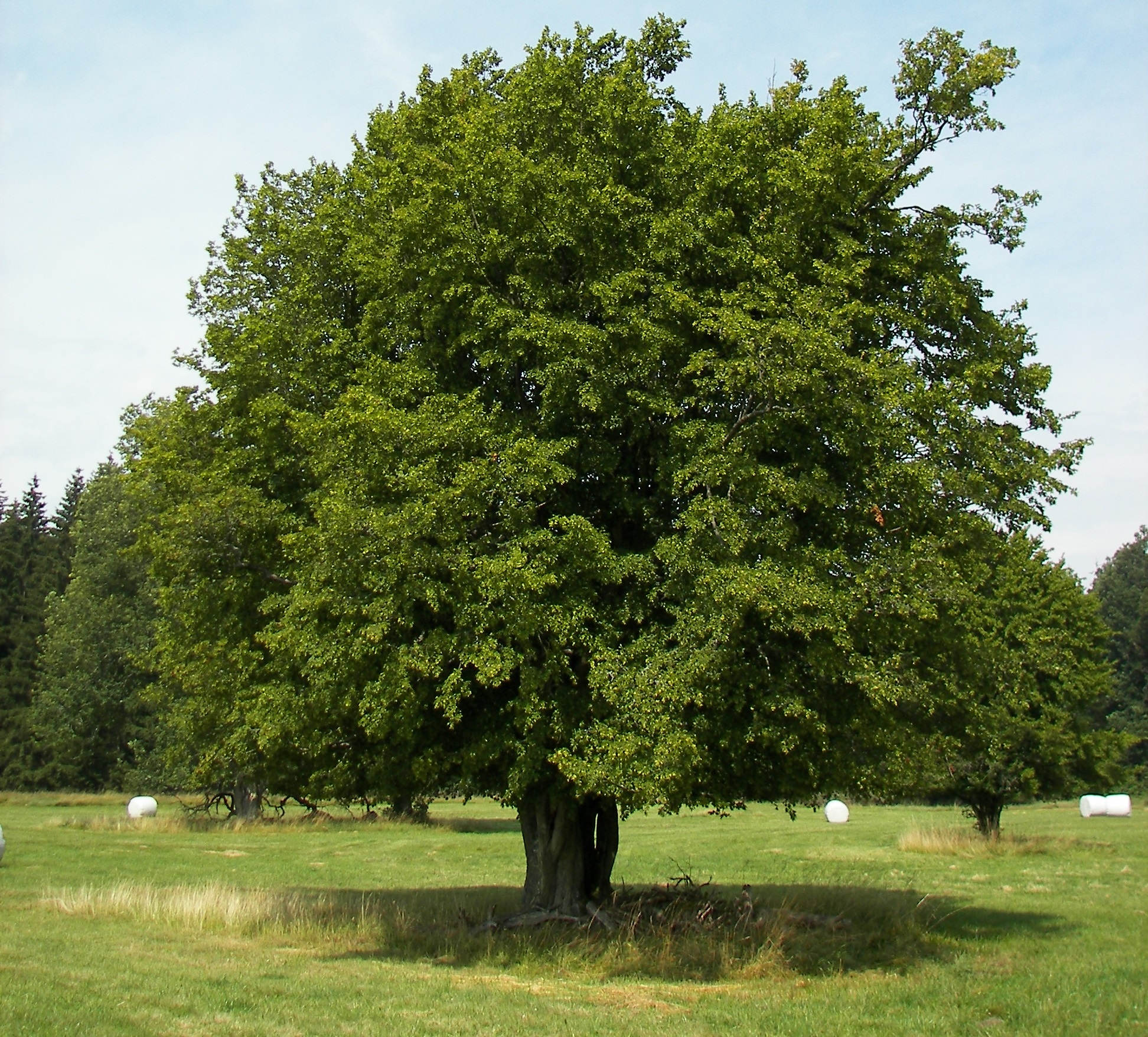
Common hawthorn is a much-branched, gnarled, thorny shrub or small tree of the rose family, growing from 2 to 10 metres tall. Its leaves are deeply lobed, and in late spring the flowers appear, white and gathered in corymbs, with a characteristic strong scent. In autumn it produces small red, globe-shaped fruits, berry-like, each containing a single stone, hence the scientific name monogyna.
Habitat and distribution
It is native to Europe, North Africa and western Asia. It grows at woodland edges, in hedgerows, pastures and on slopes, adapting to a great variety of soils, even poor and chalky. It is a pioneer plant and very long-lived: some specimens live for centuries.
Cultivation and uses
It is a hardy, tough shrub, among the most used for countryside hedges, often together with blackthorn. It wants full sun or part shade and tolerates drought, cold and pruning well. In herbal medicine hawthorn flowers and fruits have been used for centuries as a traditional remedy for cardiovascular wellbeing.
- Plant in a mixed hedge for barriers and windbreaks
- Tolerates hard pruning to control its shape
- Leave the fruit on the tree as winter food for birds
Value for wildlife
Hawthorn is one of the most important shrubs for biodiversity: the flowers attract many pollinating insects, the thorns offer safe shelter for birds' nests, and the fruits, known as haws, feed thrushes, blackbirds and other birds through the winter.
Flowering season
Practical tips
Water needs: Low once established — always check soil moisture before watering.
Prefers Full sun or part shade: provide the right light and rotate the plant for even growth.
Recommended soil: Adaptable, including chalky and poor. Refresh the substrate every 1-2 years.
Dust the leaves with a damp cloth to support photosynthesis.
Feed during the growing season (spring-summer) and stop in winter.
Pros
- Fragrant flowering loved by pollinators
- Excellent for defensive hedges and windbreaks
- Flowers and fruit used in traditional herbal medicine
Cons
- Stout thorns, to be handled with care
- Slow growth in the early years
- Can host fire blight bacterial disease