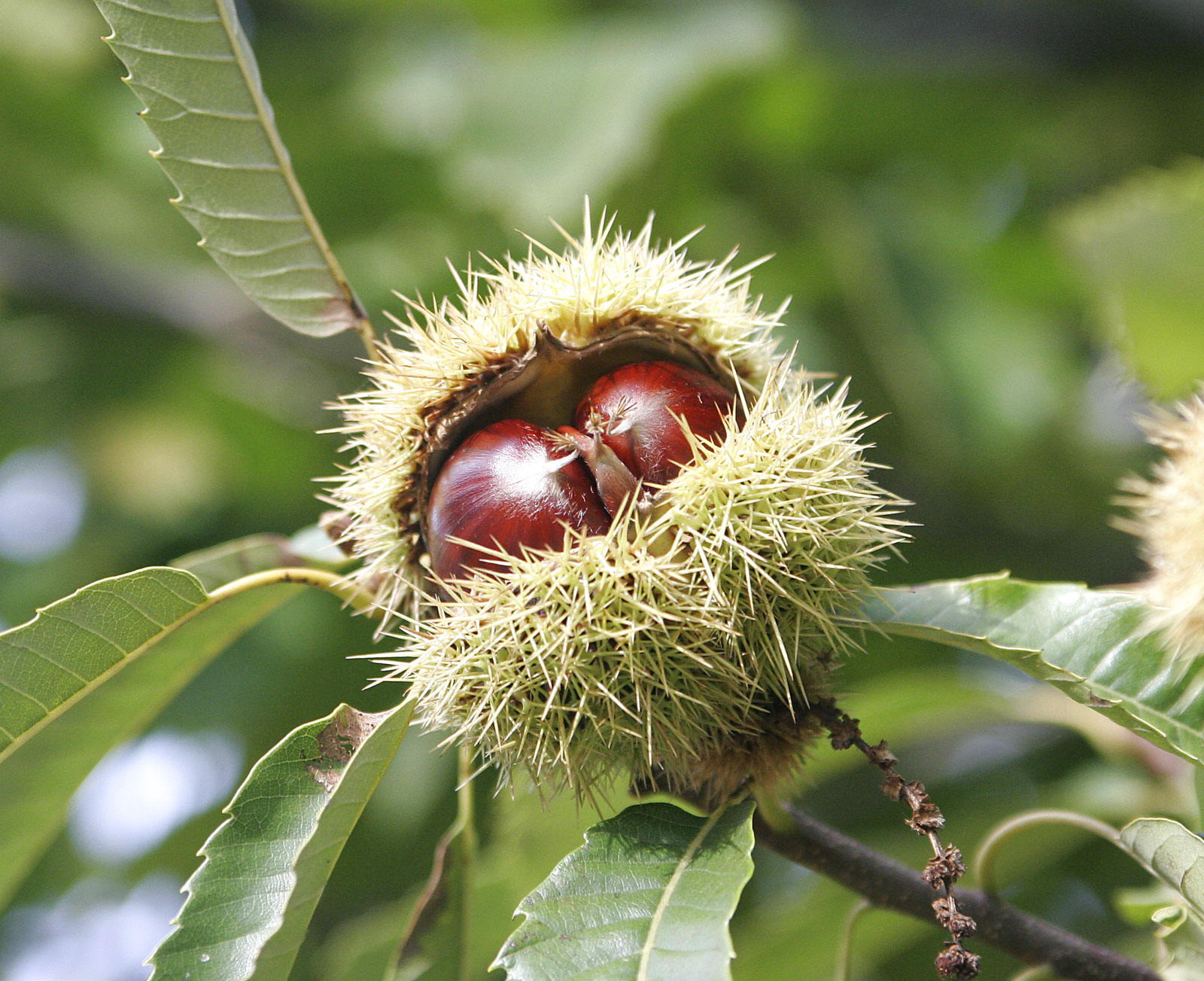
Sweet Chestnut: How to Grow the Mediterranean Forest Tree
Castanea sativa
Growing sweet chestnut: long-lived broadleaf of hilly and mountain zones. Produces sweet chestnuts, lives centuries, symbol of Italian Apennines.
Characteristics
Sweet Chestnut is a long-lived majestic broadleaf tree of European hilly and mountain forests, cultivated for thousands of years for sweet nutritious chestnuts. It grows vigorously in full sun on acidic well-drained soils, reaching 30 metres and living up to 500-1000 years. An iconic tree of the Apennines and Alps.
Flowering season
Practical tips
Water needs: media — always check soil moisture before watering.
Prefers pieno sole: provide the right light and rotate the plant for even growth.
Recommended soil: acido drenante. Refresh the substrate every 1-2 years.
Dust the leaves with a damp cloth to support photosynthesis.
Feed during the growing season (spring-summer) and stop in winter.