Photo: m.dolores paderne sa… · CC BY-SA 3.0
Common daisy
Bellis perennis
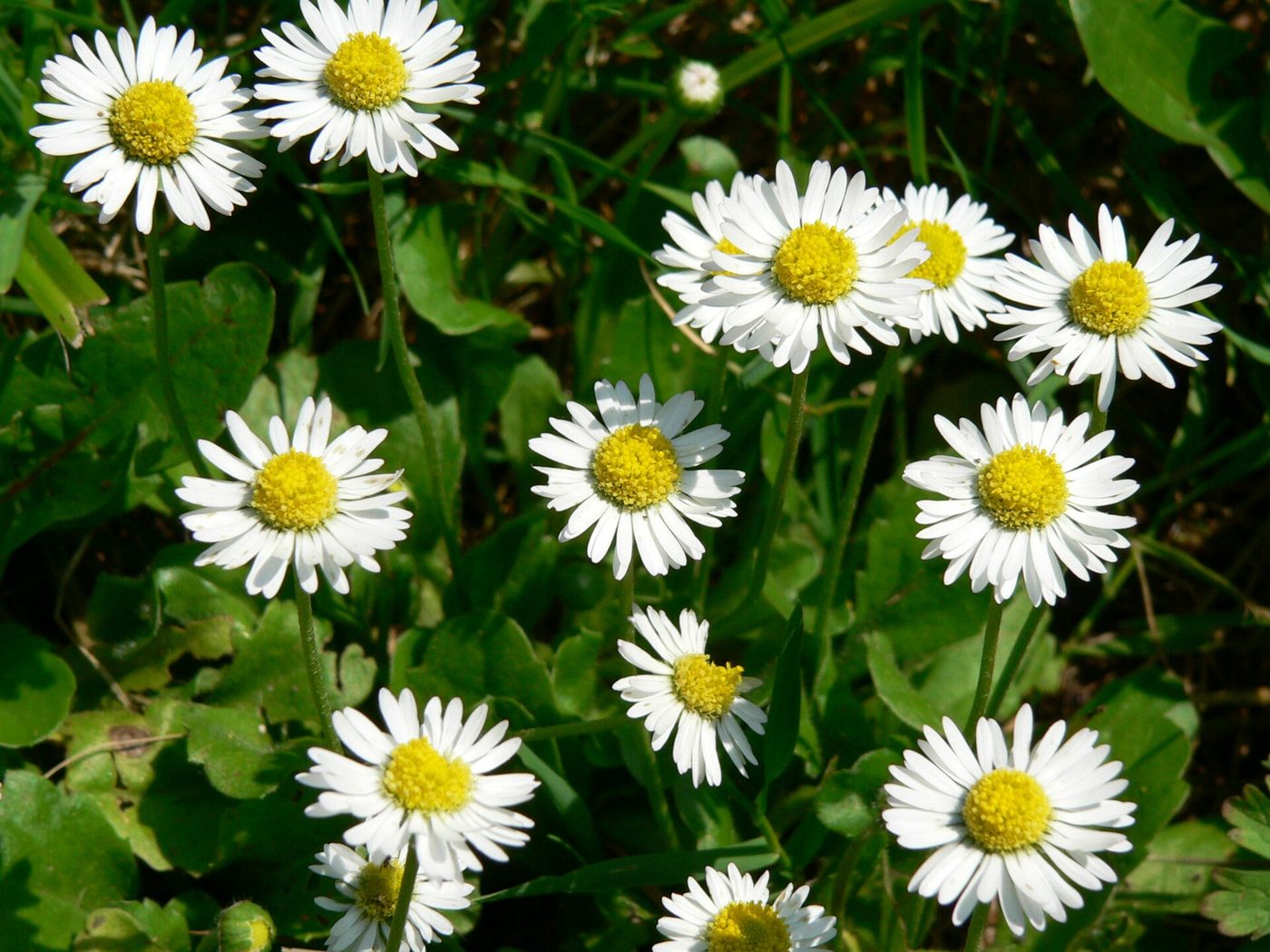
The humblest and best-loved of meadow flowers: the daisy opens its white petals to the sun and closes them at night, dotting the meadows for much of the year.
Characteristics
The flower of meadows
The common daisy, also called the lawn daisy, is a small perennial herbaceous plant, among the most common and recognisable wildflowers of Europe. It forms low rosettes of leaves flattened to the ground, from which rise slender stems bearing a single flower head. What looks like a flower is in fact a composite inflorescence: a central disc of tiny yellow flowers, surrounded by a crown of white petals, often tinged with pink at the tip.
Its low stature lets it survive the mowing of lawns, sprouting back tirelessly.
Where it grows
It is a hardy and highly adaptable plant, widespread throughout Europe and now across much of the world. It grows wild in meadows, gardens, along paths, in parks and grassy ground. It prefers sunny positions but also tolerates partial shade, and it does not fear trampling, which lets it thrive even in the busiest lawns.
A flower that follows the sun
One of the most fascinating features of the daisy is the movement of its flower heads: they open in the morning with the sunlight and close in the evening or on cloudy days. This behaviour, together with its very long flowering that can stretch from early spring into late autumn, makes it a constant and reassuring presence in meadows.
Cultivation and uses
The daisy needs almost no care: it is hardy, spreads on its own and withstands mowing well. In gardens it is often left to grow in flowery lawns or cultivated in ornamental varieties with larger, double flowers. The young leaves and flowers are edible and were once used in folk medicine, so much so that the genus name recalls soothing properties.
A symbol of simplicity
Classified as least concern, the daisy is anything but threatened. Humble and very widespread, it has always been a symbol of simplicity and innocence, the star of childhood games such as flower chains. Its presence in meadows also supports small pollinators, offering nectar for much of the warm season.
Flowering season
Practical tips
Water needs: Moderate — always check soil moisture before watering.
Prefers Full sun or partial shade: provide the right light and rotate the plant for even growth.
Recommended soil: Adaptable, best if fresh. Refresh the substrate every 1-2 years.
Dust the leaves with a damp cloth to support photosynthesis.
Feed during the growing season (spring-summer) and stop in winter.
Pros
- Very long flowering, spring to autumn
- Hardy and undemanding
- Tolerates trampling and mowing
- Supports small pollinators
Cons
- Can spread widely in lawns
- Flowers small and inconspicuous singly