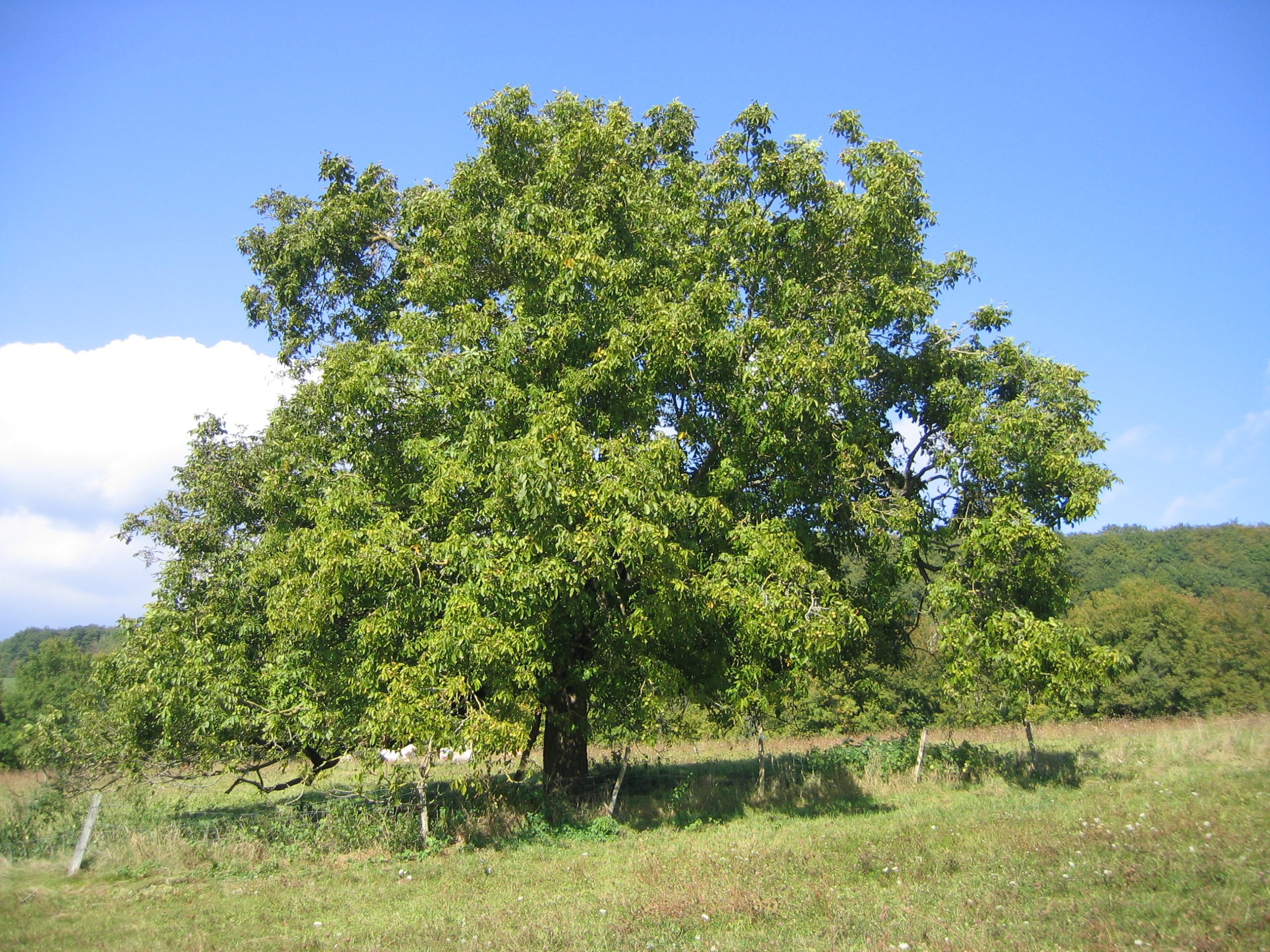
Common Walnut: Growing Juglans regia
Juglans regia
Common walnut care (Juglans regia): large tree for edible nuts and fine timber. Full sun, deep fertile soil, frost hardy, flowers in spring.
Characteristics
The common walnut (Juglans regia) is a large deciduous tree grown for its edible nuts and valuable timber. It wants full sun and deep, fertile, well-drained soil and is frost hardy. It produces juglone, a compound that suppresses other plants under its canopy. It reaches 15-25 metres and flowers in spring.
Flowering season
Practical tips
Water needs: media — always check soil moisture before watering.
Prefers pieno sole: provide the right light and rotate the plant for even growth.
Recommended soil: profondo fertile. Refresh the substrate every 1-2 years.
Dust the leaves with a damp cloth to support photosynthesis.
Feed during the growing season (spring-summer) and stop in winter.