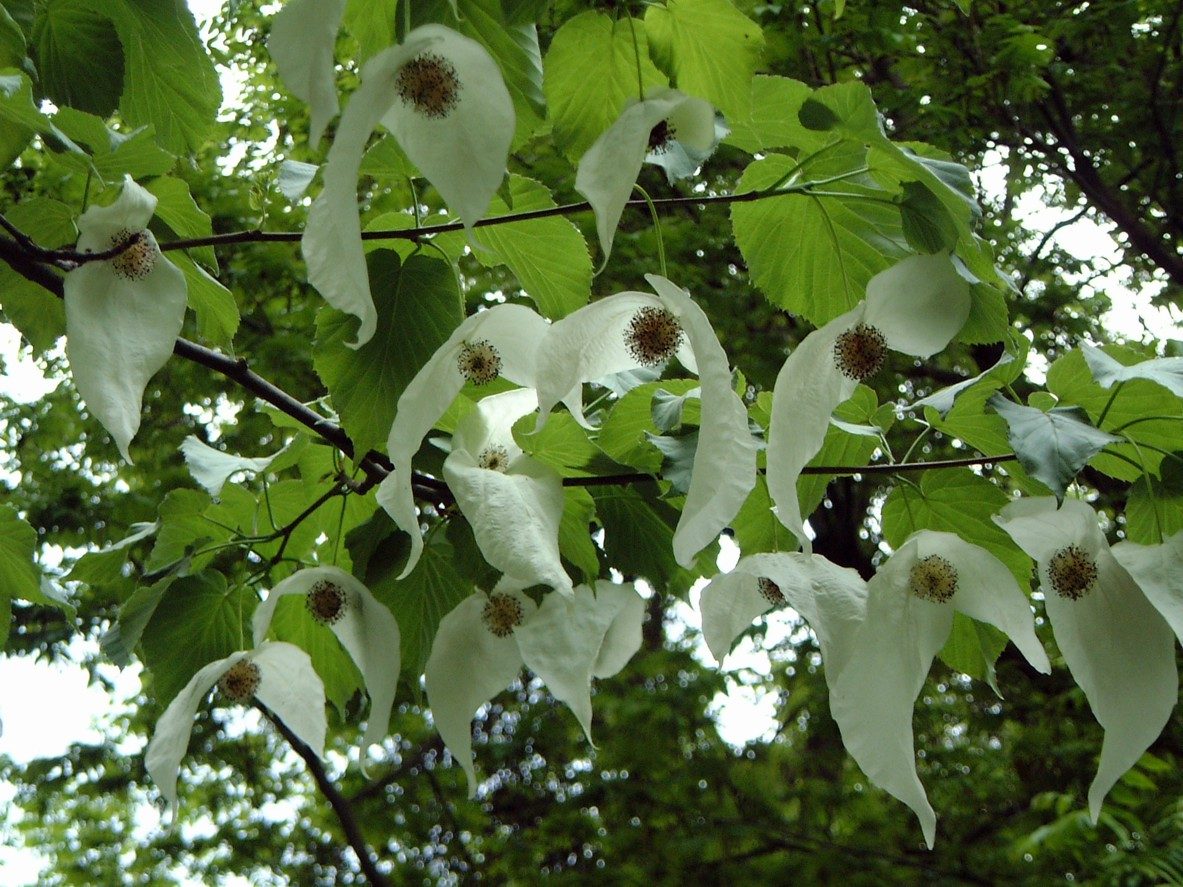
Photo: Wikimedia Commons · CC BY-SA 3.0
Handkerchief tree
Davidia involucrata
The handkerchief tree is a rare Chinese tree famous for the large white hanging bracts that in spring look like handkerchiefs or doves resting on the branches.
Characteristics
White handkerchiefs among the branches
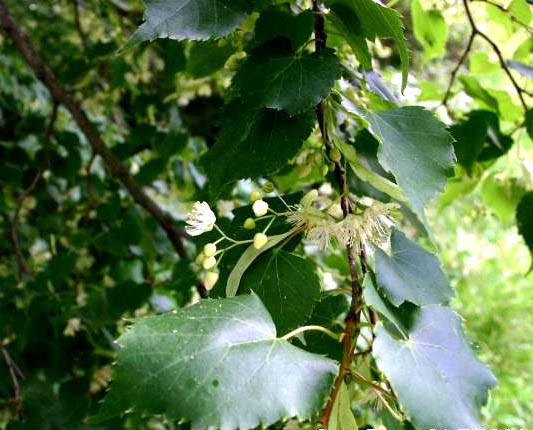
The handkerchief tree, also called dove tree, is an elegant medium-sized deciduous tree, the only species of the genus Davidia, once placed in the dogwood family and now in the Nyssaceae. It has bright green heart-shaped leaves, similar to those of a lime. But it is the spring flowering that makes it famous: the small globular flowers are accompanied by two large, unequal white bracts that hang from the branches, fluttering in the wind like handkerchiefs or, from afar, like a flock of white doves — hence the names handkerchief tree and dove tree.
Origin and habitat
It is endemic to central and southern China, where it grows in moist mountain forests. It is a rare tree, regarded as a kind of living fossil: fossil species of the genus Davidia are known extending into the Upper Cretaceous. In its native regions it has become scarce.
Cultivation
It wants full sun or bright part shade and a fertile, deep, cool, well-drained soil. It is hardy and withstands cold winters, but dislikes prolonged drought. Growth is slow and the first flowering can take several years — sometimes over a decade — from planting: for this reason it is considered a tree that rewards patience.
Ornamental use
It is grown as a prized garden and park specimen in temperate regions, where the flowering, though brief, is an unforgettable sight. It owes its scientific name and Western discovery to the French missionary and naturalist Armand David.
Care
It needs little pruning and a spot sheltered from dry winds. A mulch at the base keeps the roots cool. It is non-toxic, so it is safe even in gardens used by children and pets.
Flowering season
Practical tips
Water needs: Regular, likes cool, moist soils — always check soil moisture before watering.
Prefers Full sun or bright part shade: provide the right light and rotate the plant for even growth.
Recommended soil: Fertile, deep, cool and well-drained. Refresh the substrate every 1-2 years.
Dust the leaves with a damp cloth to support photosynthesis.
Feed during the growing season (spring-summer) and stop in winter.
Pros
- Spectacular, unique spring flowering
- Decorative heart-shaped foliage
- Very hardy and non-toxic
Cons
- Slow-growing, flowers after many years
- Dislikes prolonged drought