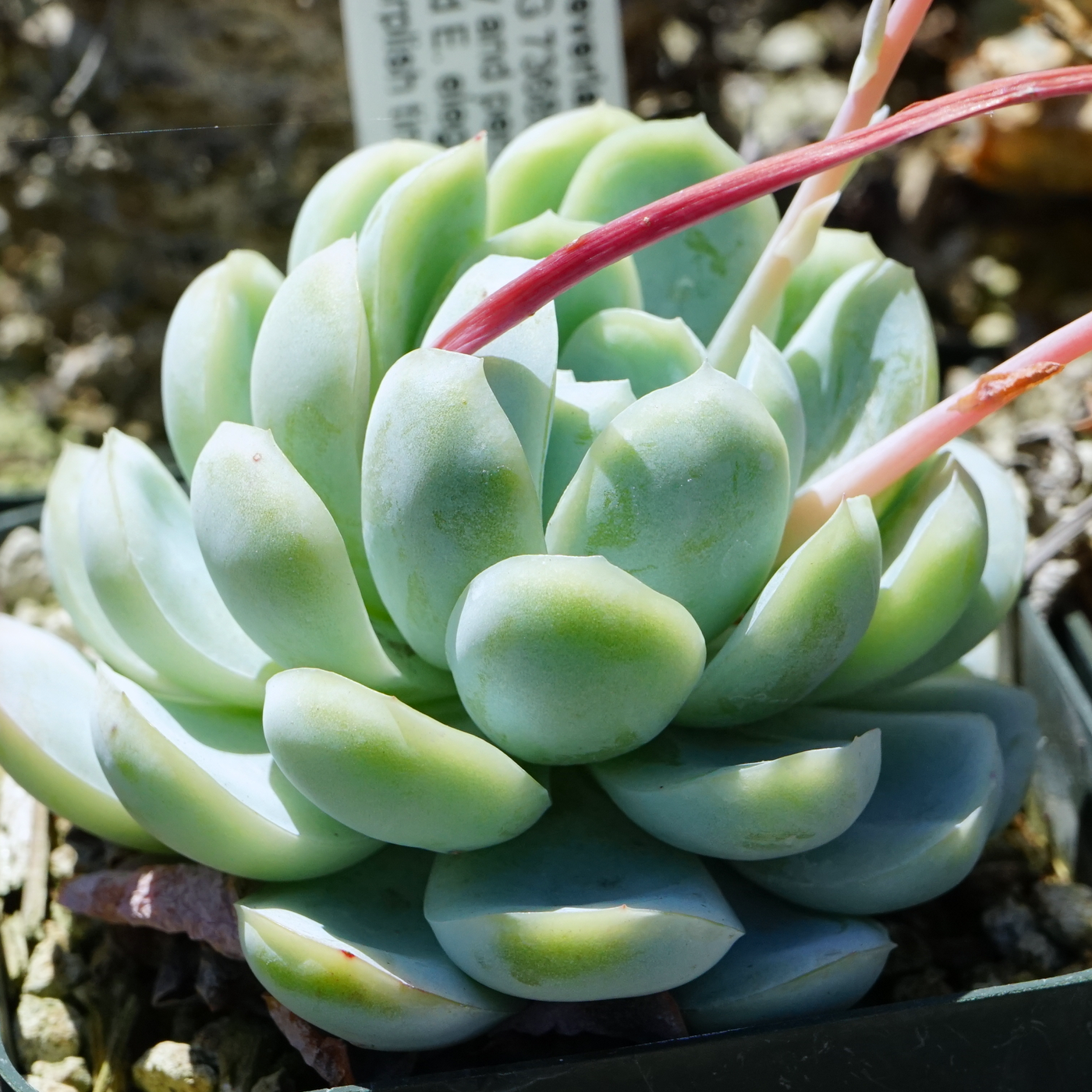
Echeveria: How to Care for the Perfect Rosette Succulent
Echeveria elegans
Growing echeveria: rosette succulent with fleshy blue-green leaves. Full sun, mineral well-drained soil, little water, ideal in pots and arrangements.
Characteristics
Echeveria (Echeveria elegans) is a rosette-forming succulent with elegant fleshy blue-green leaves, often blushed pink at the edges. It grows in full sun on a very free-draining mineral mix with sparse watering. Ideal in small pots, succulent arrangements and rock gardens.
Flowering season
Practical tips
Water needs: bassa — always check soil moisture before watering.
Prefers pieno sole: provide the right light and rotate the plant for even growth.
Recommended soil: drenante minerale. Refresh the substrate every 1-2 years.
Dust the leaves with a damp cloth to support photosynthesis.
Feed during the growing season (spring-summer) and stop in winter.