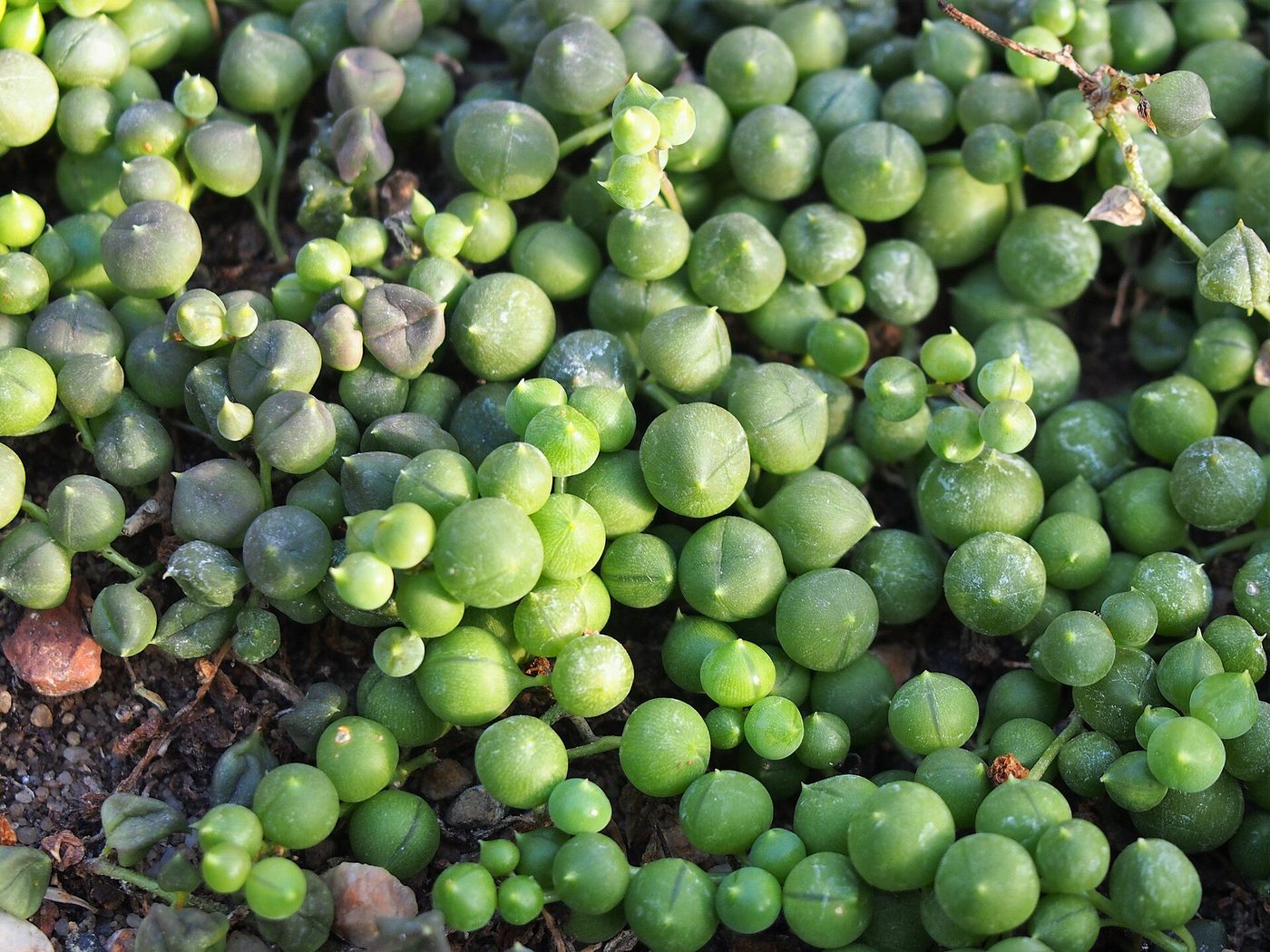
Photo: Agnieszka Kwiecień, Nova · CC BY-SA 4.0
String of pearls
Curio rowleyanus
A trailing succulent of unmistakable charm, the string of pearls has slender stems from which hang dozens of small green spheres like beads or peas.
Characteristics
A necklace of plant pearls
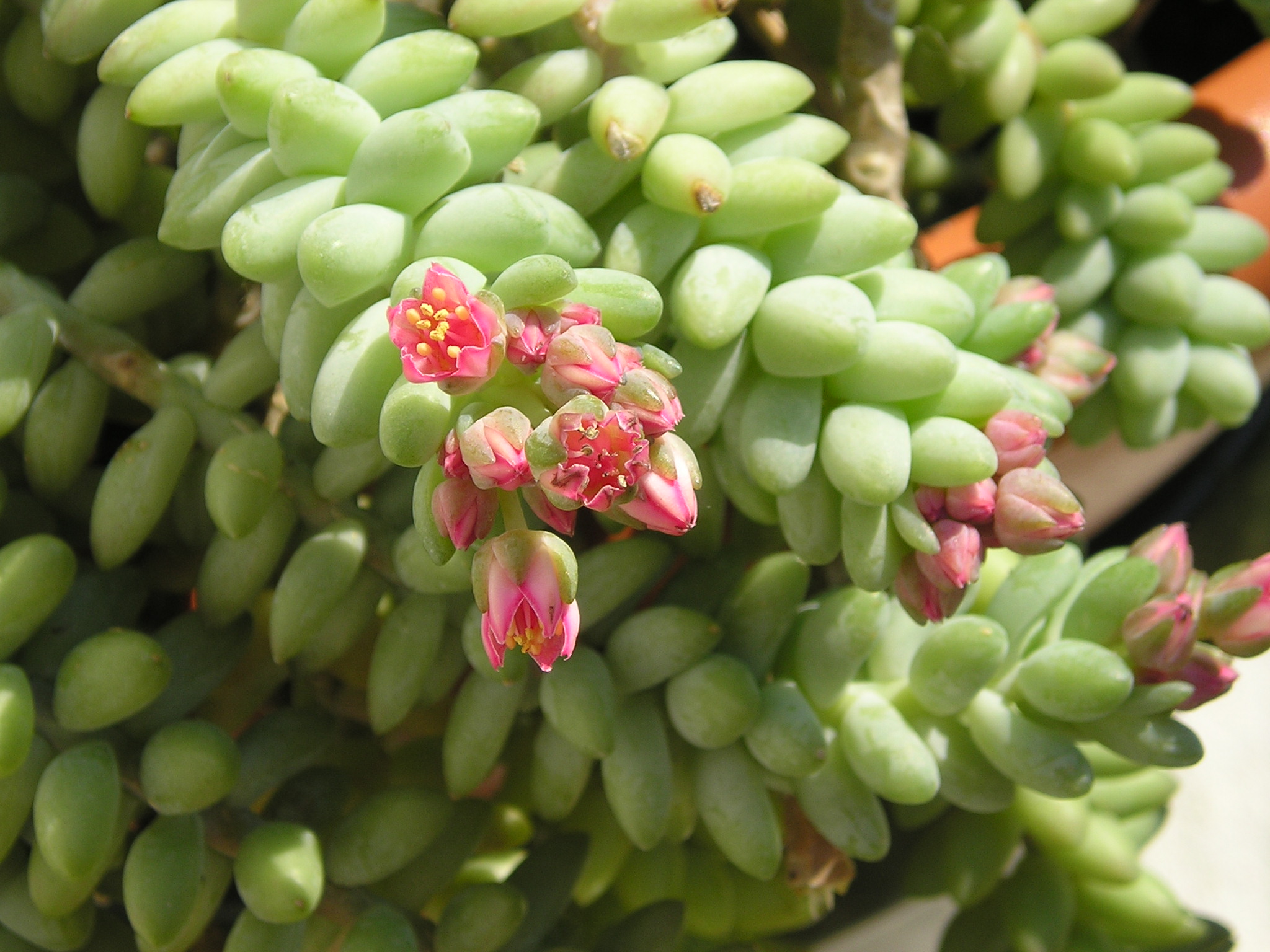
The string of pearls, also known as string-of-beads, is a succulent of unique appearance. Its thin, hanging stems bear dozens of spherical little leaves, pea-sized, resembling a row of beads or the beads of a rosary. Each little sphere has a fine translucent stripe, a 'window' that lets light reach the photosynthetic tissue inside: the rounded shape reduces the surface exposed to scorching sun and limits water loss.
Origin and habitat
It is native to the arid zones of South Africa, in the Cape Provinces. In the wild its stems trail on the ground, rooting where they touch and forming dense mats, and it often grows in the shade of other plants and rocks to avoid the strongest direct sun.
Cultivation
It is one of the most beloved trailing succulents as a houseplant, perfect for hanging pots and high shelves, from which the stems cascade like strands of pearls. It wants bright but indirect light, a free-draining mineral substrate and sparing watering: let the soil dry out well between waterings. Waterlogging is its worst enemy and rots the stems.
Caution and curiosities
It is toxic if eaten, both to pets and, to a lesser extent, to humans: keep it away from children and animals. It produces small white brush-like flowers scented of cinnamon. It propagates easily: just lay a length of stem on moist substrate and it will root.
Care
Perfect for those wanting a dramatic, low-maintenance plant. The commonest mistake is overwatering: like all succulents, it tolerates drought better than excess water.
Practical tips
Water needs: Low: let dry between waterings — always check soil moisture before watering.
Prefers Bright indirect light: provide the right light and rotate the plant for even growth.
Recommended soil: Mineral and very free-draining. Refresh the substrate every 1-2 years.
Dust the leaves with a damp cloth to support photosynthesis.
Feed during the growing season (spring-summer) and stop in winter.
Pros
- Unique bead-like leaves and cascading effect
- Easy to grow and propagate
- Perfect for hanging pots and high shelves
Cons
- Toxic if eaten by people and pets
- Rots with too much water or waterlogging
- Frost-tender