Photo: Wikimedia Commons · CC BY-SA 3.0
French rose
Rosa gallica
One of the oldest roses cultivated in Europe, the French rose charms with its fragrant, intense pink-crimson flowers and is the ancestor of many garden roses.
Characteristics
An ancient and noble rose
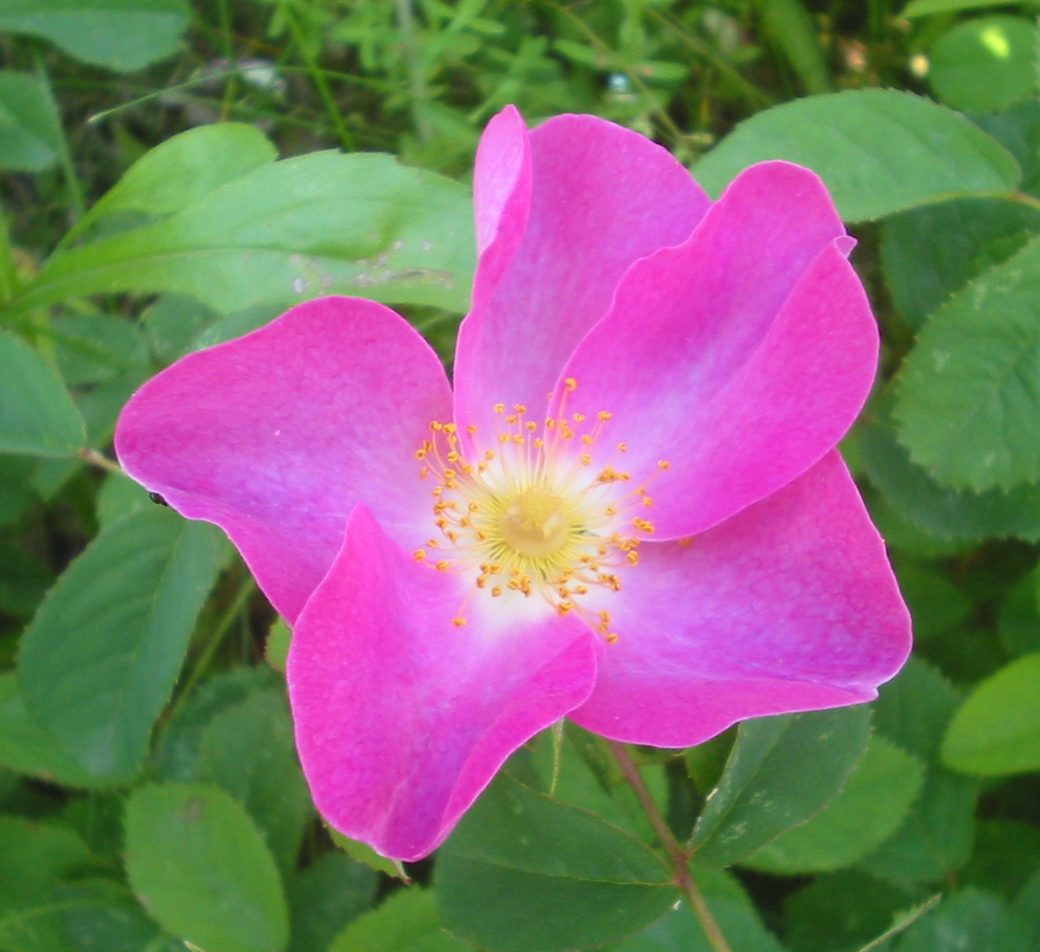
The French rose is a deciduous shrub with a long history, considered one of the oldest roses cultivated in Europe. It forms compact, vigorous bushes, with upright, thorny stems and deep green, slightly wrinkled leaves. The flowers, which usually appear only once a year in high summer, are a bright pink tending to crimson, with golden stamens clearly visible at the centre; they release a sweet, lasting fragrance. In the wild form the flowers are simple, with five petals, while the many cultivated varieties can be fuller and richer.
Origin and distribution
It is native to central and southern Europe, extending eastwards to Turkey and the Caucasus. It grows wild at the edges of woods, in clearings and on sunny slopes. It was one of the first roses to be cultivated in central Europe and is the ancestor of many of the garden roses we know today.
Cultivation and care
The French rose is a sturdy, undemanding rose, ideal even for those with little experience. It prefers a sunny or partly shaded position and a fertile, well-drained soil. It is extremely hardy and copes well with winter cold. It needs regular watering, especially in dry periods, avoiding waterlogging. A light pruning after flowering helps to keep the compact shape of the bush. It tends to produce root suckers, with which it can spread to form small colonies.
Uses and curiosities
Also known as the rose of Provins, for centuries it was cultivated for its fragrant petals, used in perfumery and in traditional preparations. Its intense scent and its ability to retain it even when dried made it one of the most prized roses in history. In gardens it is much loved today for the romantic, old-world charm it brings to beds.
Flowering season
Practical tips
Water needs: Moderate, regular in dry spells — always check soil moisture before watering.
Prefers Full sun or partial shade: provide the right light and rotate the plant for even growth.
Recommended soil: Fertile, deep and well-drained. Refresh the substrate every 1-2 years.
Dust the leaves with a damp cloth to support photosynthesis.
Feed during the growing season (spring-summer) and stop in winter.
Pros
- Fragrant flowers of intense pink-crimson
- Sturdy, undemanding old rose
- Very hardy and cold-resistant
- Ancestor of many garden roses
Cons
- Usually flowers only once a year
- May spread through root suckers
- Thorny stems to handle with care