Photo: Dominicus Johannes Bergsma. · CC BY-SA 4.0
Spring snowflake
Leucojum vernum
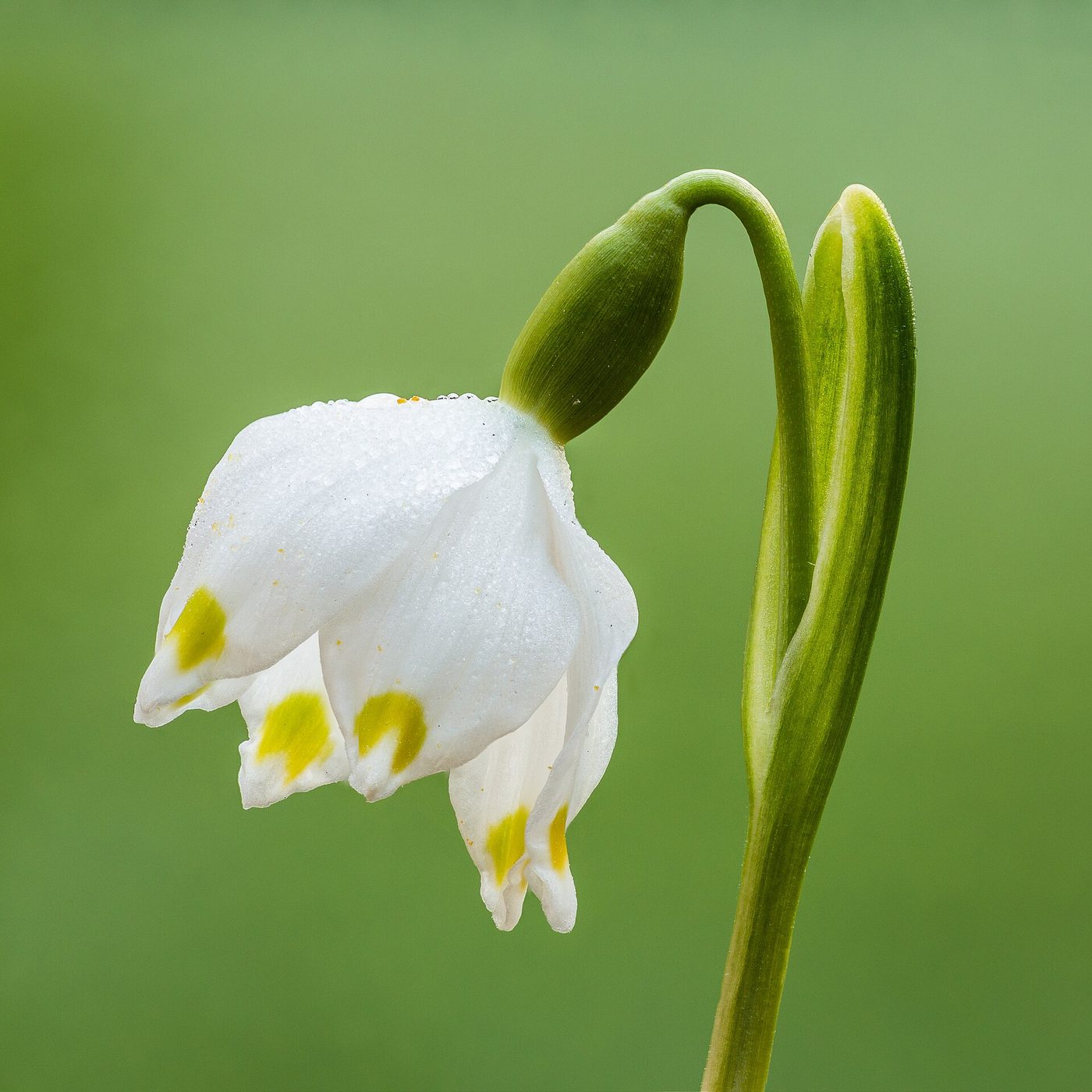
The spring snowflake is a small bulb that bears, in late winter, a single nodding white bell-shaped flower with a green spot at the tip of each petal.
Characteristics
Description
The spring snowflake is a small bulbous perennial in the family Amaryllidaceae. Each bulb sends up a stem 10–20 cm tall bearing, as a rule, a single nodding bell-shaped flower, pure white, with a distinctive green (sometimes yellowish) spot at the tip of each of its six equal petals. The leaves are strap-shaped and a bright green. It is among the first flowers to appear at the end of winter.
Habitat and distribution
It is native to central and southern Europe, from Belgium to Ukraine, and has naturalised in other regions. It grows in damp deciduous woodland, cool meadows and along streams, where it forms flowering carpets as the snow retreats.
Cultivation
It likes cool, moist, humus-rich soils, in part shade or gentle sun. The bulbs are planted in autumn and should never be allowed to dry out. It dislikes frequent transplanting: left undisturbed, it multiplies slowly to form broad clumps. It is a very hardy plant that stands up well to frost.
A note of caution
Like many amaryllids, the whole plant and especially the bulb contain alkaloids that can cause upset if eaten. It should be kept away from children and pets, and never confused with edible bulbs.
Did you know?
The spring snowflake is often confused with the snowdrop, but they are different plants: the snowdrop has three long outer petals and three shorter inner ones, whereas the snowflake has six equal petals, each with its own green spot. The snowflake is also usually a little later and slightly taller.
Flowering season
Practical tips
Water needs: Regular, never dry — always check soil moisture before watering.
Prefers Part shade or full sun: provide the right light and rotate the plant for even growth.
Recommended soil: Cool, moist, humus-rich. Refresh the substrate every 1-2 years.
Dust the leaves with a damp cloth to support photosynthesis.
Feed during the growing season (spring-summer) and stop in winter.
Pros
- Among the first flowers of late winter
- Hardy, stands up well to frost
- Naturalises into lovely flowering carpets
Cons
- Slightly toxic if eaten
- Dislikes frequent transplanting
- Needs constantly cool soil, suffers in drought