Jelly Bean Plant: Sedum rubrotinctum Care
Sedum rubrotinctum
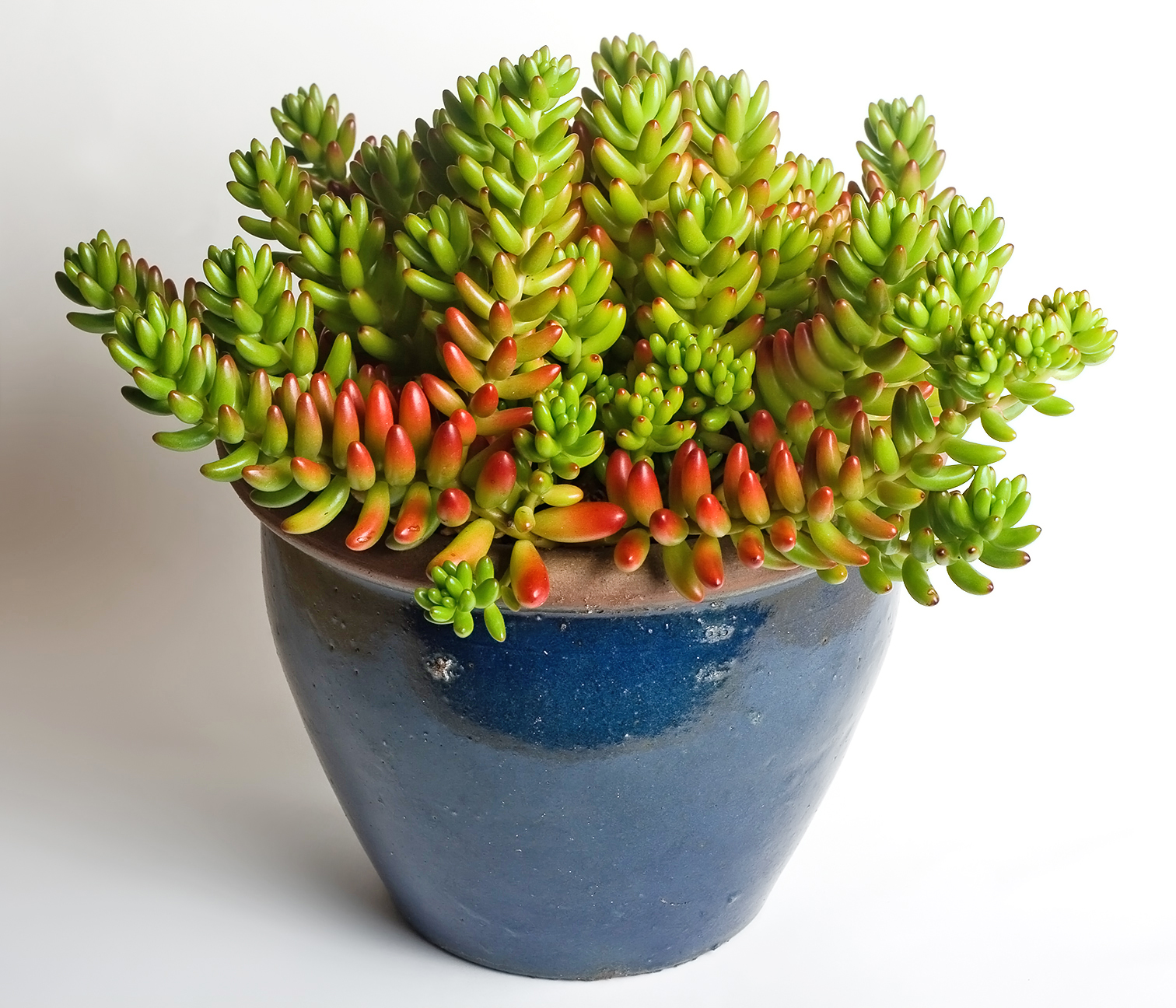
Jelly bean plant care (Sedum rubrotinctum): succulent with bean leaves that redden in sun. Full sun, mineral soil, very little water.
Characteristics
The jelly bean plant (Sedum rubrotinctum), or pork and beans, is a small succulent with plump bean-shaped leaves, green turning red at the tips in full sun. In spring it bears small yellow star flowers. It wants full sun, gritty mineral soil and sparse watering. Its leaves drop and root by themselves. Mildly toxic; it stays low, 10-25 cm.
Flowering season
Practical tips
Water needs: bassa — always check soil moisture before watering.
Prefers pieno sole: provide the right light and rotate the plant for even growth.
Recommended soil: drenante minerale. Refresh the substrate every 1-2 years.
Dust the leaves with a damp cloth to support photosynthesis.
Feed during the growing season (spring-summer) and stop in winter.