Photo: W. Bulach · CC BY-SA 4.0
Pasqueflower
Pulsatilla vulgaris
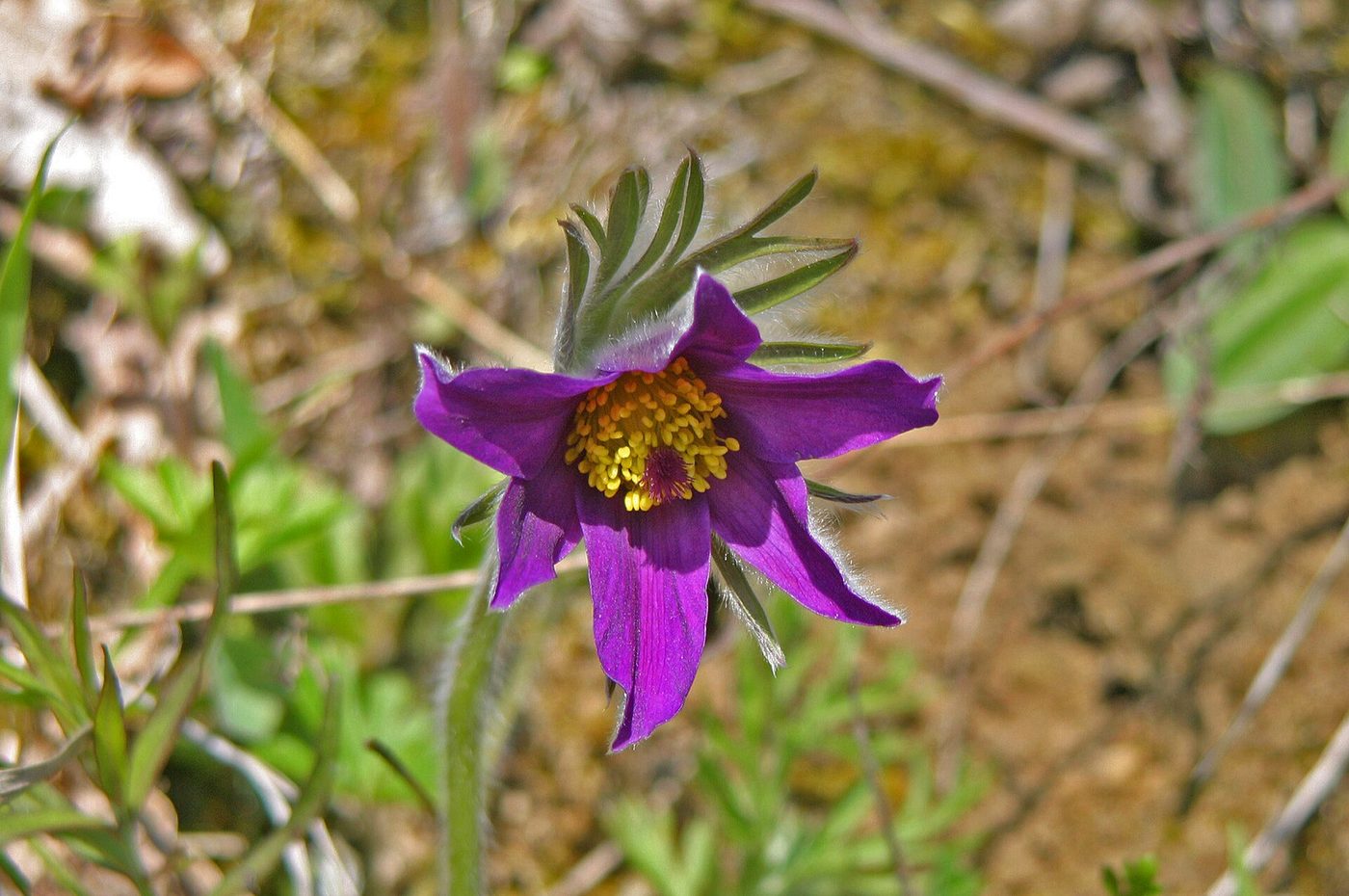
The pasqueflower is a small spring perennial with large purple bell-shaped flowers and a velvety look, covered in dense silvery down.
Characteristics
Description
The pasqueflower is a small herbaceous perennial of the buttercup family, 10-25 centimetres tall. It is entirely covered with a dense, soft silvery down, giving it a velvety look. In spring it produces large solitary bell-shaped flowers, an intense purple with a golden-yellow centre of stamens. After flowering it develops striking feathery seed heads, made up of long silky filaments.
Habitat and distribution
It is native to western and central Europe, where it grows in dry, chalky grassland, on sunny slopes and heaths. It prefers poor, stony, very free-draining soils, in full sun.
Cultivation
It is a lovely plant for the rock garden and sunny border, very hardy but demanding as to drainage. It wants full sun and a poor, stony, well-drained soil, ideally chalky. It dislikes waterlogging. Once established it should be left undisturbed, as it resents transplanting.
- Plant in full sun, in very free-draining soil
- Avoid waterlogging, which causes rot
- Do not move mature plants; they resent transplanting
Cautions and conservation
Like many buttercups, it is toxic if eaten fresh, due to irritant substances. In the wild it is classed as near threatened: the loss of dry chalk grassland, through the abandonment of grazing and agricultural intensification, threatens its wild populations.
Flowering season
Practical tips
Water needs: Low once established — always check soil moisture before watering.
Prefers Full sun: provide the right light and rotate the plant for even growth.
Recommended soil: Chalky, stony, very free-draining. Refresh the substrate every 1-2 years.
Dust the leaves with a damp cloth to support photosynthesis.
Feed during the growing season (spring-summer) and stop in winter.
Pros
- Large velvety purple flowers in spring
- Decorative feathery seed heads after flowering
- Hardy, ideal for sunny rock gardens
Cons
- Toxic if eaten fresh
- Dislikes waterlogging and transplanting
- Wild species near threatened