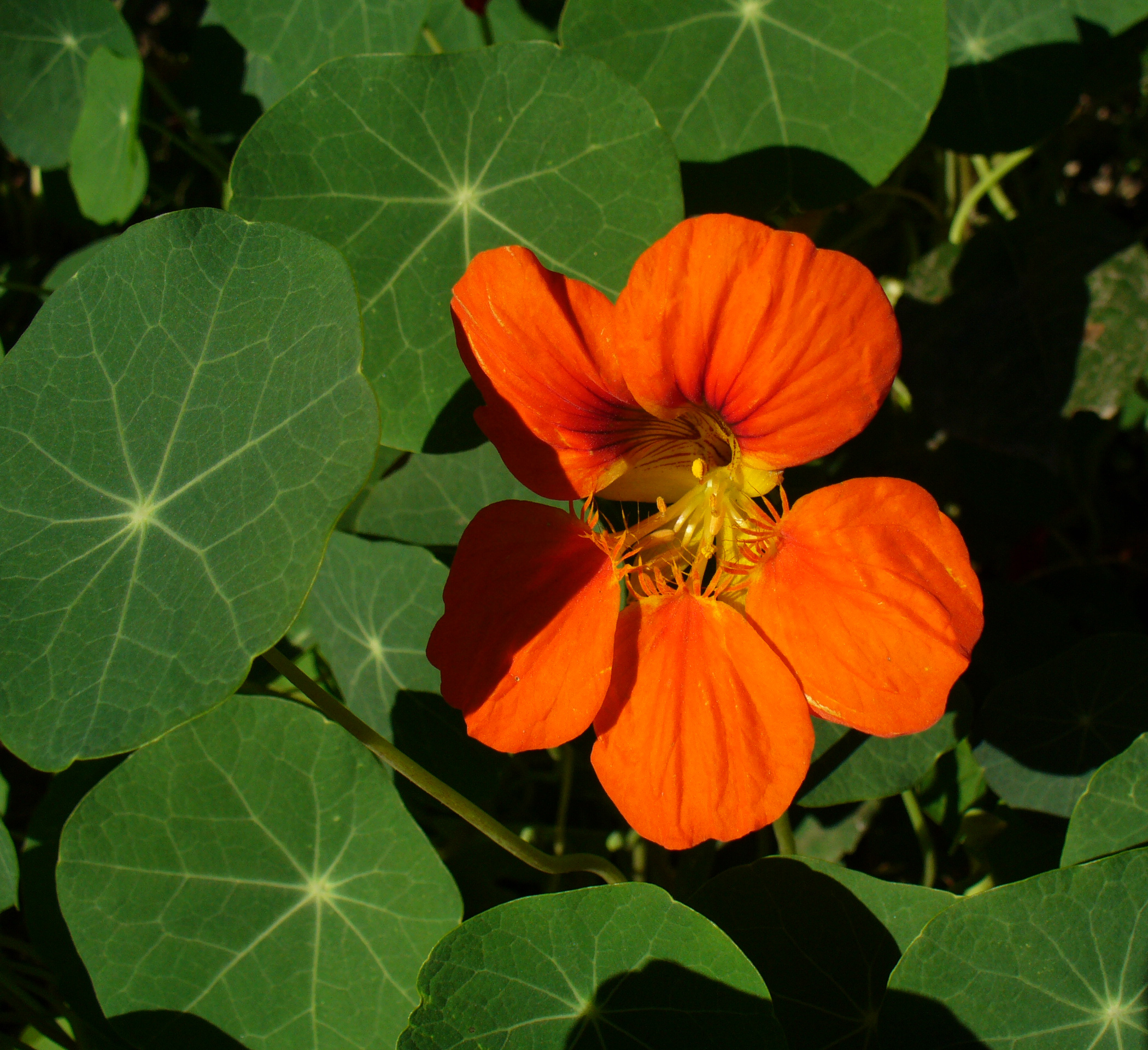
Nasturtium: The Easy Annual with Edible Flowers
Tropaeolum majus
Growing nasturtium: easy annual with edible orange flowers. Full sun, poor soil, great in the vegetable garden, pots and as an edible flower.
Characteristics
Nasturtium (Tropaeolum majus) is an annual with vivid orange, yellow and red flowers that are entirely edible, with a peppery taste. It grows fast in full sun on poor soil, in bushy or trailing forms. Great in the vegetable garden as a companion plant and in the kitchen for salads.
Flowering season
Practical tips
Water needs: media — always check soil moisture before watering.
Prefers pieno sole: provide the right light and rotate the plant for even growth.
Recommended soil: povero drenante. Refresh the substrate every 1-2 years.
Dust the leaves with a damp cloth to support photosynthesis.
Feed during the growing season (spring-summer) and stop in winter.