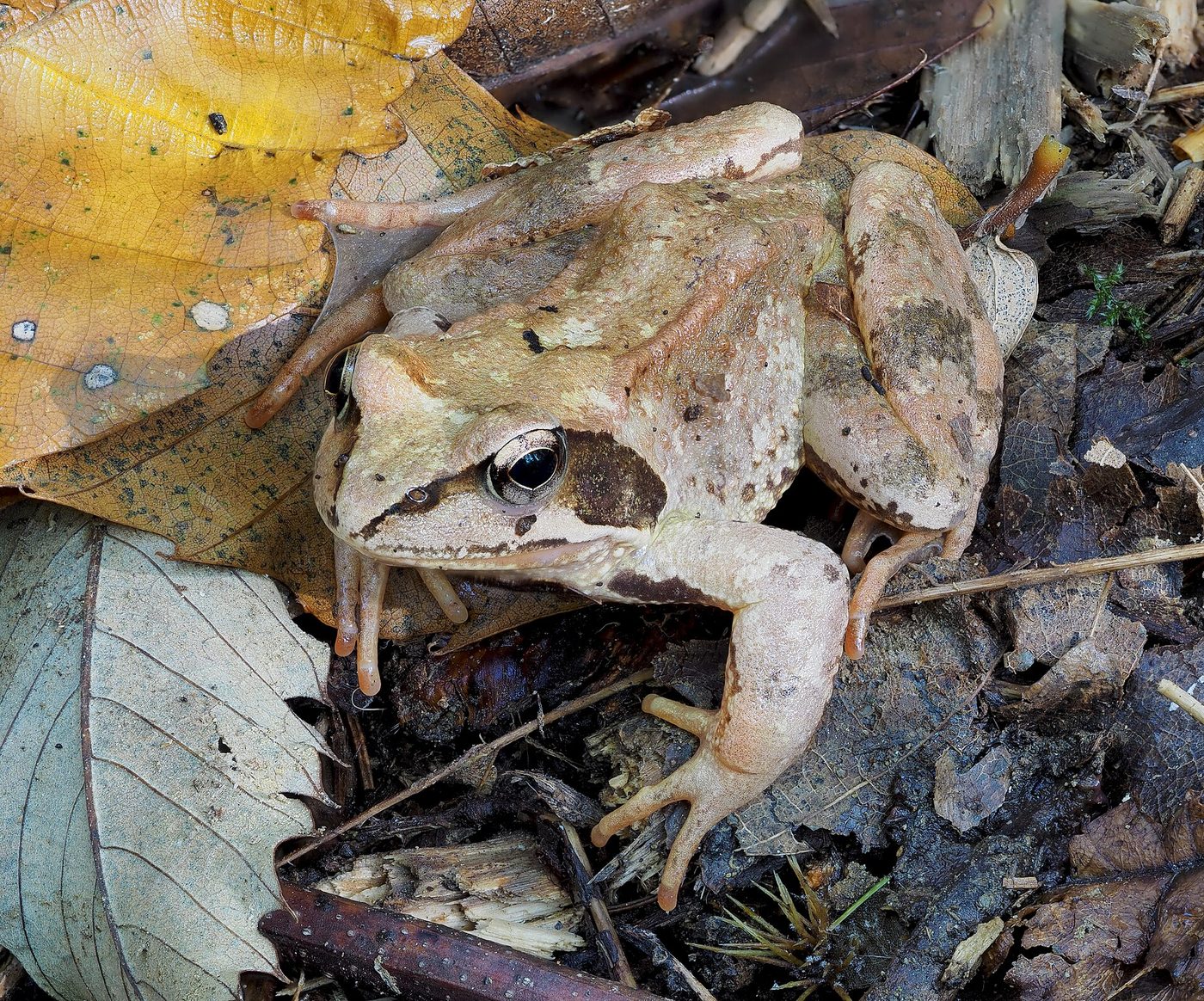
Photo: Petar Milošević · CC BY-SA 4.0
Agile frog
Rana dalmatina
The agile frog is a small brown amphibian with very long hind legs, capable of spectacular leaps of over two metres.
Characteristics
Temperament
Crepuscular, leaping, shy
Diet
Insects and small invertebrates
Description
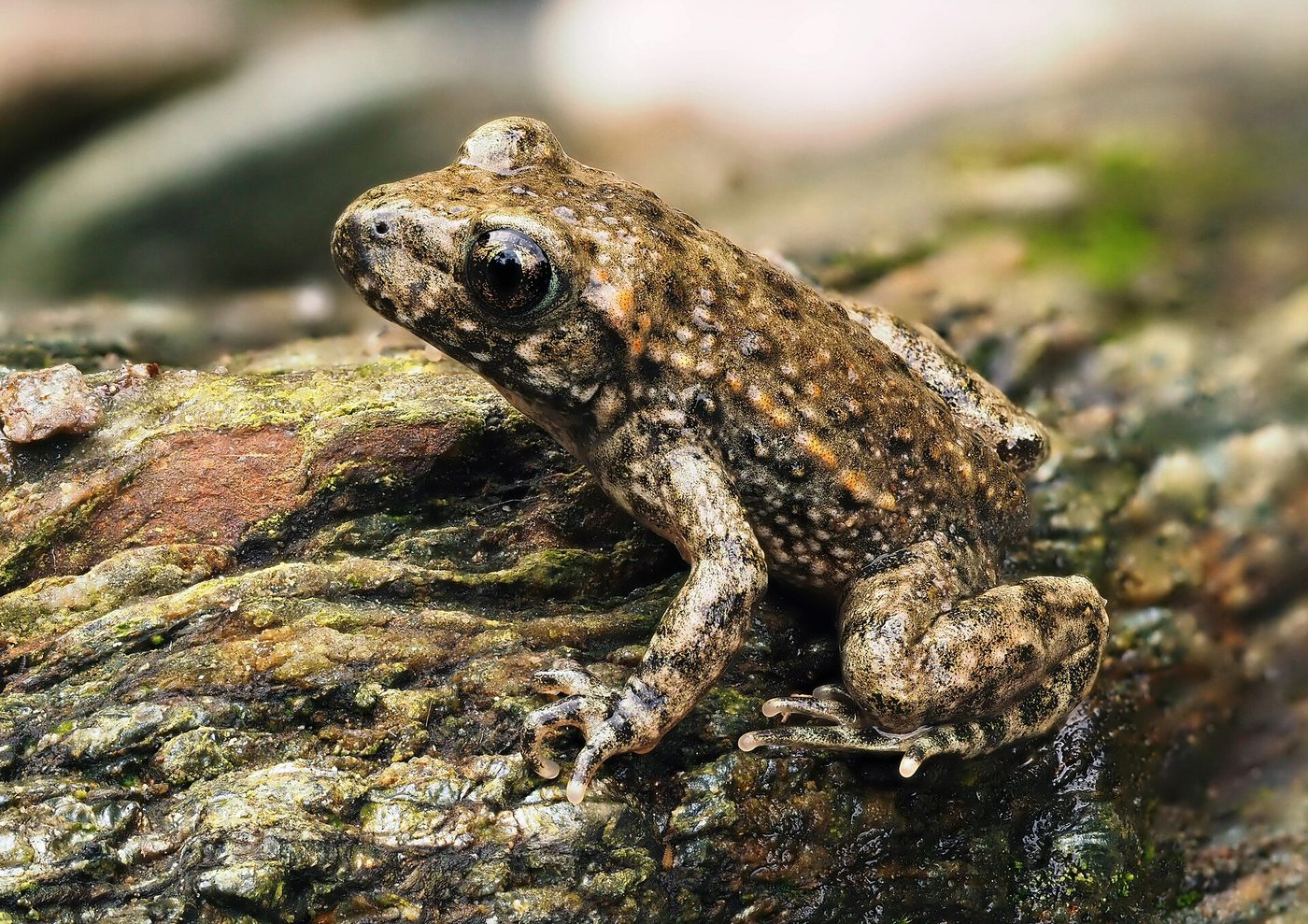
The agile frog is a small anuran amphibian of the true frog family, with a slender body and a pointed snout. Its skin is smooth, reddish-brown or beige, with a dark triangular patch behind the eye. Its most remarkable feature is the extraordinary length of its hind legs, allowing exceptional leaps that can exceed two metres.
Habitat and distribution
It is widespread across much of Europe, from the centre to the south. It favours open broadleaf woodland, clearings and damp meadows, where it spends most of the year leading a terrestrial life. It overwinters and passes dry spells hidden under logs and stones.
Behaviour and reproduction
It is active mainly at dusk and by night, when it hunts insects and other small invertebrates. In spring, among the first frogs to breed, it returns to small bodies of still water, where the females lay gelatinous masses of eggs anchored to submerged vegetation. Its prodigious leaps are its main escape strategy from predators.
Did you know?
In some languages it is called the 'pissing frog' because, if handled, it can empty its bladder in defence. Its long legs make it one of Europe's best jumping frogs relative to its size.
Conservation
It is classed as least concern, but depends on damp woodland and small wetlands to breed. The loss of these habitats and habitat fragmentation can threaten its populations locally.
Pros
- Spectacular leaps of over two metres
- Useful predator of insects
- Among the first frogs to breed in spring
Cons
- Depends on damp woodland and small wetlands
- Sensitive to habitat fragmentation
- Shy and hard to observe