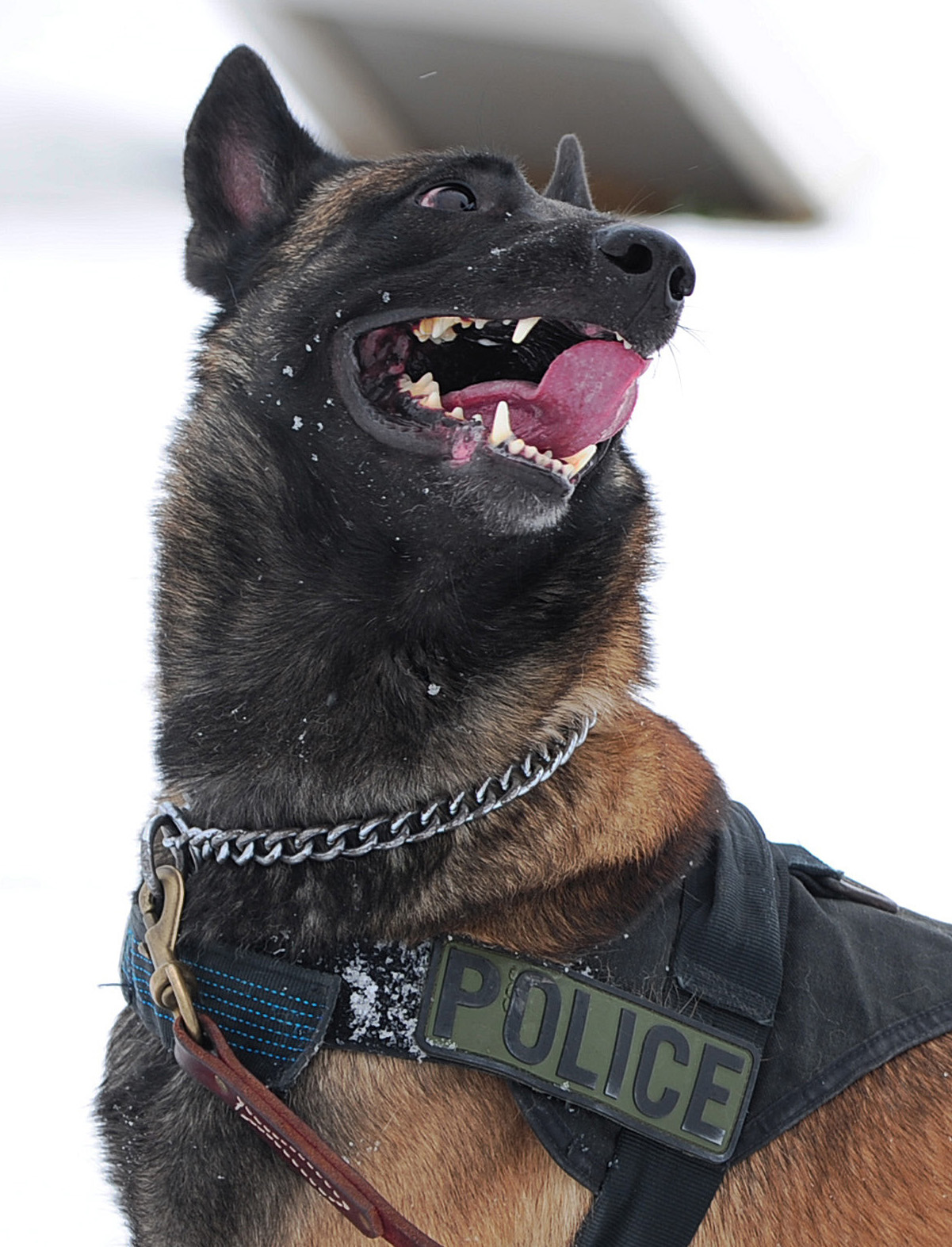
Belgian Malinois
Canis lupus familiaris
Characteristics
Temperament
Extremely intelligent, vigilant, tireless, strongly bonded to the owner. Top 5 most intelligent breeds. Most chosen dog by special forces (Navy SEAL, GIGN, RAID). Not for beginners: requires 2-3 hours of exercise/day and continuous mental work.
Diet
Omnivore, very high metabolism. 1,300-1,800 kcal/day in 2 meals. High-quality kibble for active dogs (28-32% protein, 15-20% fat). Obesity rare, abundant hydration. Specialised diets for elite working dogs.
The Belgian Malinois (Canis lupus familiaris), one of the four varieties of the Belgian Shepherd along with Groenendael, Tervueren and Laekenois, is today considered the most capable and versatile working dog in the world. Originated in the region of Malines (Mechelen) in Belgium at the end of the 19th century as a shepherd dog for the flocks of Flanders, it has rapidly conquered the primacy as military and police utility dog for its exceptional intelligence, agility, physical endurance, superior trainability and determination in work. Famous are the Malinois used by US special forces (including "Cairo", the Navy SEAL dog who participated in the Operation Neptune Spear against Osama Bin Laden in 2011) and French (e.g. "Diesel", heroic RAID dog killed in the raids following the Paris attacks 2015). It is today also increasingly popular as a sports dog (IPO, mondioring, agility), while remaining a "not for beginners" breed: its very high energy and intelligence require experienced owners and daily commitment.
Classification and category
The Belgian Malinois belongs to the species Canis lupus familiaris, the domestic subspecies of the grey wolf. It is classified by the FCI in Group 1 — Sheepdogs and Cattle Dogs, section 1 (Sheepdogs), as short-coated fawn-charcoal variety of the Belgian Shepherd (breed code FCI 015). The other three varieties of Belgian Shepherd are: Groenendael (long-haired black), Tervueren (long-haired fawn-charcoal), Laekenois (rough-haired fawn). All four are considered the same breed by FCI with coat varieties, but the American AKC and other kennel clubs recognise them as distinct breeds. The standard provides for a withers height of 62 cm for males and 58 cm for females (with tolerance of ±4 cm), and a weight of 25-30 kg for males, 20-25 kg for females. The breed has been officially recognised by Belgium since 1891 with the first formal description by veterinarian Adolphe Reul, by FCI since 1956.
Habitat and distribution
The Belgian Malinois is a dog perfectly adapted to active outdoor life, but can also live in an apartment provided it receives 2-3 hours a day of intense physical exercise (running, dog sports, search, training). It is not a breed for sedentary families: if not stimulated, it can develop destructive behaviours (chewing furniture, barking incessantly, escaping). It tolerates cold well thanks to the undercoat, suffers intense heat (requires protection above 28-30 °C).
The history of the breed begins in 1891 when Professor Adolphe Reul of the University of Veterinary of Cureghem (Brussels) catalogued 117 shepherd dogs of the Belgian region, recognising four distinct varieties. The breed was developed as a shepherd dog for the flocks of Flanders, where climatic (humidity, rain) and geographical (flat terrain) conditions required a resistant, vigilant and tireless dog. After World War I, Malinois were used as military dogs for messages, patrolling and protection, and their use has expanded to become today the most chosen breed by the world's armed and police forces: US Navy SEAL, French RAID, GIGN, German GSG-9, Israel Defense Forces, Italian State Police. The reasons: greater agility, intelligence and physical endurance than the German Shepherd (the historical competing breed), absence of joint problems such as hip dysplasia widespread in the German Shepherd, reduced predisposition to hereditary pathologies. The current distribution is global, with concentrations in Belgium (country of origin), France, USA, Israel, Germany. The average price of a pedigree FCI puppy is 1,500-3,000 euros; specimens from elite working lines can reach 5,000-10,000 euros.
Diet
The Belgian Malinois is a domestic omnivorous dog with very high metabolism: the daily caloric requirement of an active 25 kg adult is 1,300-1,800 kcal, distributed in 2 meals. The ideal diet consists of high-quality kibble for very active medium-sized dogs (kibble rich in animal protein 28-32%, fat 15-20%, low in cereals), or wet feeding or BARF under veterinary supervision.
The breed is generally robust, with few genetic predispositions compared to other pure breeds. Pathologies to monitor: hip and elbow dysplasia (rarer than in German Shepherd, diagnostic tests recommended in parents anyway), hereditary cataract (DNA test), idiopathic epilepsy, dilated cardiomyopathy. Joint screening at 12-18 months and annual cardiological visits from 5 years are recommended. The breed tends to be lean and athletic: obesity is rare. Water always available, fresh, in abundant quantities (intense physical exercise significantly increases water requirement). Portions must be controlled after castration (20-30% metabolism drop). For elite working dogs (military, police forces) specialised diets with energy supplements, vitamins, omega-3 are common.
Physical features
The Belgian Malinois has an elegant, muscular, athletic, well-proportioned body. The structure is square (body length equal to withers height), with straight back, deep chest, slightly retracted abdomen. The head is well chiselled, of medium length, with elongated muzzle (not short like the German Shepherd), little marked stop, black nose. The ears are triangular, of medium size, carried very erect and well spaced. The eyes are of medium size, slightly almond-shaped, dark brown in colour, expressive and "intelligent". The tail is long, well-haired, carried low at rest and curved upwards during action.
The coat is the characteristic that distinguishes the Malinois from the other varieties of Belgian Shepherd: short hair (1-2 cm), dense, with thick undercoat, well adhered to the body. The standard colour is charcoal fawn (golden fawn with darker shades on back and flanks, due to black hair tips — the "charcoal"), with characteristic black mask on the muzzle (extended from nose to eyes), black ear edges, often darker tail base. Small white markings on the chest and toes are accepted. The muscular structure is optimised for endurance and explosive power: Malinois can run at 30-35 km/h, jump over 2.5 m in height (world record "Wall Climb": a military Malinois has scaled a smooth wall of 3.7 m), and maintain intensive work rhythms for hours without pause. The longevity is good (12-14 years), superior to the German Shepherd thanks to the lower incidence of hereditary joint pathologies.
Behaviour and curiosities
The Belgian Malinois has an intense, vigilant, strongly bonded to the owner temperament. Three characteristics define it: exceptional intelligence (top 5 most intelligent breeds according to Stanley Coren), working hyperdrive ("working drive" superior to any other breed), acute sensitivity to the environment and to owner signals. It is not a "calm" dog: it needs continuous mental and physical stimulation. Deprived of work, it rapidly develops neurosis, anxiety, compulsive behaviours. It is strongly monolateral: it bonds deeply to one-two human referents whom it recognises as "leader", and can be reserved with strangers.
Exceptional training capabilities make it the most chosen dog for: special military forces (US Navy SEAL, French RAID, GIGN, GSG-9, IDF Oketz, Italian NOCS), police and customs (drug, explosive, currency, mobile phone, missing person detection), civil protection (search for people in rubble, avalanches), dog sports (IPO/Schutzhund, mondioring, French Ring, agility). Olfactory capabilities are at maximum level: some Malinois are trained to detect tumours in human patients (medical laboratories), drugs and explosives in port containers, hidden mobile phones in prisons. Recent history is rich in famous Malinois: "Cairo" (Navy SEAL, participated in Operation Neptune Spear against Osama Bin Laden, May 2011), "Conan" (US Delta Force, participated in the operation against Abu Bakr al-Baghdadi, ISIS, October 2019), "Diesel" (French RAID, hero of the Saint-Denis raid post-Bataclan November 2015, decorated post-mortem). The famous dog Hawkeye in the films "John Wick" is a Malinois (actually played by several dogs of the same breed). Important curiosity: the breed is the subject of a growing ethical debate due to the massive military/police use and the abandonments by inexperienced owners who cannot manage it: in some European regions (Belgium, Germany) the abandonment rates of Malinois are three times the national average of pedigree dogs, with a concentration of specimens in shelters. The breed is not for everyone: it requires experience, time, energy, and daily commitment for years.
Pros
- Intelligenza eccezionale (top 5 razze)
- Longevità superiore al Pastore Tedesco (12-14 anni)
- Minore predisposizione a displasia anca/gomito
- Cane da lavoro polivalente: militare, polizia, sport, ricerca, terapia
Cons
- NON per principianti: richiede esperienza ed energia
- 2-3 ore/giorno di esercizio fisico+mentale obbligatorie
- Tassi di abbandono triplo media (proprietari inesperti)
- Può essere riservato/aggressivo con estranei se non socializzato