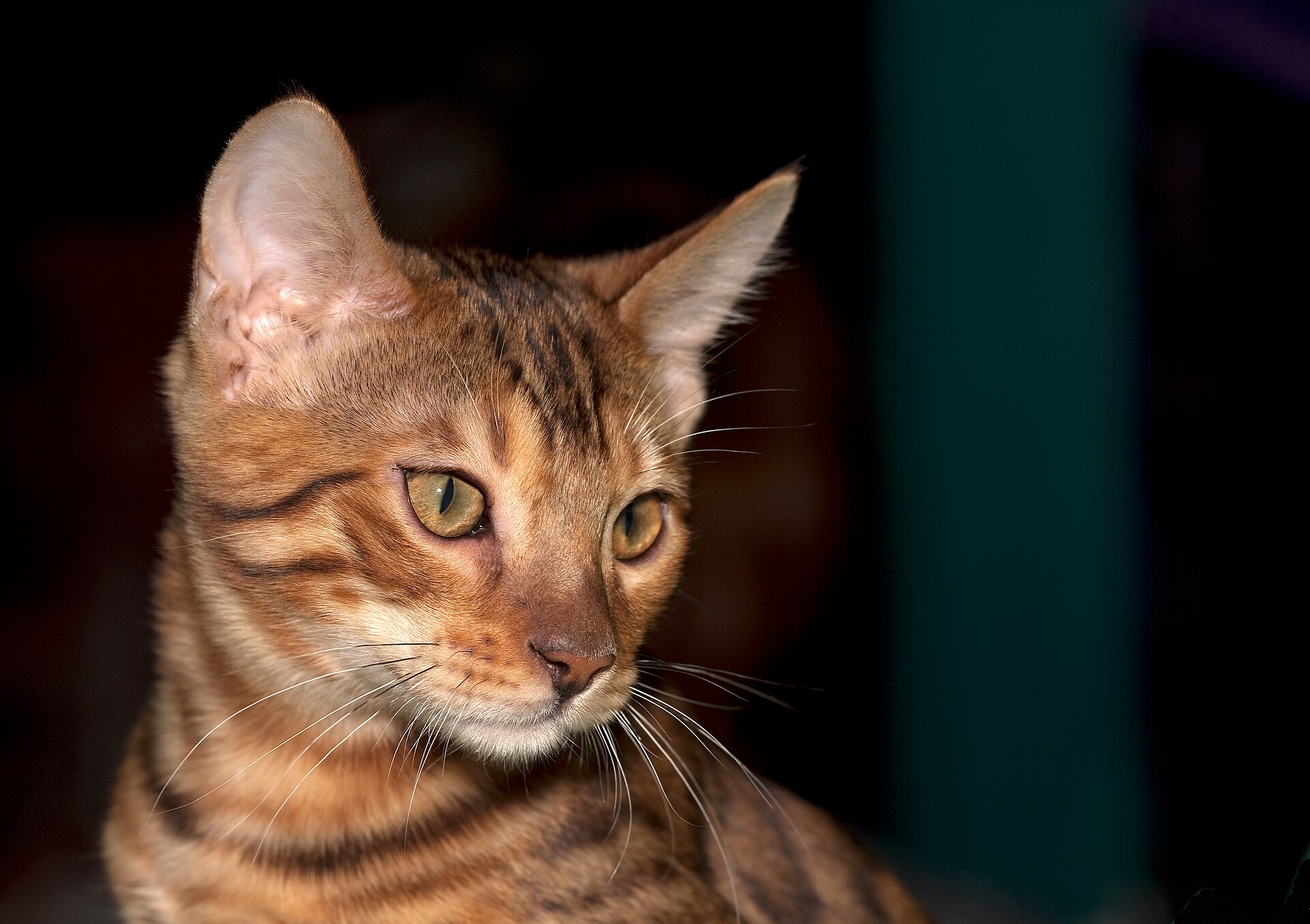
Bengal Cat
Characteristics
Temperament
Extremely active, intelligent, independent yet bonded to the family. Loves water, heights and play. Very vocal, can learn clicker training and leash walks.
Diet
Obligate carnivore: high-protein diet (35%+), taurine, possible BARF. Wet food for hydration, kibble for active cats. Loves running water.
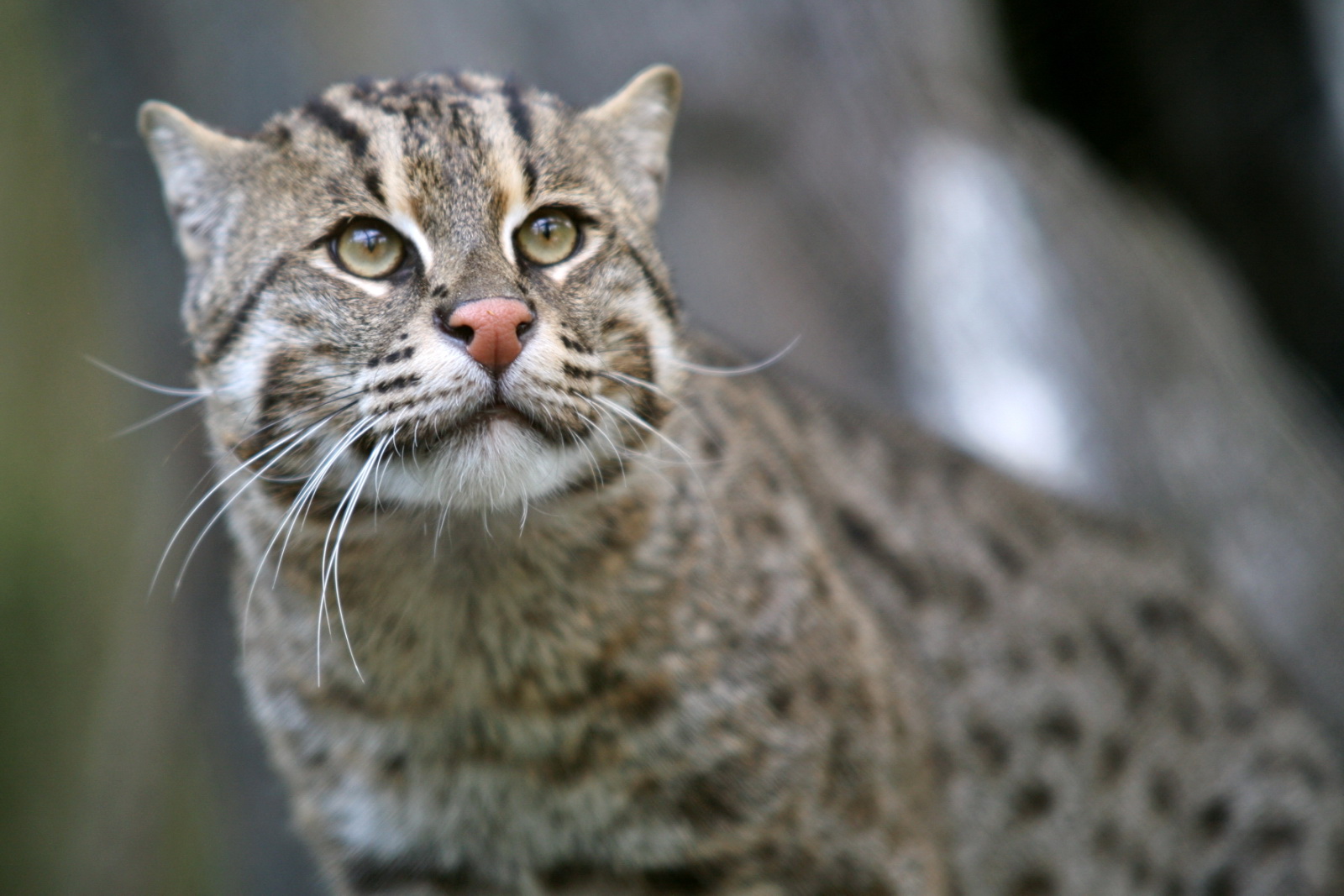
The Bengal Cat is a feline breed with a unique character and unmistakable appearance: its spotted or marbled coat is directly reminiscent of the leopard and the ocelot. It was developed from the 1960s onwards by crossing domestic cats with the Prionailurus bengalensis, the small Asian Leopard Cat, from which it also takes its name.
Classification and category
The Bengal is a domestic breed of the species Felis catus (Mammalia, order Carnivora, family Felidae). The first modern specimens were developed by American breeder Jean Mill between the 1960s and 1980s. Cat associations recognised it progressively: TICA from 1986, FIFe from 1999, the British GCCF from 2005. The standard only admits individuals from the fourth generation (F4) onwards from the wild ancestor, considered fully domestic. It is a medium-large cat: males weigh 4-7 kg, females 3-5 kg, with a body length of 50-60 cm excluding the tail.
Habitat and distribution
The wild ancestors of the Bengal, the Asian Leopard Cats, live in the forests of South-East Asia, from India to Borneo. The modern domestic breed, on the other hand, is found worldwide as a companion animal, particularly in North America and Europe, where over the last twenty years it has consistently entered the top ten most popular cat breeds.
Its ideal domestic "habitat" is a spacious, stimulation-rich environment: elevated cat beds, large scratching posts, shelves, vertical routes and ideally access to a secure garden or enclosed veranda. It is not a breed for small flats nor for those looking for a calm cat: the Bengal is an active, exploratory and curious hunter, in need of channelling its energy through play and movement.
Diet
Like all cats, the Bengal is an obligate carnivore: its diet must be rich in animal protein (at least 35%), high-quality fats, taurine and arachidonic acid. A mixed diet is recommended — premium wet food to ensure hydration, kibble specifically designed for active cats — divided into small, frequent portions.
As a breed derived from a wild ancestor, some breeders recommend a BARF diet (biologically appropriate raw food) or high-protein commercial foods. Weight monitoring is essential: despite its muscular build, the Bengal can accumulate abdominal fat if sedentary or overfed. Running water is preferred to still water: many Bengals are fascinated by taps and cat fountains.
Physical features
The Bengal has an athletic, muscular body, with hind legs slightly longer than the front ones — a direct inheritance from its wild ancestor — giving it a feline, powerful gait. The head is wedge-shaped, with small rounded ears, large oval eyes of variable colour (green, gold, amber, sometimes blue in snow individuals).
The coat is the breed's true hallmark: short, dense, silky, in two main patterns — spotted (rosette-shaped markings like the leopard's) and marbled (marbled spiral design). Base colours include brown (the most classic), silver, snow (lynx, mink and sepia, derived from the colourpoint gene) and blue. A particular effect is the glitter: transparent hair tips that reflect light like mica flakes, creating a golden or silver sheen unique to this breed.
Behaviour and curiosities
The Bengal is famous for its extremely active, intelligent, independent character, yet deeply bonded to its family. It loves heights, water (one of the few cats actively seeking it, even playing in it or swimming), fetch and interactive play. It adapts very well to leash walks with a harness and to clicker training activities.
It is a great "talker": it communicates through a wide vocal repertoire, from chirps to high-pitched calls very different from the classic meow. If it doesn't receive enough mental stimulation, it can develop destructive or repetitive behaviours. Average lifespan is 12-16 years; genetic predispositions include progressive retinal atrophy (PRA-b), now controlled by DNA testing in responsible breeding programmes. In many countries (including Italy) the law requires that Bengals be at least F4 to be fully considered as domestic cats.
Pros
- Aspetto unico e spettacolare
- Intelligenza top tra i gatti
- Apprende clicker e guinzaglio
- Uno dei pochi gatti che ama l'acqua
Cons
- Energia altissima: non adatto a chi cerca un gatto tranquillo
- Non ideale per piccoli appartamenti
- Molto vocale: può essere rumoroso
- Legislazione richiede almeno F4 per essere considerato pet domestico